Overview
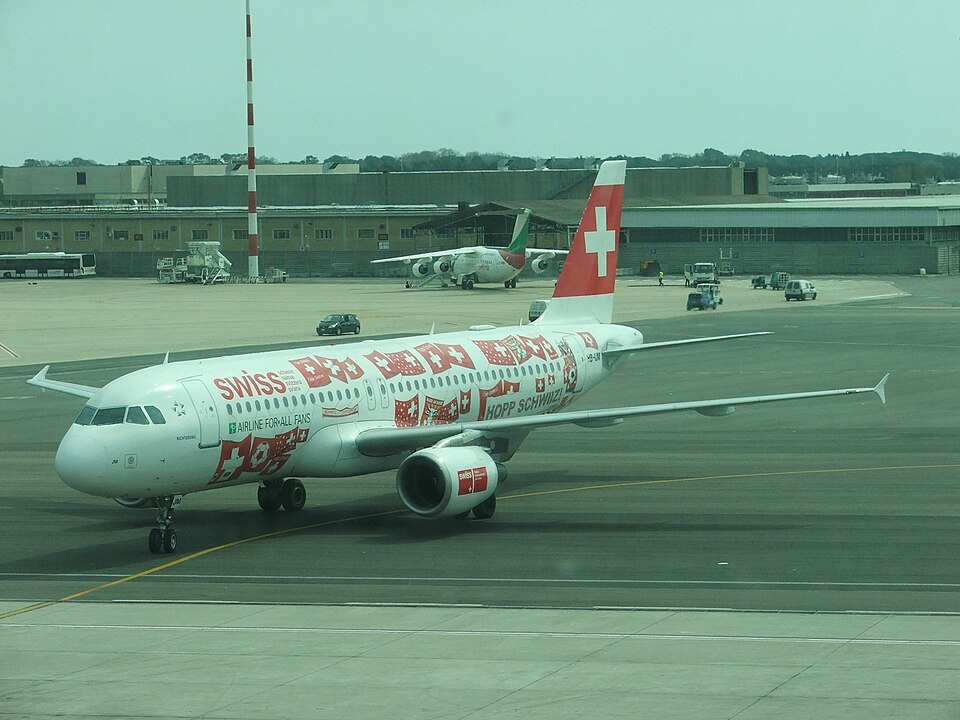
On 17 August 2011 at 08:31 UTC, a serious incident (AIRPROX) occurred between two aircraft in the Geneva Terminal Manoeuvring Area (TMA). The aircraft were an Airbus A320-214, registration HB-IJM, operating as SWR194W (Swiss International Air Lines flight LX 1914) from Barcelona (LEBL) to Geneva (LSGG), and a Cessna Citation C56X, registration D-CTTT, operating as AUF331 (Augusta Air flight AUF331) from Augsburg (EDMA) to Geneva (LSGG).
Location and Airspace
The incident took place over Lake Geneva, approximately 2.9 nautical miles southwest of the St-Prex VOR (SPR), in Swiss airspace. The airspace was classified as TMA LSGG 1, Class C. The prescribed minimum separation was 3 NM horizontally or 1,000 ft vertically.
Proximity
At the closest point, the horizontal separation was 0.7 NM and the vertical separation was 375 ft. The incident was classified by ICAO as Category A, indicating a high risk of collision.
Air Traffic Control
At the time, the approach control frequency was handled by a student controller under the supervision of a coach. The student was providing radar guidance to AUF331, aligning it with the ILS approach for runway 23 at Geneva Airport. Simultaneously, SWR194W was inbound from Barcelona.
Investigation
The Swiss Accident Investigation Board (SAIB) opened an investigation on 26 August 2011, following notification from the Federal Office for Civil Aviation. The German Federal Bureau of Aircraft Accident Investigation (BFU) appointed an accredited representative. The final report was published by SAIB.
Safety Recommendations
The report included a safety recommendation regarding STCA alerts (Safety Recommendation No. 471).