Incident
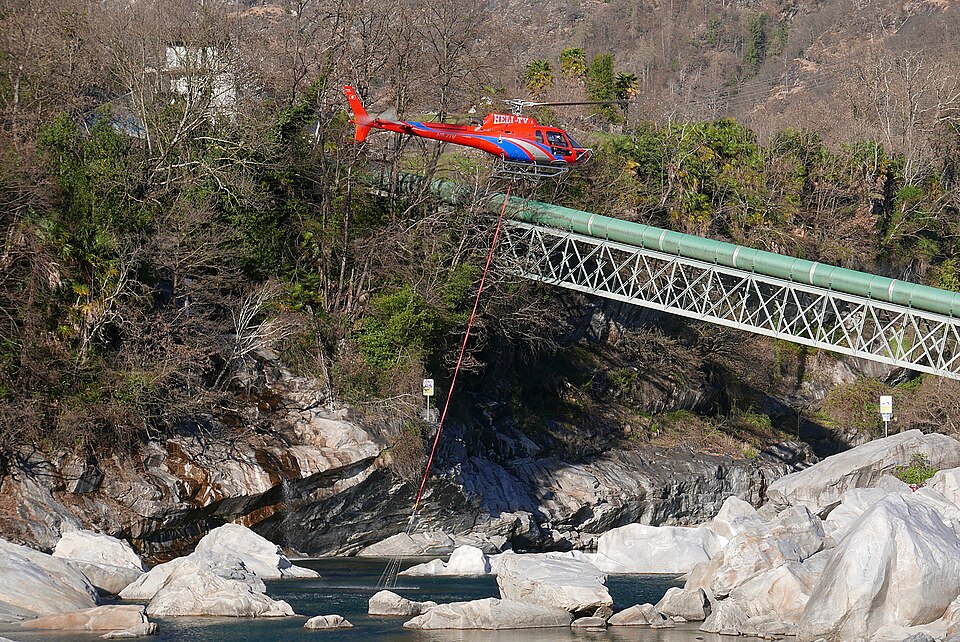
On March 16, 2022, at approximately 10:47 local time, an Airbus Helicopters H125, registration HB-ZTV, operated by Heli-TV SA, was conducting an aerial work mission with an external load in Gordola, Canton Ticino. The helicopter departed from a landing site near Contra and proceeded to a loading point in Via Cecchino, where a bundle of timber was attached to a 40-meter longline. The helicopter then flew up the Carcale valley towards the unloading site. During approach, the main rotor struck the lower conductor of a high-voltage power line crossing the valley. The conductor was severed, and the rotor, main gearbox, and tail rotor separated from the fuselage. The helicopter fell to the ground and caught fire. The pilot suffered fatal injuries; no other persons were injured. The power line conductor sections fell to the ground on each side of the valley.
Pilot Information
The pilot, a Swiss citizen born in 1972, held a Commercial Pilot License (Helicopter) issued by EASA. He had accumulated 6,731:47 flight hours, with over 1,350 hours on the H125 type. He worked part-time as a forest engineer for the Canton Ticino administration and as a freelance pilot for Heli-TV. He had performed about ten prior missions at the same construction site. His duty and rest times were compliant.
Aircraft and Operation
The helicopter was owned by Nuova Camping Tamaro SA. The mission involved transporting construction materials, including timber and concrete, using a sling load. The flight was conducted under visual flight rules. The helicopter had a fuel load of 149 liters at departure, and an additional 90 liters were taken on at Contra.
Sequence of Events
A task specialist operator (TSOP) at the unloading site saw the helicopter approaching faster than usual, about 15 meters below the lowest power line. He radioed the pilot repeatedly about the wires but received no response. He then looked away momentarily and witnessed the rotor strike the conductor at 10:47:25, as recorded by the power line operator. The helicopter was destroyed.
Damage
The helicopter was destroyed. The power line suffered a severed conductor, with minor soil pollution from leaked fluids.