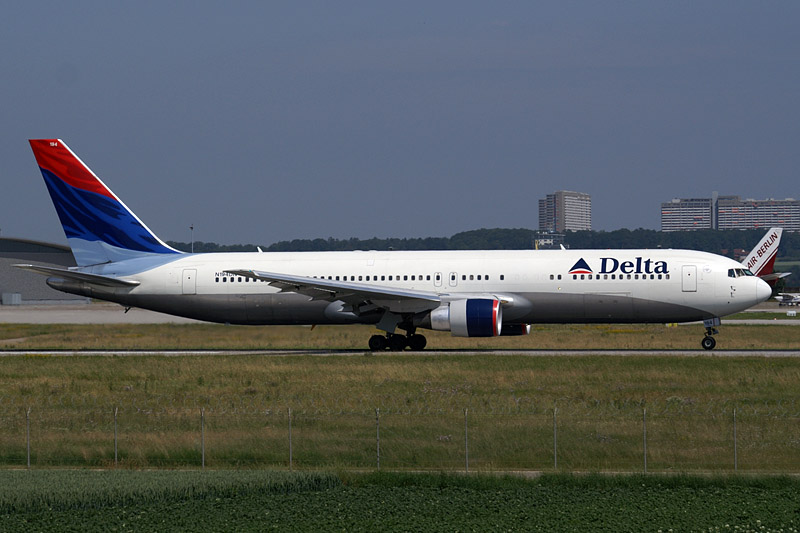
Near miss in Geneva airspace caused by flight level error and crew distraction

Casualties unknown • UAC West MILPA, CH

An Airbus 320 and a Boeing 767 narrowly avoided a collision in Swiss airspace after a crew error led to an unauthorized climb through assigned altitude.

What happened

On 27 November 2003, an air traffic incident occurred 3 NM northwest of MILPA within the Geneva control sector. The crew of an Iberia Airbus 320, registration EC-IEF, was operating a scheduled flight from Frankfurt to Madrid. After being cleared to climb to flight level 340, the crew mistakenly set flight level 350 in the flight control unit (FCU) altitude window.

Simultaneously, a Delta Airlines Boeing 763, registration N194DN, was cruising at flight level 350 on a flight from New York to Venice. Because the Iberia aircraft climbed through its assigned level, it intercepted the flight path of the Delta aircraft. The conflict triggered a Short Term Conflict Alert (STCA) and a TCAS Resolution Advisory (RA) for the Delta crew. At the closest point, the two aircraft were separated by only 4.6 NM horizontally and 6/00 FT vertically.

The investigation

The investigation established that the Iberia crew failed to monitor the aircraft's altitude correctly due to significant distractions. The commander reported that the crew was preoccupied with checking circuit breakers and addressing an ECAM consultative message. Additionally, the pilots had requested a flight attendant to check the cabin for unauthorized electronic devices.

Radar controllers noted that the controller in charge was a trainee under supervision. The investigation found that the controller had observed the aircraft's climb and had even issued reminders to the pilot to maintain flight level 340 before the STCA alert was triggered. The investigation also noted that the control frequencies for the sectors involved were coupled.

Findings

  • The primary cause was a crew member on EC-IEF erroneously setting flight level 350 instead of the cleared flight level 340.
  • The error went unnoticed by the second crew member due to distractions caused by the disorganized handling of an ECAM message and the checking of cockpit circuit breakers.
  • The radar controller's proactive monitoring and reminders helped alert the crew to the deviation before the loss of separation became critical.

Probable cause

The incident was caused by the Iberia crew incorrectly entering an unauthorized altitude into the flight control unit, a mistake that was compounded by crew distraction during cockpit maintenance tasks.

Frequently asked questions

What happened in the 2003-11-27 BOEING B767-300 accident near UAC West MILPA, CH?

An Airbus 320 and a Boeing 767 narrowly avoided a collision in Swiss airspace after a crew error led to an unauthorized climb through assigned altitude.

What aircraft was involved and where did it happen?

The accident on 2003-11-27 involved a BOEING B767-300, registration N194DN, at UAC West MILPA, CH.

What was the probable cause of the accident?

The incident was caused by the Iberia crew incorrectly entering an unauthorized altitude into the flight control unit, a mistake that was compounded by crew distraction during cockpit maintenance tasks.

Investigation report by the Swiss Transportation Safety Investigation Board (STSB / SUST). Original record: https://www.sust.admin.ch/inhalte/AV-berichte/1836_e.pdf. This page is a structured re-presentation; facts and quotes are in the Swiss Transportation Safety Investigation Board (STSB), Switzerland.

Loading the flight search…

What you can do on Flight Finder

  • Search flights between any two airports with live fares.
  • By aircraft — pick a plane model (e.g. Boeing 787, Airbus A350) and see every route it flies from your origin.
  • Route map — click any airport worldwide to explore its destinations, or draw a radius to find nearby airports.
  • Global aviation safety — aviation accident database, 40,000+ records since 1980, with map and rankings by aircraft and operator.
  • NTSB safety feed — recent U.S. aviation accidents and incidents from the official NTSB CAROL database, updated daily.