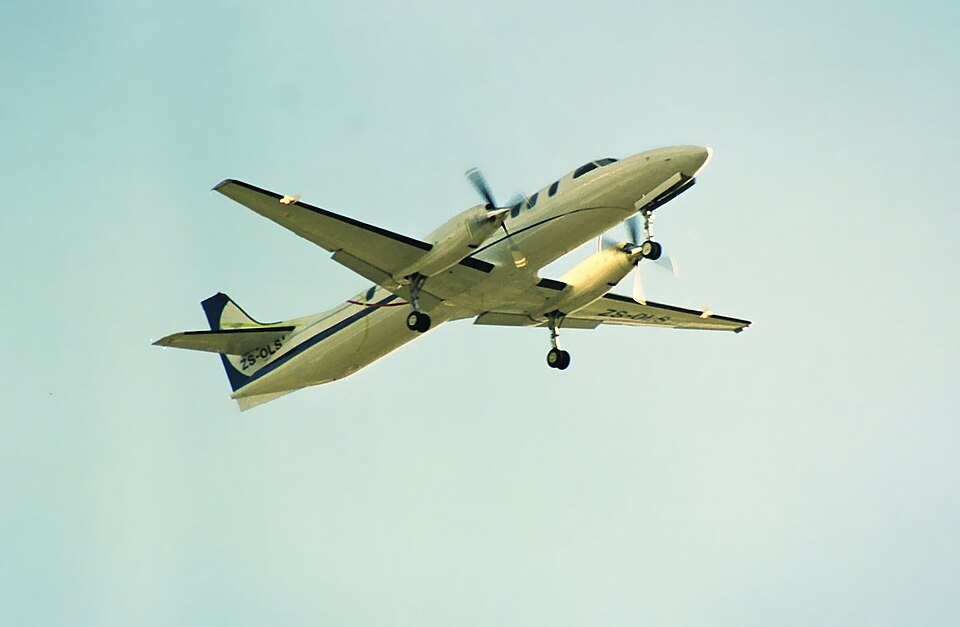
Accident Details
The aircraft was operating a domestic charter flight under Instrument Flight Rules (IFR) from Bloemfontein Aerodrome to George Aerodrome. As the crew prepared for landing on Runway 11 via an ILS approach, the flying pilot (the copilot) was conducting the approach with the undercarriage down, full flaps, and an indicated airspeed of 120 knots at approximately 1,000 feet from the threshold. The pilot-in-command advised the copilot to continue visually with the approach. Shortly thereafter, a loud impact sound was heard, and the right-hand engine failed. The aircraft yawed and banked severely to the right. The copilot stated that a bird strike had occurred on the right engine.
Emergency Response
The pilot-in-command immediately assumed control and attempted to arrest the yaw, but the aircraft continued to yaw right. He made a blind transmission on frequency 118.9 MHz and called for a go-around. The copilot then selected full power on both engines and retracted the undercarriage, while the pilot-in-command feathered the right-hand propeller. Despite these actions, the aircraft continued yawing to the right. With the stall warning sounding and a loss of altitude, the pilot-in-command pulled the left-hand engine stop and feather control, committing to a forced landing on a cattle farm. The aircraft was approximately just outside the boundary fence when both wings collided with gum poles of a telephone and wire fence, causing extensive damage to the wings and fuselage undersurface.
Aftermath
Both occupants sustained no injuries.
Probable Cause
The official investigation determined that the aircraft encountered a bird strike on the right-hand engine prior to landing at George Aerodrome. It appears that the cockpit crew did not apply the correct procedures for a go-around when the aircraft yawed severely to the right. The aircraft failed to climb, and a forced landing was executed.