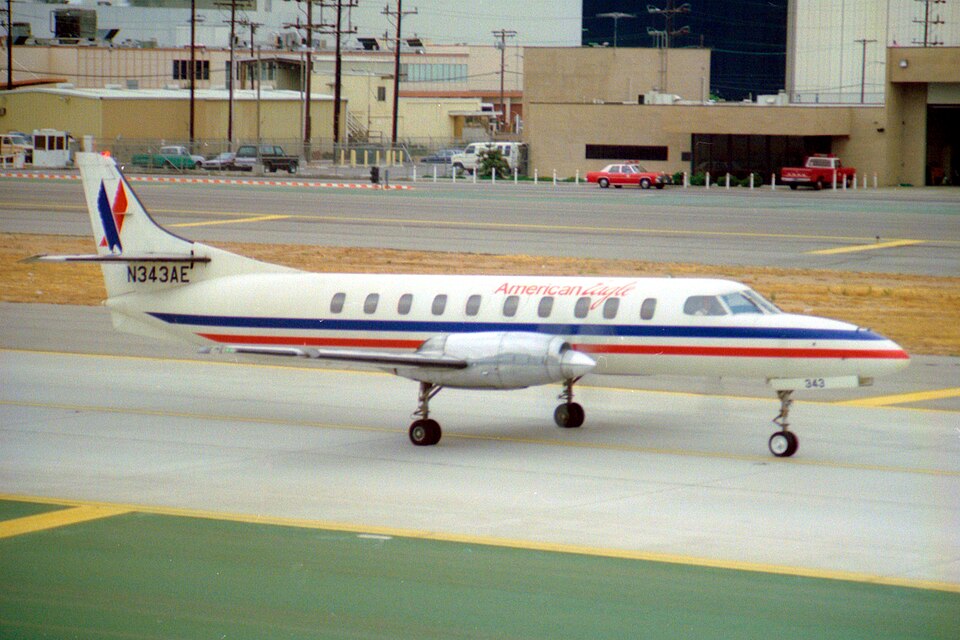
Accident Sequence
During the after-start checklist, the captain moved the power levers to disengage the start locks on the propellers. Post-accident examination revealed that the left propeller was still in the start lock position, while the right propeller was in the normal operating range. The captain was the pilot flying (PF), and the second-in-command (SIC) was the non-flying pilot (NFP).
After receiving clearance, the PF taxied onto the runway and initiated the takeoff sequence. The SIC did not set and monitor engine power during takeoff, as required by company procedures. During the takeoff acceleration, when the airspeed was between 40 and 60 knots, the captain released the nose gear steering control switch as the rudder became aerodynamically effective. Upon release, the airplane immediately began veering left due to the asymmetrical thrust between the left and right engine propellers.
The PIC did not advise the SIC that he had lost directional control and was aborting the takeoff, as required by company procedures. The distance from the start of the takeoff roll to where the first tire marks became apparent was about 630 feet. From those first marks to where the left main landing gear tire marks exited the left side of the runway was about 220 feet. Thereafter, depressions in the dirt were noted for 108 feet in the adjacent field. Medium-intensity tire tread marks were apparent on the parallel taxiway and the adjacent vehicle service road over a 332-foot distance, leading to the accident airplane's landing gear tires.
Based on tire tracks and skid marks, the PIC did not reject the takeoff until the airplane approached the runway's edge and continued diverging from the centerline. The airplane rolled across the runway, through a dirt median, and across a taxiway for 850 feet before the PIC applied moderate brakes. Evidence of heavier brake application appeared only a few hundred feet from the impacted hangar.
Findings
No evidence of pre-impact mechanical failures or malfunctions was found with the propeller assemblies, nose wheel steering mechanism, or brakes. The asymmetrical thrust resulted from the left propeller remaining in the start lock position while the right propeller was in normal range. The crew did not follow company procedures for setting and monitoring engine power during takeoff, nor did they communicate the rejected takeoff as required.
Probable Cause
The pilot-in-command's failure to maintain directional control during the rejected takeoff. The loss of directional control was caused by the crew's failure to follow prescribed pre-takeoff and takeoff checklist procedures to ensure both propellers were out of the start locks. Contributing factors were the failure of the crew to follow normal company procedures during takeoff, the failure of the flightcrew to recognize an abnormal propeller condition during takeoff, and a lack of crew coordination in performing a rejected takeoff.