Background
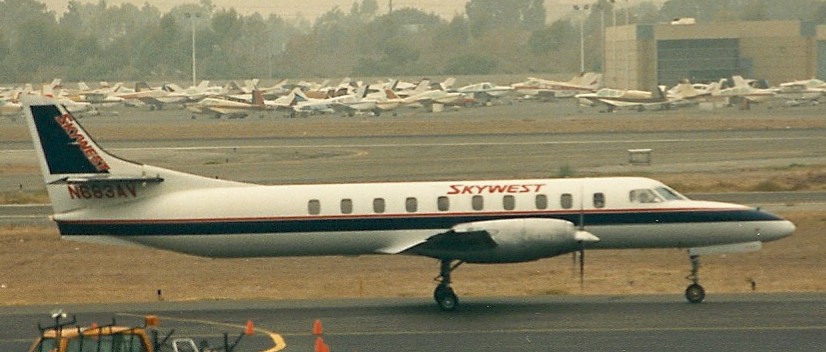
On the day of the incident, SkyWest flight SKW5569, operating as N683AV, had been cleared to runway 24L at intersection 45 to position and hold. The local controller, due to preoccupation with another aircraft, forgot that SKW5569 was on the runway. Subsequently, she cleared USAir flight US1493, operating as N388US, to land on the same runway.
Incident
After the collision, both aircraft slid off the runway into an unoccupied fire station. The tower operating procedures at the time did not require flight progress strips to be processed through the local ground control position. Because the strip for SKW5569 was not present at the local controller's position, she misidentified an aircraft and issued the landing clearance.
Investigation
Investigators found that the technical appraisal program for air traffic controllers was not being fully utilized. This was due to a lack of understanding by supervisors and the unavailability of appraisal histories.
Probable Cause
The probable cause, as determined by the official investigation, was the failure of the Los Angeles air traffic facility management to implement procedures that provided redundancy comparable to the requirements contained in the national operational position standards, and the failure of the FAA Air Traffic Service to provide adequate policy direction and oversight to its air traffic control facility managers. These failures created an environment in the Los Angeles air traffic control tower that ultimately led to the failure of the local controller 2 (LC2) to maintain an awareness of the traffic situation, culminating in the inappropriate clearances and the subsequent collision of the USAir and SkyWest aircraft. Contributing to the cause of the accident was the failure of the FAA to provide effective quality assurance of the ATC system.