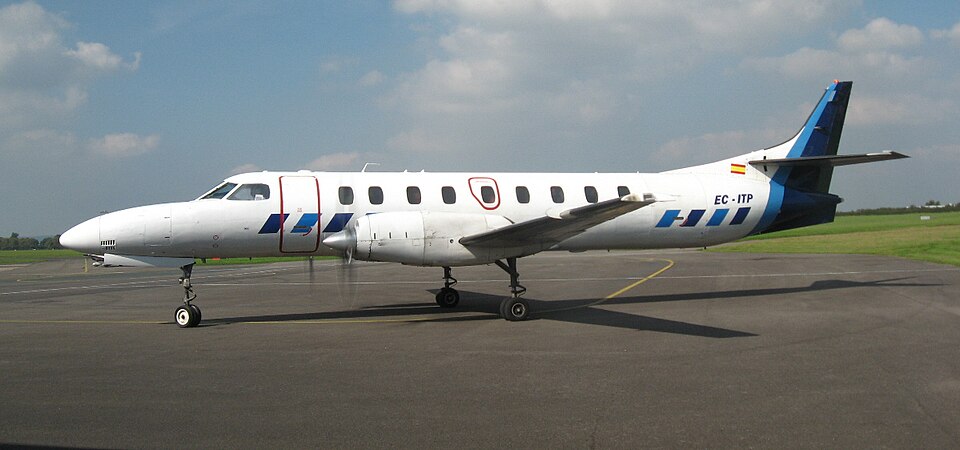
Accident Sequence
The aircraft departed Belfast City Airport (EGAC) on an international scheduled passenger service to Cork Airport (EICK). Low Visibility Procedures (LVP) were in operation at the destination. The aircraft conducted two ILS approaches to Runway 17, each followed by a missed approach. After entering a holding pattern, a third ILS approach was initiated. The approach was continued below Decision Height (200 ft) and a missed approach was then initiated. As the aircraft neared the runway threshold, it rolled left, then rapidly rolled right, causing the right wingtip to contact the runway surface. The aircraft continued to roll and impacted the runway in a fully inverted position. It departed the runway to the right and came to rest in soft ground. A significant quantity of mud entered the aircraft through a fracture in the roof, partially filling the cabin.
Injuries and Damage
Six persons, including both flight crew members, were fatally injured. Four individuals sustained serious injuries, and two received minor injuries. The propeller blades on both engines were severely damaged; three of the four propeller blades on the right-hand engine detached during the impact. Fire occurred in both engines after impact and was extinguished expeditiously by the Airport Fire Service.
Probable Cause
The official investigation determined the probable cause was loss of control during an attempted go-around initiated below Decision Height (200 feet) in Instrument Meteorological Conditions. Significant factors considered included: the approach continued in poor visibility below required conditions; descent continued below Decision Height without adequate visual reference; uncoordinated operation of flight and engine controls during the go-around; the engine power-levers were retarded below the normal in-flight operational range, an action prohibited in flight; a power difference between engines became significant when power levers were retarded below the normal in-flight range; tiredness and fatigue on the part of the flight crew; inadequate command training and checking; inappropriate pairing of flight crew members; and inadequate oversight of the remote operation by the operator and the state of the operator.