Incident Description
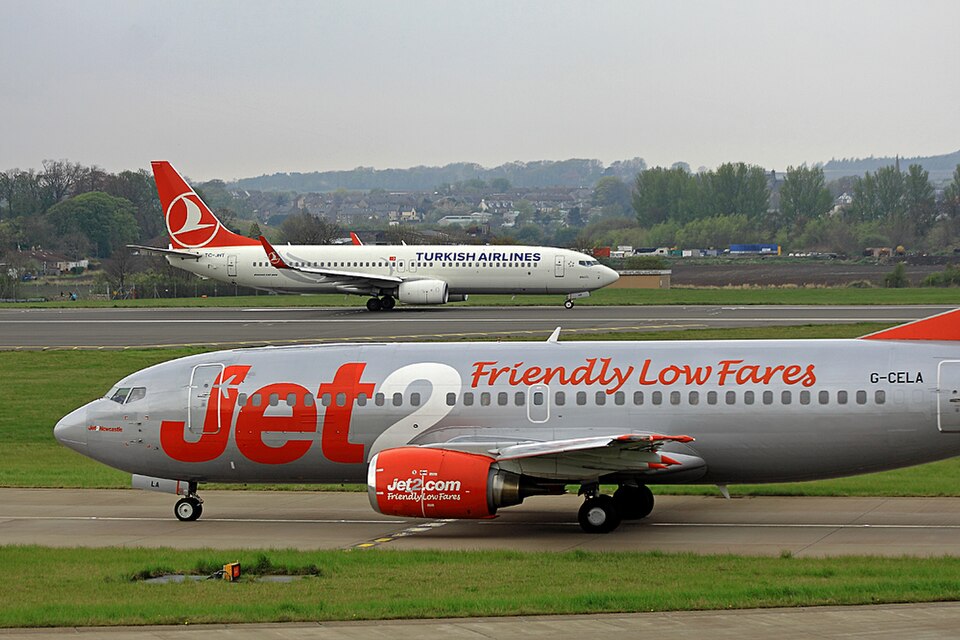
On 17 September 2023, at 16:23 UTC, a Boeing 737-800 (registration TC-JHT, serial number 42001) operated by Turkish Airlines (THY A.O.) as flight TK-2578 from Istanbul Airport (LTFM) to Denizli Çardak Airport (LTAY) was involved in a serious incident during landing. The aircraft, owned by Mercury Aircraft Leasing LLC, was on a scheduled passenger flight with two pilots, three cabin crew, and 151 passengers. No injuries or fatalities occurred.
Aircraft and Crew Information
The aircraft was a Boeing 737-8F2 type. The flight crew consisted of a captain (born 1987, ATPL, total flight hours 5991:49) and a first officer (born 1988, ATPL, total flight hours not fully recorded in the report). Both held valid licenses and medical certificates.
Sequence of Events
The flight was planned to land on runway 23, but during en route, Ankara ATC informed the crew that runway 05 was active. During approach, Denizli tower advised that the hook barrier was present at the runway threshold. After intercepting runway 05, the hook barrier became visible, but its marker lights were reported inoperative. The approach was stable. The Pilot Flying (PF) had not previously landed on a runway with a hook barrier, and this was discussed during the approach briefing.
The aircraft crossed the runway threshold at 49 feet radio altitude. To land behind the hook barrier, the crew reduced the descent rate and advanced the thrust levers. The first touchdown occurred behind the barrier at 1.85g, followed by a second touchdown at 2.95g. After the first touchdown, both pilots manipulated the controls and thrust levers, leading to confusion of PF and Pilot Monitoring (PM) roles. The captain took over control after the second touchdown and initiated a go-around. During the rotation, the tail and fuselage made contact with the runway surface. The crew became aware of the damage only after parking.
Damage
The aircraft sustained minor damage. Inspection revealed abrasions on the tail section from runway contact and damage to the tail cone skin. The damage was classified as minor according to regulation.
Additional Information
Cabin crew reported two hard landings and subsequent go-around, but no unusual sounds were heard. After de-boarding, the captain briefed the cabin about the situation. The aircraft was taken for maintenance at Denizli Çardak Airport.