What happened
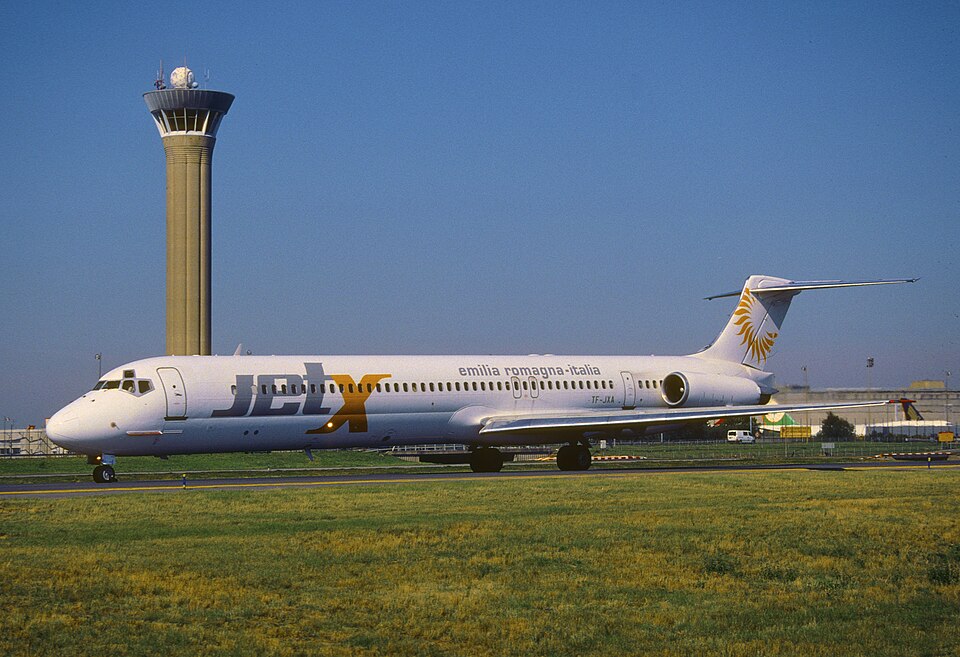
On May 8, 2004, an MD-82, registration TF-JXA, operated by an Icelandic carrier on behalf of an Italian operator, experienced a serious technical issue during takeoff from Catania Fontanarossa. While the takeoff roll proceeded normally, the aircraft exhibited a pronounced tendency to roll and yaw to the right immediately after liftoff.
The flight crew promptly corrected the directional deviation but identified a severe fuel imbalance between the wing tanks. To manage the situation, the crew decided to abort the flight to Milan Linate and return to Catania. During the approach, the crew extended the landing gear to increase aerodynamic drag, aiming to accelerate fuel consumption and restore lateral balance. As a precaution, the crew instructed the cabin crew to prepare passengers for a potential emergency evacuation or ditching, and life jackets were distributed. After approximately 54 minutes of flight, the imbalance was reduced to within manufacturer limits, and the aircraft landed safely.
The investigation
The ANSV investigation focused on the refueling process and the crew's pre-flight checks. It was noted that the aircraft had been refueled manually by a fuel truck operator. While the crew performed their standard checklists, they did not identify any anomalies in the fuel quantity indicators.
Post-event maintenance inspections revealed that the left tank's fill valve was experiencing intermittent resistance, or a "sticky" movement, which had temporarily hindered proper fuel distribution. The investigation also examined the organizational context, noting that the flight was part of a short-notice wet lease arrangement. The investigation found that the refueling operation was conducted without direct supervision from the commander or qualified technical personnel, and the commander failed to verify that the fuel totals on the refueling vehicle matched the aircraft's onboard gauges.
Findings
- The primary cause of the event was a severe fuel imbalance of approximately 2,400 kg between the wing tanks, far exceeding the manufacturer's maximum limit of 680 kg.
- The imbalance occurred during refueling due to a momentary malfunction of the fuel system, specifically a sticking fill valve.
- The imbalance went undetected because the commander did not supervise the refueling process as required by company manuals.
- The crew failed to perform adequate cross-checks between the refueling truck's totals and the aircraft's fuel gauges.
- There was insufficient coordination and integration between the pilots during the execution of the pre-flight checklists.
- The lack of qualified technical personnel to oversee the refueling contributed to the failure to identify the distribution error.