Incident Overview
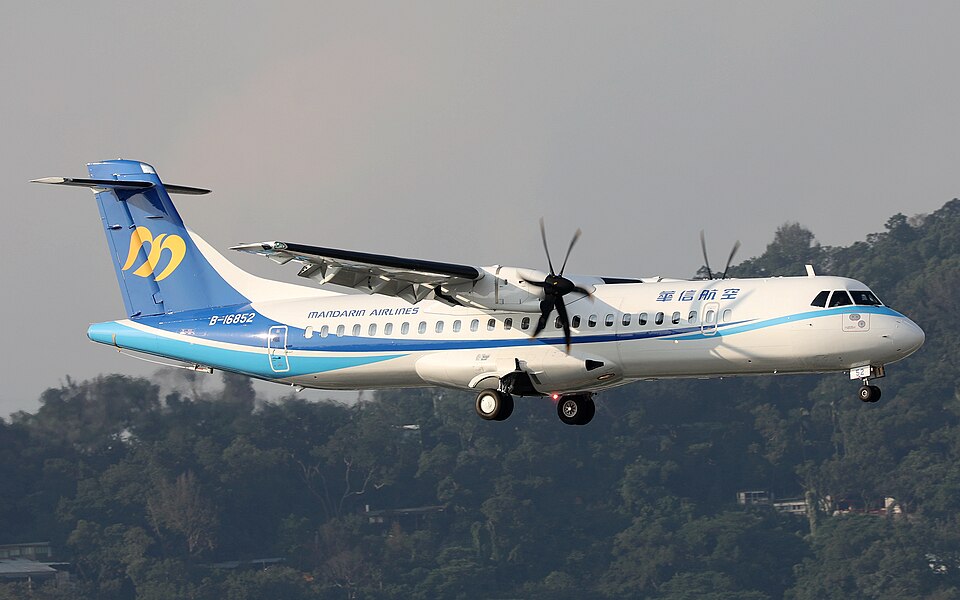
On 22 August 2018, Mandarin Airlines flight AE788, an ATR72-212A aircraft registered as B-16852, departed from Penghu Airport bound for Taichung/Ching Chuan Kang Airport. The flight carried two pilots, two cabin crew members, and 70 passengers, totaling 74 occupants. At approximately 1928 local time, the aircraft landed on runway 36. During the landing roll, it veered off the paved surface and struck three runway edge lights, causing damage to the aircraft and the lights. No injuries were reported among occupants.
Flight Crew and Conditions
The flight crew consisted of a captain and a first officer. Both held valid medical and pilot certificates. The investigation found no evidence of impairment from drugs, alcohol, or fatigue affecting their performance during the 72 hours prior to the accident. Weather conditions at the time included rain and reduced visibility. The airport's automated weather observation system recorded wind and visibility data, but the specific values are not detailed in the report.
Accident Sequence
According to flight data recorder and cockpit voice recorder analysis, the aircraft was on an instrument landing system (ILS) approach to runway 36. The first officer was the pilot flying (PF) during the approach and landing. The captain was the pilot monitoring (PM). The autopilot was engaged during the initial approach but was disconnected by the crew before touchdown. After disengagement, the aircraft began to drift left of the runway centerline. The PF did not adequately correct the lateral deviation. The aircraft touched down near the left edge of the runway and continued to veer left. The captain intervened to correct the path, but the correction was insufficient, and the aircraft exited the runway surface, striking runway edge lights.
Investigation Findings
The investigation, conducted by the Taiwan Transportation Safety Board (TTSB), identified several findings related to the probable cause and contributing risks:
- Probable Cause Findings:
- The flight crew did not comply with Mandarin Airlines' flight operations manual regarding visibility minima for first officer landings. The first officer conducted the landing when visibility did not meet the required criteria.
- After disengaging the autopilot, the PF failed to maintain proper lateral control, allowing the aircraft to drift left of the centerline without correction.
- The captain permitted a large lateral deviation, reducing safety margins. Due to rain impairing visibility, the captain's late intervention could not prevent the excursion.
- Risk-Related Findings:
- Prior to descent, the PF conducted an approach briefing that omitted evaluation of weather threats such as heavy rain, thunderstorms, and low visibility, as required by the company's CFIT/ALAR prevention checklist.
- The runway edge light bases within the runway strip had holes and hard concrete structures, increasing the potential for aircraft damage during an excursion.
- Other Findings:
- Runway 36 was a Category I precision approach runway without centerline lights, which was compliant with regulations but contrary to recommendations that suggest them for edge light spacing exceeding 50 meters.
- The average transverse slope of the runway was 0.53%, below the recommended 1% to 1.5%.
- Recent friction tests before and after the accident met applicable standards.
- Aircraft maintenance records showed no abnormalities related to direction control systems in the three months prior.
Conclusion
The Taiwan Transportation Safety Board issued the final report on August 21, 2019, with seven safety recommendations addressed to Mandarin Airlines, the Civil Aeronautics Administration, and the Air Force Command of the Ministry of National Defense. The recommendations include improving crew adherence to procedures, enhancing runway area inspections, and considering the installation of centerline lights and improved transverse slopes at Taichung Airport.