What happened
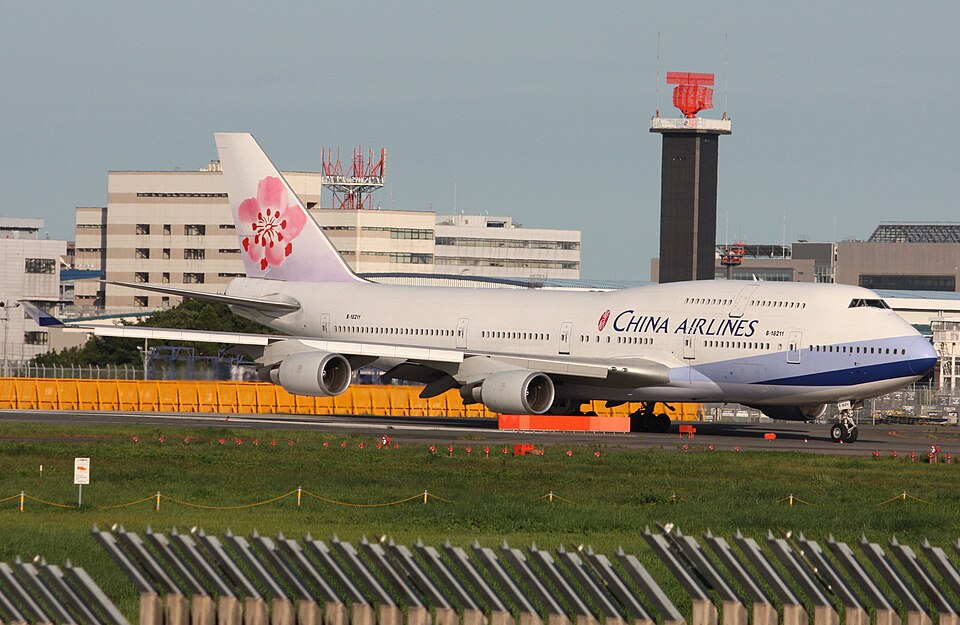
On March 9, 2019, a China Airlines Boeing 747-400, registration B-18211, departed Taiwan Taoyuan International Airport for Naha International Airport, Japan. The flight, CI122, was carrying 361 passengers and 20 crew members.
During the initial departure from Taoyuan, an unexpected runway closure due to pavement damage necessitated a change in taxi route, resulting in an unplanned fuel consumption increase of approximately 1,220 lbs. Upon arrival at Naha, heavy rain and low visibility led to two separate go-around maneuvers. The first attempt at runway 18 was aborted because the aircraft was too high on the glide path. The second attempt was aborted because the descent rate exceeded stable approach criteria.
Following the second go-around, the flight crew decided to divert back to Taoyuan. During the transit, the crew declared a fuel emergency (mayday fuel) to Kobe Area Control Center at 19:54. As the aircraft approached Taipei, the cockpit triggered a "Fuel QTY Low" warning at 20:51, indicating remaining fuel had dropped to approximately 8,000 lbs. The aircraft eventually landed on runway 05L at Taoyuan at 21:01 with approximately 6,800 lbs of fuel remaining, which was below the required final reserve fuel of 7,975 lbs. There were no injuries or damage to the aircraft.
The investigation
The Taiwan Transportation Safety Board (TTSB) examined the flight data, cockpit voice recordings, and air traffic control communications. The investigation reviewed the flight crew's training records, medical fitness, and the aircraft's maintenance and fuel systems. The investigation also analyzed the air traffic control handovers between Kobe and Taipei centers, specifically noting a communication difficulty where the "mayday fuel" declaration was initially misunderstood by Taipei controllers as a standard "low fuel" status due to accent differences.
Findings
- The aircraft landed with fuel levels below the minimum final reserve due to a combination of factors: increased ground taxi time at Taoyran, two go-arounds at Naha Airport, and specific air traffic control characteristics.
- The flight crew maintained valid certifications and followed all company and regulatory procedures regarding flight operations and fuel management.
- The weather conditions at the time of the incidents were within the operational limits for the aircraft type.
- A communication gap occurred during the handover between Kobe and Taipei controllers, where the severity of the fuel situation was initially miscommunicated.