Flight Details
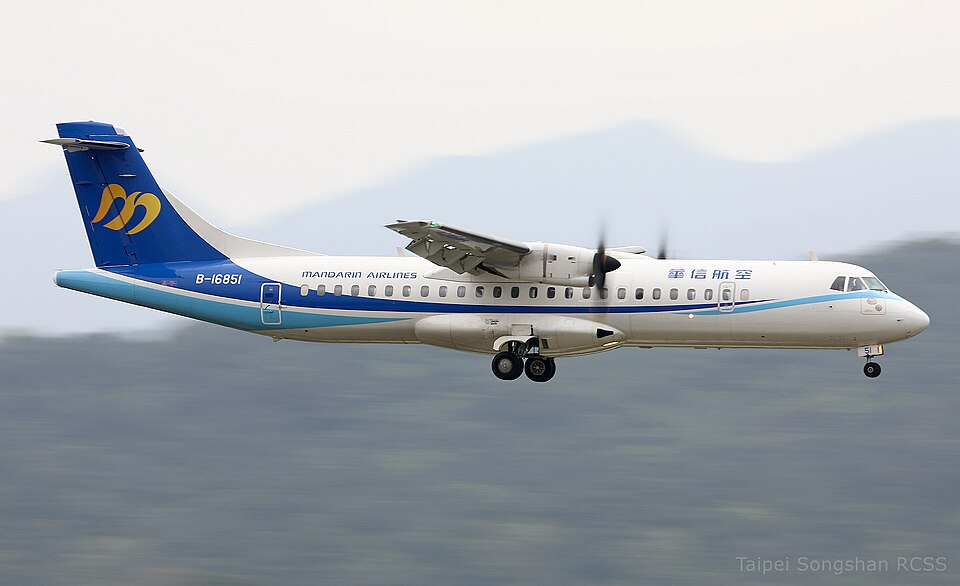
On May 2, 2019, Mandarin Airlines flight AE7931, an ATR72-212A (registered B-16851), departed Kaohsiung International Airport at 1432 local time for a scheduled flight to Hualien Airport. The aircraft carried 2 pilots, 2 cabin crew, 1 mechanic, and 48 passengers, totaling 53 occupants.
Incident Sequence
During the descent from cruise flight level 130, the master caution and master warning activated. At 1504:04, the engine warning display showed a "CAB ALT" caution, followed by an "EXCESS CAB ALT" warning at 1504:17. The crew donned oxygen masks and declared a mayday to Taipei Approach at 1504:40. The cabin altitude peaked at 10,241 feet at 1504:45, then began decreasing. The warning cleared at 1505:19. The crew descended to 5,000 feet and later requested an instrument landing system approach to Hualien's runway 03, landing at 1528 without further incident.
Aircraft Information
The aircraft was an ATR72-212A, equipped with Pratt & Whitney Canada engines. The air conditioning system includes a ground check valve that prevents loss of pressurization when external air conditioning carts are connected. This valve was found to have a broken spring, likely preventing it from remaining fully closed.
Investigation Findings
The Taiwan Transportation Safety Board (TTSB) investigated. The probable cause was determined to be a failed air conditioning ground check valve that could not maintain its closed position, allowing cabin air to escape to the outside atmosphere. During descent, reduced engine thrust lowered airflow, and the unclosed valve prevented the pressurization system from maintaining proper cabin pressure, triggering the warnings.
Prior to the incident, Mandarin Airlines had not evaluated the manufacturer's Retrofit Information Letter (RIL-2018-03) to replace the valve with an improved design. Maintenance check sheets lacked instructions to verify the valve position after using external air conditioning carts. During cruise at flight level 130, the cabin altitude gradually rose from about 2,000 feet to 8,000 feet, but the flight crew did not detect this anomaly.
No other aircraft systems or engines were found abnormal. The crew held valid licenses and medical certificates, and no alcohol factors were identified.