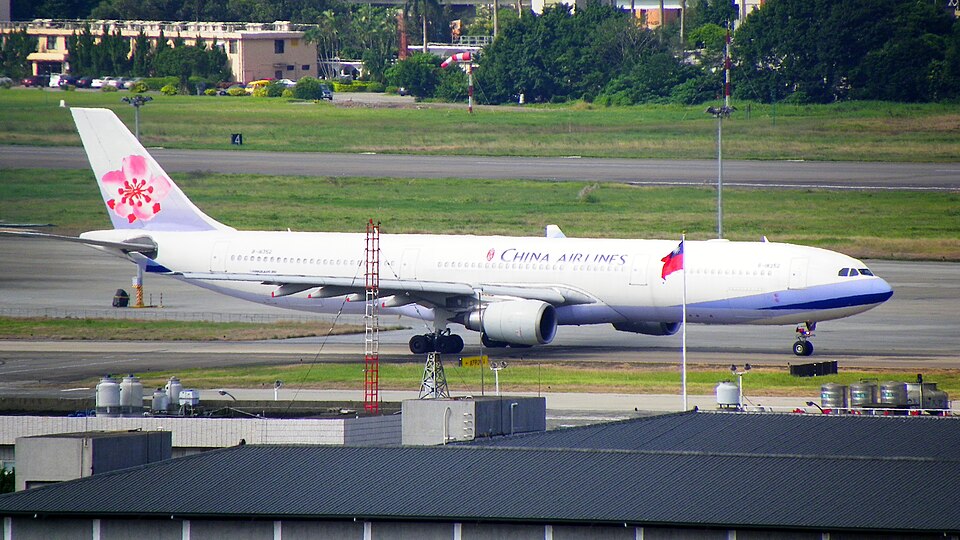
Incident Summary
On May 30, 2019, China Airlines flight CI922, an Airbus A330-302 (registration B-18352), departed Hong Kong International Airport at 08:36 local time for Taipei Taoyuan International Airport. The aircraft carried 2 flight crew, 10 cabin crew, and 243 passengers. During climb, at approximately 88 nautical miles southeast of Hong Kong and passing through 26,672 feet, the left engine (No. 1) experienced high vibrations, which were followed by a fire warning. The flight crew declared an emergency, performed abnormal procedures, and turned back to Hong Kong. The aircraft landed safely on runway 07L at 09:31 without further incident. No injuries were reported.
Investigation Findings
The Taiwan Transportation Safety Board (TTSB) conducted the investigation with participation from the NTSB, BEA, Airbus, GE Aviation, China Airlines, and the Taiwan CAA. The final report identified the probable cause as the misassembly of the No. 4R stationary air/oil seal during the last shop visit for performance restoration. The incorrectly seated seal caused ovalization, reducing clearance between stationary and rotating seals, leading to overheating, deformation, and severe damage. Liberated debris impacted the rotating vent seal, allowing high-pressure, high-temperature air to enter sump cavities and cause an oil auto-ignition fire. The fire burned through tubes, leading to engine compartment overheat and fire.
The report also noted risk-related findings: installation of the seal without using the prescribed gage fixture compromised clearance; an alternative installation method deviated from the effective manual revision but was accepted by GE Aviation; the operator's work card did not fully reflect recommended procedures; and the operator did not acquire the necessary tool in a timely manner.
Other findings confirmed that the flight crew were properly certified, trained, and rested. No medical or alcohol issues were found. Maintenance records showed no anomalies in parts, mechanic qualifications, tool calibrations, or seal measurements, though work was performed per a previous revision of the process accepted by GE Aviation.
Safety Actions
In response, GE Aviation revised the engine shop manual to mandate use of gage fixture 2C18118G01 and added caution notes. Field communications enforced the requirement. China Airlines implemented interim measures until obtaining the tool, including checking seal seating with a shim and performing runout measurements. In late 2019, China Airlines rented the gage fixture and updated procedures. In late 2020, they found the purchased tool exceeded specifications and reported it to the manufacturer, who provided an alternative.