Ultralight Crash in Chonburi Kills Pilot Due to Wing Fabric Failure
An X-AIR HAWK ultralight crashed in Chonburi, Thailand, killing the pilot and injuring a passenger. The accident was caused by deteriorated wing fabric and…
On June 3, 1973, a Tupolev TU-144 (registration CCCP-77102) operated by Tupolev Industries - GKAP Tupolev OKB was involved in an aviation accident near Goussainville, France in flight. 14 people were killed. Investigators recorded the probable cause as: The final report concluded that no anomaly was found in the construction or operation of the aircraft, making human intervention the most probable cause. This summary draws on records from the Bureau of Aircraft Accidents Archives (B3A).
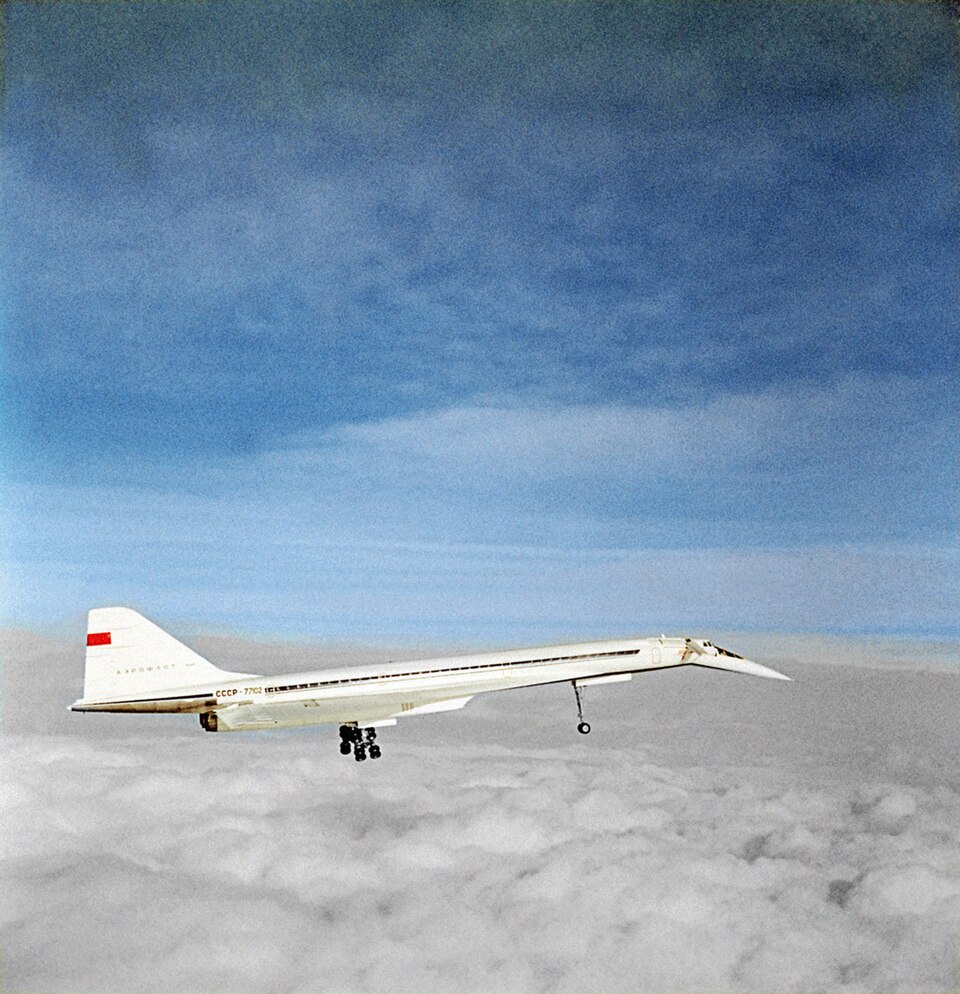
A Tupolev TU-144 disintegrated during a demonstration at the 1974 Paris Air Show after a structural failure, killing 14 people and injuring 28 others.
The final report concluded that no anomaly was found in the construction or operation of the aircraft, making human intervention the most probable cause. Investigations revealed that a French Air Force Mirage III fighter, tasked with taking aerial photos, was positioned about 200 meters above and slightly ahead of the Tupolev. The presence of the fighter likely distracted the Tupolev crew, who perceived the separation distance as insufficient. When the Mirage turned left, it appeared larger to the Tupolev crew, prompting the pilot-in-command to execute a maneuver to avoid a collision. This maneuver resulted in a negative aerodynamic force of one g. The Tupolev TU-144 was designed to support positive forces of five to seven g but only a negative force of one g. Reaching this limit caused a structural failure on the left wing, leading to the aircraft rolling onto its back, breaking in two, and exploding. It was later confirmed that a collision was impossible given the actual positions of the aircraft.
An X-AIR HAWK ultralight crashed in Chonburi, Thailand, killing the pilot and injuring a passenger. The accident was caused by deteriorated wing fabric and…
A Challenger II Special ultralight aircraft (U-B23) landed off-runway at Pai Airport, Mae Hong Son, on September 17, 2024, due to a gust of wind. No injuries…
The Polish aviation safety authority is investigating a serious incident involving an AT-3R100 aircraft that occurred on September 2, 2024. The investigation…
A SZD-48-3 glider suffered damage when its left wing struck a ground obstacle during a low final approach at EPWK on June 20, 2025. The pilot was uninjured.
A 39-year-old skydiver died after a hard landing near Leszno on May 1, 2026. The PKBWL preliminary report indicates the fatal impact resulted from a late,…
A student pilot crashed an SZD-50-3 Puchacz glider into the airfield fence during a solo training flight on June 6, 2026. The pilot was uninjured, but the…