Casualties unknown

L410 UVP-E9 OK-RDA Incident After Takeoff from Isle of Man

Isle of Man, CZ

On October 18, 2012, a L 410 UVP - E9 (registration OK-RDA) was involved in an aviation accident near Isle of Man, CZ. Investigators recorded the probable cause as: The incident was caused by an operational failure of the right engine, resulting from a fragment of a retaining ring entering the inlet of the oil scavenge pump and interrupting oil circulation in the engine’s oil system. This summary draws on records from the Czech Air Accidents Investigation Institute (UZPLN).
Sourcesthe Czech Air Accidents Investigation Institute (UZPLN)Primary reportUpdated 2026-09-13Data APIEditorial standards
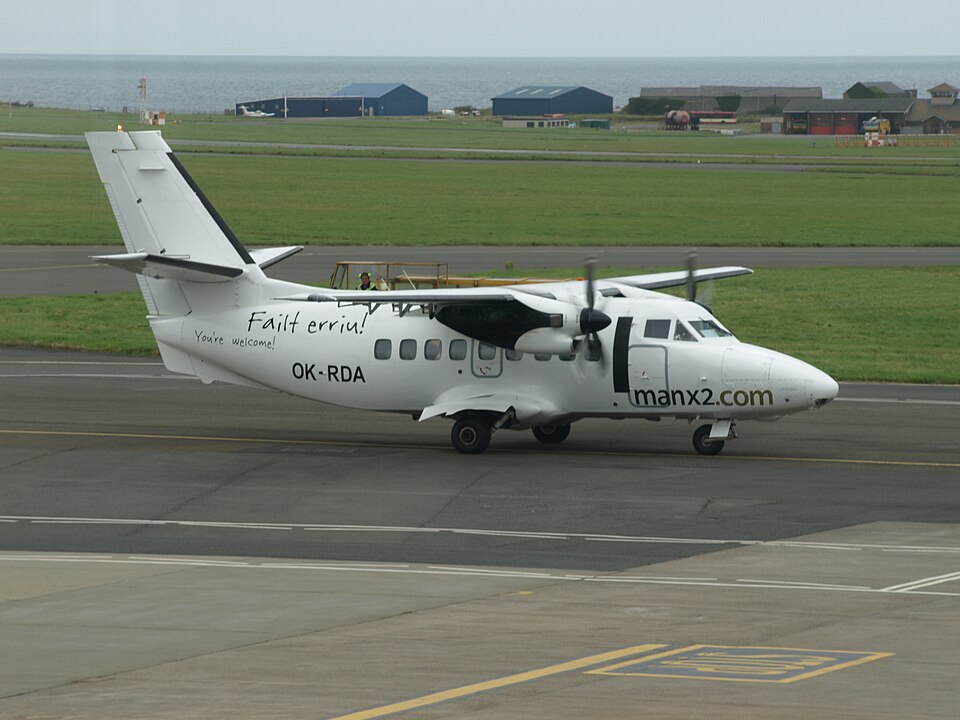
Aircraft registered OK-RDA
Aircraft registered OK-RDA. Photo: Andrewrabbott / CC BY-SA 3.0, via Wikimedia Commons

On 18 October 2012, an L410 UVP-E9 (OK-RDA) operated by VAN AIR Europe experienced a right-engine oil-pressure loss and rising turbine temperatures after takeoff from Ronaldsway, Isle of Man. The crew shut down the engine and landed safely with no injuries or damage.

Overview and Flight Details On 18 October 2012, a LET L410 UVP-E9 with registration OK-RDA, operated by VAN AIR Europe a.s., departed Ronaldsway Airport (EGNS) on the Isle of Man for Newcastle (EGNT). The takeoff began at 13:00 UTC. Approximately ten minutes after takeoff, the crew received an indication of low oil pressure on the right engine, followed by rising temperatures between the turbines on that engine. The flight crew assessed the condition as critical and, in accordance with operating procedures, shut down the right engine and returned to the departure airport. The crew notified air traffic control at the Isle of Man. The aircraft landed in a normal approach configuration with one inoperative engine. No injuries were reported among the two crew members and eight passengers, and the aircraft was not damaged. ## Aircraft and Engine Findings The aircraft was a twin-engine turboprop designed for 19 passengers, powered by two Walter M601E engines and Avia V510 propellers. It had a total time of 9,944 hours 40 minutes and 13,167 cycles. The right engine, a Walter M601E serial number 871034, had 3,096 hours 45 minutes total time and 602 hours 45 minutes since the last general overhaul. After landing, the engine was removed and sent for expert examination. The expert examination found damage to the engine’s main bearing and a broken torsion shaft in the drive of the oil scavenge pump. A foreign object, identified as a fragment of a retaining ring, was found in the inlet of the scavenge pump. Further inspection matched the fragment to a missing part of a retaining ring. Metallographic analysis did not confirm a material defect in the retaining ring. The rest of the engine showed normal operational wear. ## Analysis and Conclusions The investigation concluded that the fragment of the retaining ring entered the inlet of the oil scavenge pump, causing the pump’s torsion shaft to twist and interrupt oil circulation in the engine’s oil system. This resulted in the low oil-pressure indication on the right engine. Insufficient oil circulation caused the main bearing to seize and the temperatures between the turbines to rise. The flight crew was qualified, the aircraft was airworthy and maintained according to applicable procedures, and the crew responded in line with the operator’s procedures. The event was classified as an incident of technical origin. ## Safety Recommendations The report recommended that the engine manufacturer, together with the sub-supplier of the drive housing, take effective measures to prevent repeated failure of the retaining ring during assembly of the M601-5.6.SP922/89 drive housing components. It also recommended that the engine manufacturer inform M601 users through its own information system and implement a service bulletin to modify the inspection technology for oil filters in the drive housing.

Probable cause

The incident was caused by an operational failure of the right engine, resulting from a fragment of a retaining ring entering the inlet of the oil scavenge pump and interrupting oil circulation in the engine’s oil system.

Investigation report by the Czech Air Accidents Investigation Institute (UZPLN). Original record: https://uzpln.gov.cz/incident/313. This page is a structured re-presentation; facts and quotes are in the Ustav pro odborne zjistovani pricin leteckych nehod (UZPLN), Czech Republic.