Introduction
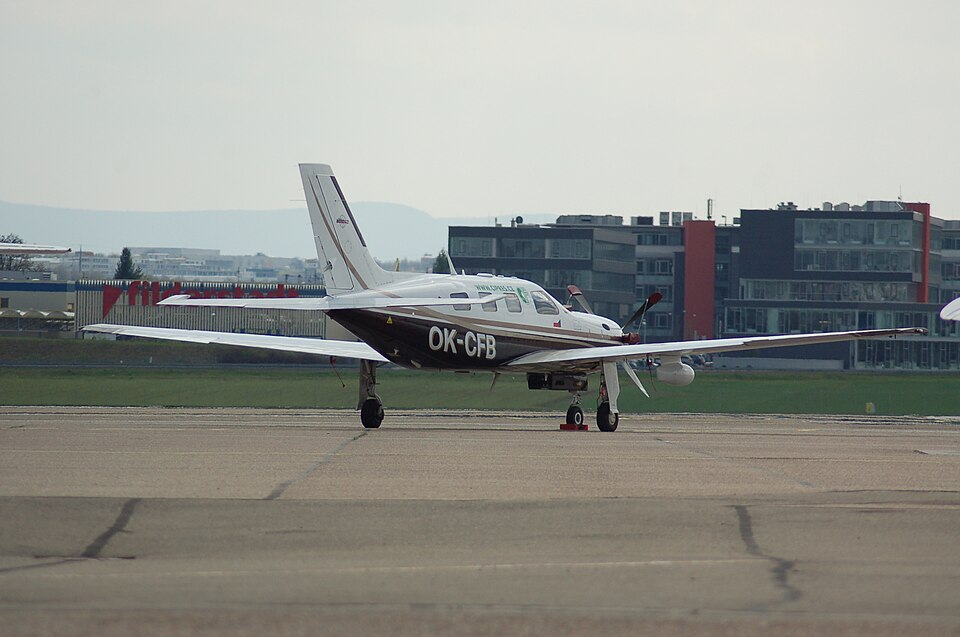
On 25 February 2013, a non-commercial flight involving a Piper PA-46-500TP (Meridian) ended in a hard landing at Příbram Airport (LKPM). The aircraft, registration OK-CFB, was operated by a private individual. The pilot reported a subjective decrease in engine thrust shortly after rotation, prompting a decision to land straight ahead on the remaining runway surface. The event was classified as an accident and investigated by the Czech Accident Investigation Institute (ÚZPLN).
Aircraft and Crew
The aircraft was a 2000-model Piper PA-46-500TP, a single-engine turboprop with retractable tricycle landing gear, powered by a Pratt & Whitney PT6A-42A engine and a four-blade Hartzell propeller. It had accumulated 1,336 hours total time. The pilot, aged 53, held a private pilot license (PPL(A)) with type rating for PA46/IR and various class ratings. His total flight experience was 2,097 hours, with 57 hours on type. Three passengers were on board: one man with aviation qualifications and two foreign nationals without pilot licenses.
Accident Sequence
On the morning of 25 February, the pilot arranged for snow clearing of a 24 by 1000 meter strip and two taxiways. After preflight inspection, the pilot and passengers boarded. The pilot occupied the left seat; a passenger sat in the right front seat. Engine start and taxi were normal. The takeoff was initiated from runway 06R. The pilot stated that acceleration was normal up to rotation speed (78 knots) with a 3° climb attitude. Shortly after lift-off, at about 5 meters above ground, the pilot sensed insufficient thrust; the aircraft stopped climbing and accelerating. A stall warning sounded. The pilot decided to land straight ahead on the runway, which was covered with wet snow beyond the cleared section. The aircraft touched down hard, causing the nose gear to collapse rearward and jam in its bay. The rotating propeller struck the ground. After sliding about 150 meters, the aircraft turned 180° and came to rest facing approximately 070°.
Damage
Damage was concentrated in the forward section. The propeller was destroyed, the engine was damaged, and all landing gear and the wing center section were deformed. The runway and airport equipment were not damaged.
Aftermath
The pilot and three passengers evacuated through the normal door without injury. One male passenger and the female passenger left the airport; the pilot remained with the aircraft. The airport manager reported the occurrence to the police and the accident investigation institute.