Incident Overview
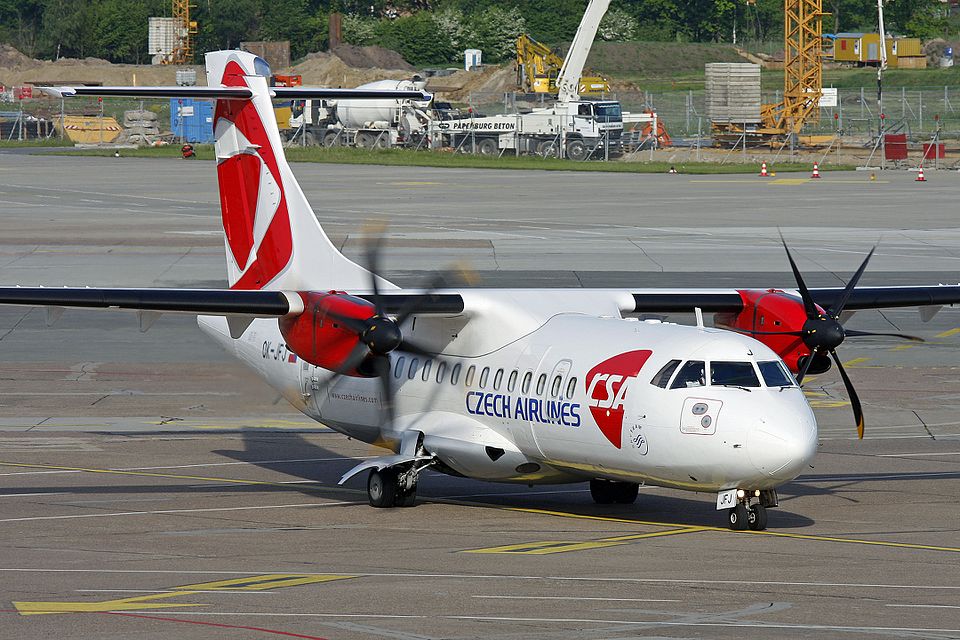
On October 31, 2012, an ATR 42-500 aircraft with registration OK-JFJ was involved in a serious incident while operating under the authority of Czech Airlines (České aerolinie, a.s.). The event occurred during a delivery and test flight conducted within the Prague Flight Information Region (FIR). The investigation was carried out by the Institute for Professional Investigation of Causes of Aviation Accidents (ÚZPLN) in accordance with EU Regulation 996/2010.
Operational Context
The flight was part of a technical and operational handover process to a new operator. Between October 6 and 31, 2012, the aircraft underwent maintenance and repainting. The specific objective of the test flight on October 31 was to verify the functionality of the Stick Shaker and Stick Pusher systems at minimum speeds, including tests under simulated icing conditions indicated by the 'ICING AOA' signal.
Sequence of Events
The flight commenced with takeoff at 09:44 UTC. During the climb, the crew performed various system checks. At approximately 10:22 UTC, while decelerating at Flight Level 160, the 'ICING AOA' warning illuminated. The aircraft slowed to 101 knots, a speed below the expected stall warning threshold for normal conditions, yet the Stick Shaker did not activate.
At 10:24:02 UTC, with an indicated airspeed of 94 knots and at an altitude of 15,820 feet, the aircraft entered a stall. This was accompanied by a sudden loss of lift on the left wing and a significant left bank, reaching 88.9 degrees within seconds. The crew recovered the aircraft after 25 seconds, stabilizing it at 13,800 feet.
A second stall occurred at 10:27:06 UTC at 92 knots, again with the 'ICING AOA' signal active and no Stick Shaker activation. The aircraft banked left to 33.8 degrees before being stabilized by the crew. Subsequent tests at lower speeds (down to 82 knots) did not result in further stalls, and the flight concluded with a landing at 11:10 UTC.