Incident
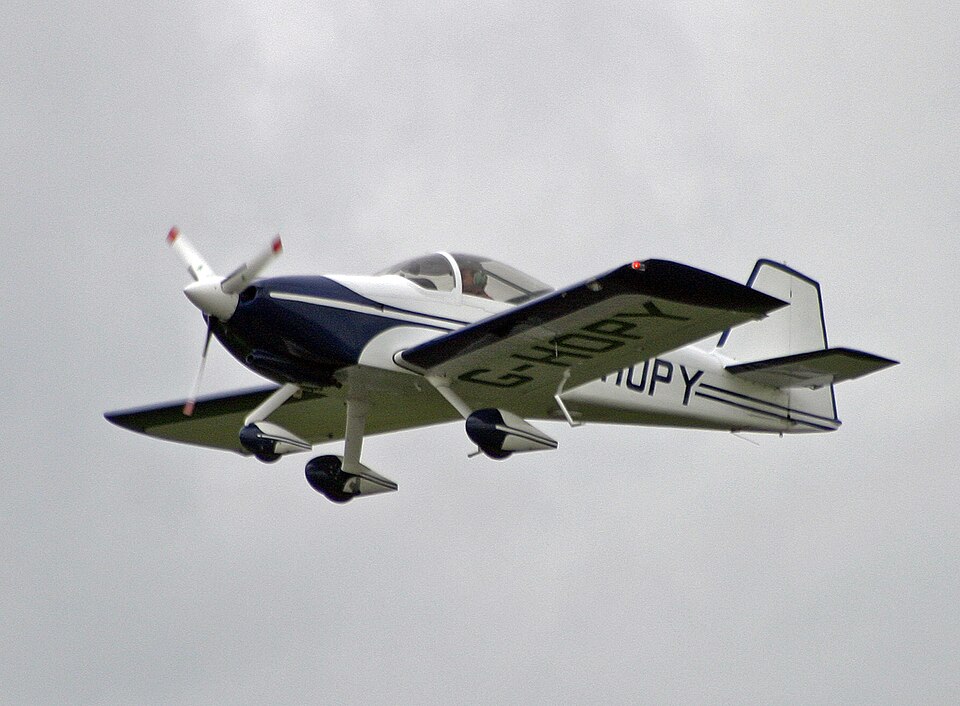
On 4 September 1999, at approximately 1630 UTC, a Vans RV-6A aircraft, registration G-HOPY, was landing on Runway 05 at Dunkeswell Aerodrome in Devon. The flight had originated from Bodmin. During the approach, the pilot conducted two go-arounds from earlier approaches because of other traffic. On the third approach, the pilot became aware of another aircraft close behind him on the approach, prompting a desire to land as quickly as possible.
The aircraft touched down but bounced two or three times, after which the nose landing gear collapsed. The collapse resulted in damage to the propeller and the right wing. The nose landing gear itself also sustained damage.
Aircraft and Pilot Information
The aircraft was a single-engine Vans RV-6A, powered by a Lycoming O-320-B2B piston engine, and had been manufactured in 1998. The pilot, aged 54, held a Private Pilot's Licence with an IMC Rating and had accumulated 508 flying hours, of which 104 were on type. His recent flying experience included 21 hours in the last 90 days and 12 hours in the last 28 days.
The flight was conducted as a private operation with one pilot and one passenger on board. No injuries were reported among either occupant.
Pilot's Retrospective Assessment
In his report, the pilot reflected on the landing. He believed that his approach speed may have been too high and that the perceived need to expedite the landing adversely affected his judgement. No formal probable cause was determined by the investigation.
Damage
The nature of damage included the collapse of the nose landing gear, damage to the propeller, and damage to the right wing.