Factual Information
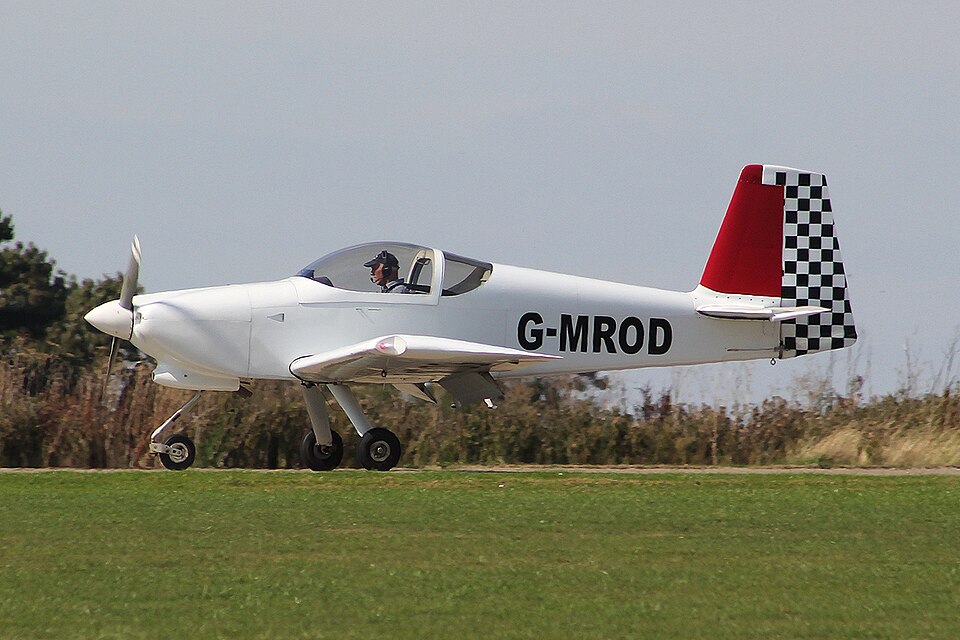
On 8 November 2009 at 1545 UTC, a Vans RV-7A (registration G-MROD) manufactured in 2007, powered by a Superior XP-IO-360-A1A2 piston engine, was involved in an accident at Sittles Farm Strip, Lichfield, Staffordshire. The flight was private, carrying one pilot and one passenger. The pilot held a National Private Pilot's Licence, was 62 years old, and had 975 total flying hours (315 on type), with 25 hours in the last 90 days and 1 hour in the last 28 days.
History of the Flight
The pilot stated he was coming in to land "a little slow" on Runway 35, a 450 m long grass strip from which he normally operated. His normal approach speed was 80 mph, but he flew this approach at 70 mph due to the short length of the strip. The stalling speed of the aircraft at maximum weight is approximately 58 mph. At about 2 ft agl and 20 m from the start of the strip, the left wing dropped, causing the left main wheel to touchdown with the aircraft in a nose-high attitude. This caused the aircraft to yaw left off the strip into a field of short standing crops. Although the pilot corrected the yaw, the aircraft continued to parallel the runway for about 70 m before the nosewheel dug into soft ground, causing it to stop abruptly.
Damage
The aircraft suffered a bent nose leg and a small nick to the propeller. The pilot and passenger vacated the aircraft uninjured. The aircraft had probably stalled.
Cause
The pilot stated that the accident was caused by him flying the approach too slowly, and added that although the audio stall warning was serviceable, he does not remember hearing it. He considered that had he been quicker applying rudder to counter the yaw, he would have been able to keep the aircraft on the grass strip.