History of the Flight
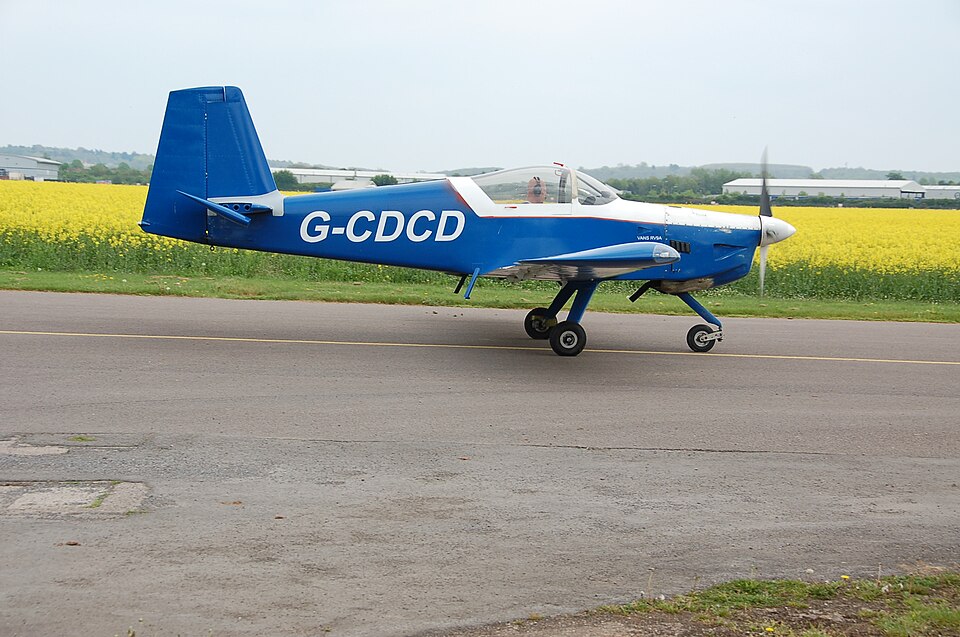
The pilot, flying a private detail of three circuits, completed the first circuit successfully. During the second circuit, at the end of the downwind leg at approximately 1,000 ft above ground level, the engine stopped. The propeller appeared to windmill, and the fuel pressure gauge indicated zero. The pilot switched the fuel tank selector from left to right, but attempts to restart the engine failed. He turned the aircraft into wind and selected a field for a forced landing. The aircraft touched down with about 60 m remaining before a wire fence and hedge. It struck the fence and a small tree, tipped onto its nose, and came to rest slightly beyond vertical, against trees and an overhead cable beside a single-track road. The pilot was released by emergency services with minor injuries.
Engine Examination
The engine, a Wilksch WAM-120 diesel, was removed and examined by the manufacturer and the AAIB. It is an indirect-injection two-stroke diesel with three inverted cylinders, designed to run on AVTUR fuel. The fuel injection system is hydro-mechanical, and the engine does not require electrical power to continue running after starting. The exhaust valves are opened and closed by a camshaft driven from a timing gear bolted to the crankshaft. Examination revealed that all three pistons had made repetitive contact with the exhaust valves, though the impacts did not appear to have occurred over a long period. Three of the four bolts securing the timing gear to the crankshaft had failed at the head/shank interface; one bolt also failed in the thread. Metallurgical examination found that the fractures exhibited characteristics of high-cycle fatigue cracks. Two bolts tested for hardness and elemental composition were deficient in chromium and nickel content and below the minimum hardness specification. The manufacturer advised that the bolts were from a revised standard introduced by Wilksch Service Bulletin WA-SB-005 (8 July 2009), which changed the material from commercial grade steel to a higher standard. The bulletin requested return of replaced bolts; no failures or cracks were found in those returned.
Fuel Contamination
During dismantling, the manufacturer emptied the fuel filter bowl and found dense black fuel with a high percentage of water. In the manufacturer's estimation, the contamination was sufficient to cause the engine to stop.
Discussion
The investigation identified at least two potential reasons for the engine failure: contaminated fuel and fatigue failure of timing gear bolts. The engine manufacturer considered contaminated fuel the more likely cause. Metallurgical examination of the failed bolts showed high-cycle fatigue, but the manufacturer considered it unlikely that the bolt failure occurred in flight, suggesting it may have occurred when the propeller struck obstacles. The AAIB did not confirm which mechanism caused the failure. Safety issues were identified and are being addressed by the manufacturer and the Light Aircraft Association.