Overview
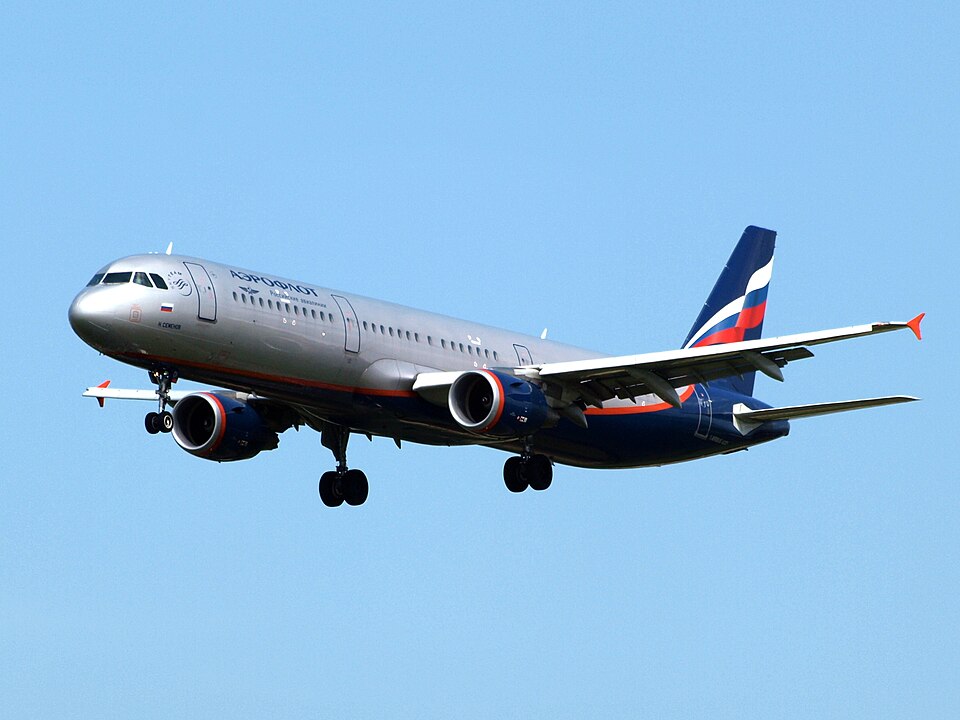
On 19 August 2015, at 11:05 UTC, a serious incident occurred in the Treviso control zone (CTR), approximately 11 nautical miles east of Treviso Sant'Angelo airport, at an altitude of about 4,000 feet. The involved aircraft were an Airbus A321-211, registration VQ-BOI, operating flight AFL2597 for Aeroflot, and a pair of Italian Air Force AMX aircraft with the radio call sign Guizzo 05. The A321 was on a public transport flight; the AMX aircraft were conducting operational training.
Sequence of Events
The Airbus A321 departed from Venice Tessera Airport via runway 04, with a planned Standard Instrument Departure (SID) ROSKA6X. Shortly after takeoff, the flight crew informed Venice Tower that they needed to continue on the runway heading due to significant thunderstorms in the southern area, where the SID was to be followed. Because of defects and delays in coordination, the A321 quickly entered the adjacent Treviso CTR, which was under the control of Treviso Approach. This placed its trajectory in conflict with unknown traffic to Venice Approach.
The unknown traffic consisted of two military AMX aircraft flying under an Operational Air Traffic (OAT) IFR flight plan. They had just performed a low pass at Treviso Sant'Angelo for runway 07 and were executing a go-around to reposition for a Ground Control Approach (GCA) to runway 26 at Istrana Airport. They were climbing to 4,000 feet AMSL under the control of Treviso Approach.
Both the A321 and the AMX pair received clearances to climb to 4,000 feet AMSL from their respective air traffic controllers. The aircraft converged approximately 11 NM east of Treviso Sant'Angelo. The A321 passed about 0.5 NM behind the AMX pair, with vertical separation increasing as the A321 executed a TCAS Resolution Advisory (RA) climb. The AMX aircraft were not equipped with ACAS and maintained 4,000 feet. Treviso Approach informed the AMX pilots of conflicting traffic; they eventually reported the traffic in sight at nine o'clock and above their altitude, climbing away.
Aircraft and Operators
The Airbus A321-211 (VQ-BOI) is a twin-engine narrow-body aircraft from the A320 family, powered by CFMI CFM56-5B3/3 engines, built and entered service in 2012. It was operated by Aeroflot. The two AMX aircraft are single-engine attack and reconnaissance jets, a joint Italian-Brazilian program, powered by a Rolls-Royce Spey turbofan. They were operated by the Italian Air Force.
Air Traffic Services
At the time, both Venice Approach and Treviso Approach were staffed with two controllers each: an Executive (EXE) handling radio communications and a Planner (PLN) managing coordination. All controllers held the required medical fitness, ratings, and experience. Venice Approach controllers had been on duty since the morning shift (07:00-15:00 local), while Treviso Approach controllers had recently started their afternoon shift (13:00-20:00 local).
Weather Conditions
The weather in the northeastern area was characterized by extensive disturbances with rain and thunderstorm activity. METAR reports from Venice, Treviso, and Istrana airports indicated rain, thunderstorms, and cumulonimbus clouds.
Airspace Information
The Treviso CTR is contiguous to the Venice CTR to the north. Treviso CTR is divided into four zones vertically from the surface to FL195, with approach control provided by the Italian Air Force from Istrana Airport. Venice CTR has three zones from the surface to FL85, with approach control provided by ENAV SpA. Both areas are Class D airspace, where IFR and VFR flights are permitted, and continuous two-way radio contact is required.
Probable Cause
Defects and delays in coordination between the air traffic service units.