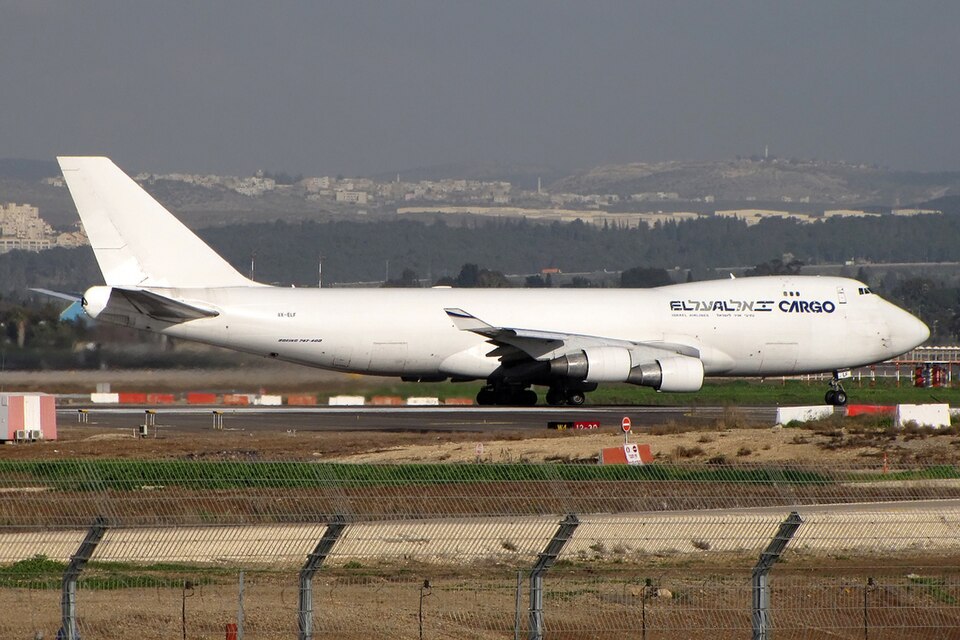
Accident Description
On 31 January 2012, during pre-flight technical checks on a Boeing 747-400 cargo aircraft (registration 4X-ELF), an EL AL technician spotted a wide crack in the aircraft's right main body landing gear outer cylinder. The incident was immediately reported to the Chief Investigator, who opened an investigation. The aircraft was grounded pending replacement of the cracked landing gear and inspection for collateral damage. Four days after discovery, the aircraft was released back to service.
Aircraft and Component History
The aircraft was manufactured in 1994 and originally operated by Singapore Airlines Cargo until May 2010, when it was leased to EL AL. The landing gear in which the crack was found had been inspected and restored at a Singaporean repair center between 2001 and 2002, then refitted to the aircraft in January 2003. Prior to restoration, the landing gear had been used in 5,799 landings; thereafter, it accumulated 2,682 landings. The part, a RIGHT MAIN BODY GEAR OUTER CYLINDER (catalogue number 65 B05187-3-2, defective part number 163W1500-62), was made of 4340M metal. It had a total of 119,426 hours of operation, with 38,851 hours since last overhaul, and 19,226 cycles since new (6,901 cycles since last overhaul). The manufacturer's specified time between renovations was 10 years.
Investigation and Tests
The investigation team included representatives from the U.S. NTSB, Singaporean AAIB, Boeing Corporation, EL AL, and the Singaporean repair center. The crack was approximately 60 centimeters long. Initial evidence indicated the first section developed through gradual fatigue rather than a one-time overload. Metallurgical tests were conducted by the Ruppin College Institute of Failure Analysis and by Boeing Research & Technology. The tests included fractography, chemical analysis, metallurgic examination, and analysis of mechanical properties.
Findings
Laboratory tests using a scanning electron microscope suggested the crack resulted from an initial fracture in a brittle mechanism that deteriorated. The fracture center was in a bushing spring retention groove. Around the groove, evidence of relative vibration between the bushing and cylinder was found, leading to disintegration of the inner surface. The initial cracked surface was covered by rust containing traces of cadmium and oxygen, indicating advanced oxidation. The fracture progressed as an unstable ductile fracture. No metallurgical irregularity was found at the fracture source other than differences in silicon and molybdenum alloy content. No coating traces were found at the source, suggesting erosion during operation. Inter-nuclear phased cracking was present adjacent to the fracture. The surface showed no signs of hardening. Far from the cracked area, evidence indicated a disintegrated layer of cadmium coating with two layers of paint above it.
On the internal wall of the cylinder, surface disintegration attributable to an abrasion-erosion process caused localized removal of coating and surface damage, creating micro-fractures. One fracture developed and progressed during a time-dependent stress-corrosion-like process. The presence of cadmium within the crack supports long-term development. Signs of internal paint peeling under the cracked area indicated mutual vibration between the cylinder's horizontal axle and bushing. Peeling in the paint coating was observed parallel to the cracked area.
Boeing's examination of the inboard trunnion lug bore found large wear marks on the inner diameter where the bushing was located; enamel and primer were worn away, and corrosion product was prevalent. On the outer diameter, enamel was removed and primer exposed. Grease and debris in the retention groove were very dry; FTIR analysis confirmed AeroShell 33 grease that had lost base oil. Debris particles matched 4340M, Aluminum Nickel Bronze, and cadmium corrosion product.