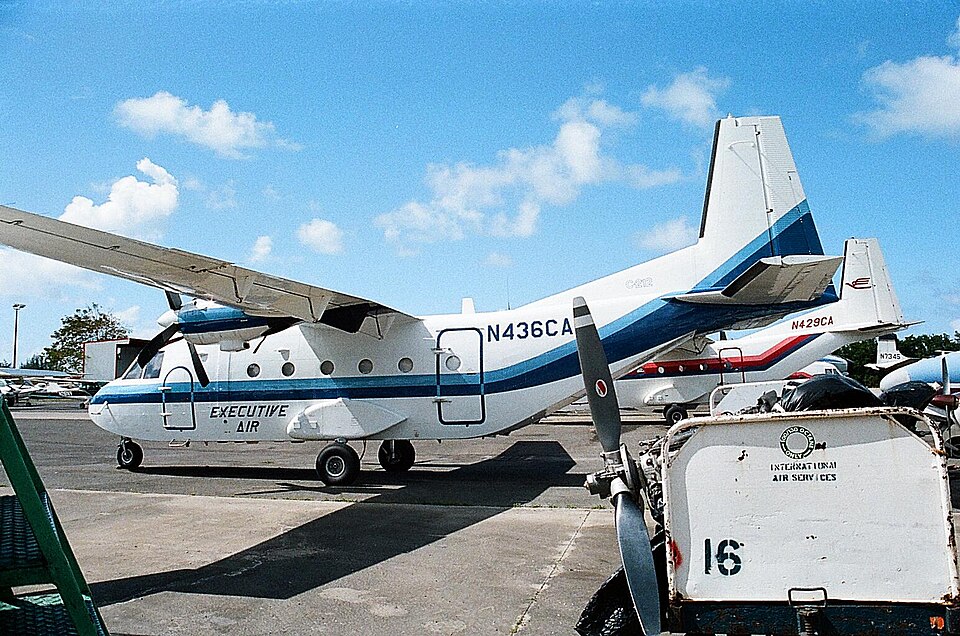
Engine Fire During Climb Leads to Forced Landing

Casualties unknown • Arecibo, PR, US

A crew detected an engine fire during climb, discharged fire extinguishers, and executed a forced landing at an intermediate field where the aircraft was shut down safely.

What happened

The flight was operating as a scheduled international commuter service when the crew observed flames originating from the number one engine while the aircraft was in the climb phase. In response to the emergency, the crew immediately initiated the applicable emergency checklist procedures and discharged two fire extinguisher bottles into the affected engine compartment.

Despite the discharge of the extinguishing agents, flames continued to exit the engine tailpipe. Recognizing that the situation could not be resolved in flight, the crew executed a forced landing at an intermediate airport. Upon touchdown and shutdown of the aircraft systems, the fire ceased completely.

The investigation

Post-accident examination of the number one engine revealed significant mechanical failures. The aft turbine bearing had failed and showed clear evidence of being mis-aligned during its original installation. Additionally, investigators noted that the bearing retainer exhibited no evidence of being nitrided as required by specifications, a deficiency that accelerated the failure process.

Probable cause

The engine fire was caused by the failure of the aft turbine bearing due to misalignment at installation and the absence of required nitriding on the bearing retainer.

Frequently asked questions

What happened in the 1985-01-25 Casa 212 accident near Arecibo, PR?

A crew detected an engine fire during climb, discharged fire extinguishers, and executed a forced landing at an intermediate field where the aircraft was shut down safely.

What aircraft was involved and where did it happen?

The accident on 1985-01-25 involved a Casa 212, registration N436CA, operated by Prinair, at Arecibo, PR.

What was the probable cause of the accident?

The engine fire was caused by the failure of the aft turbine bearing due to misalignment at installation and the absence of required nitriding on the bearing retainer.

Investigation report by the U.S. National Transportation Safety Board (NTSB) historical archive. Original record: https://carol.ntsb.gov/event/20001214X35571. This page is a structured re-presentation; facts and quotes are in the National Transportation Safety Board (NTSB), United States.

Loading the flight search…