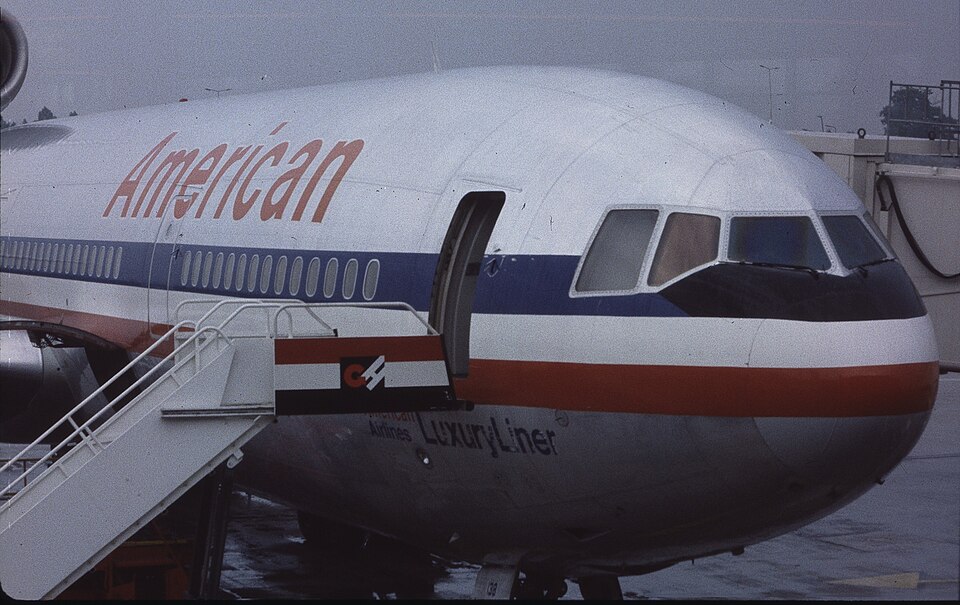
In-Flight Engine Failure Due to Turbine Blade Fatigue

Casualties unknown • Tuba City, AZ, US

Several high-pressure turbine rotor blades separated from the number one engine during cruise on a transcontinental flight, causing disintegration of the turbine assembly and subsequent engine failure.

What happened

The aircraft was operating as part of a scheduled transcontinental service traveling from New York to Los Angeles. During the cruise phase of the flight, several stage one high-pressure turbine rotor blades within the number one engine separated without warning from their platforms.

The investigation

Examination of the failed components revealed that the initial separation originated at a forward cooling hole on one of the blades. Forensic analysis determined that the failure was fatigue-induced. Further investigation into the root cause identified that the fatigue was likely triggered by a degradation of the cooling airflow pattern within the blade. This disruption in airflow was caused by an air leak that was not associated with the standard blade cooling holes.

Findings

The separation of these rotor blades resulted in the complete disintegration of the high-pressure turbine assembly. This mechanical failure led directly to the subsequent loss of power and engine failure on the affected engine.

Probable cause

Fatigue-induced separation of stage one high-pressure turbine rotor blades, likely caused by a degradation of the cooling airflow pattern due to an air leak not associated with the blade cooling holes, resulting in disintegration of the high-pressure turbine assembly and subsequent engine failure.

Frequently asked questions

What happened in the 1987-03-26 Mcdonnell Douglas DC-10-10 accident near Tuba City, AZ?

Several high-pressure turbine rotor blades separated from the number one engine during cruise on a transcontinental flight, causing disintegration of the turbine assembly and subsequent engine failure.

What aircraft was involved and where did it happen?

The accident on 1987-03-26 involved a Mcdonnell Douglas DC-10-10, registration N151AA, operated by American Airlines, Inc., at Tuba City, AZ.

What was the probable cause of the accident?

Fatigue-induced separation of stage one high-pressure turbine rotor blades, likely caused by a degradation of the cooling airflow pattern due to an air leak not associated with the blade cooling holes, resulting in disintegration of the high-pressure turbine assembly and subsequent engine failure.

Investigation report by the U.S. National Transportation Safety Board (NTSB) historical archive. Original record: https://carol.ntsb.gov/event/20001213X30549. This page is a structured re-presentation; facts and quotes are in the National Transportation Safety Board (NTSB), United States.

Loading the flight search…