Casualties unknown

Engine Fire Prompts Emergency Evacuation After Landing (N467AA)

Savannah, GA, US

On June 18, 1993, a Mcdonnell Douglas DC-9-82 (registration N467AA) operated by American Airlines, Inc. was involved in an aviation accident near Savannah, GA. Investigators recorded the probable cause as: A leak at the No. 7 fuel nozzle, which was the origin of the fire. A hole burned in the diffuser case allowed hot gases to escape and contact oil lines, resulting in extensive fire damage. This summary draws on records from the U.S. National Transportation Safety Board (NTSB) historical archive; 8 related events involving the same aircraft type or operator are linked below.

Sourcesthe U.S. National Transportation Safety Board (NTSB) historical archivePrimary reportUpdated 2026-06-10Data APIEditorial standards
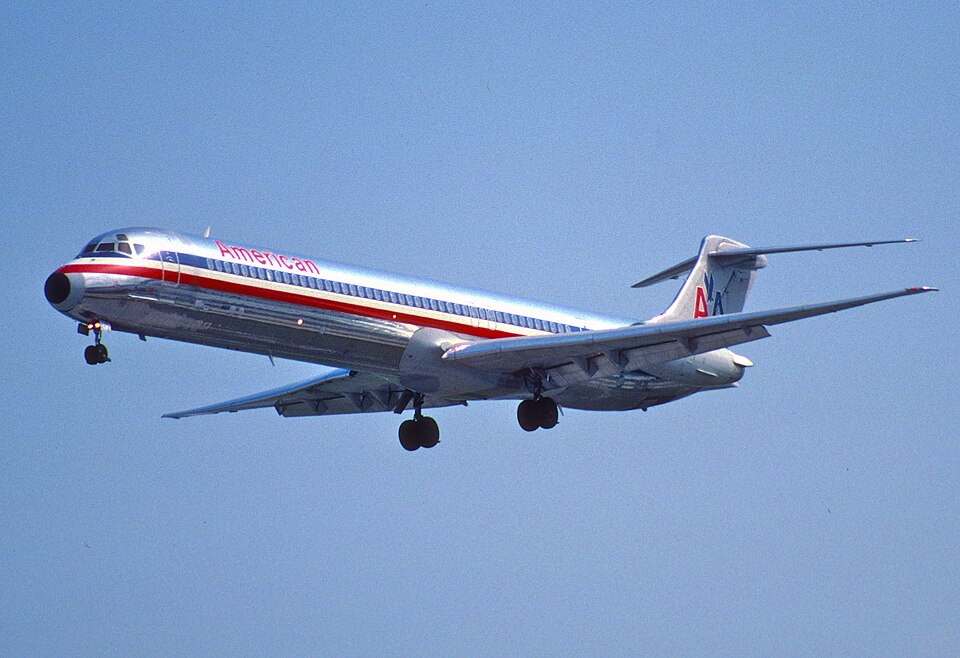
Aircraft registered N467AA
Aircraft registered N467AA. Photo: Aero Icarus from Zürich, Switzerland / CC BY-SA 2.0, via Wikimedia Commons

Shortly after takeoff, a left engine fire warning prompted crew actions including engine shutdown and extinguisher activation. An emergency evacuation followed landing due to visible fire damage. Inspection revealed a fuel nozzle leak caused the fire.

Incident Description

Approximately one minute after takeoff, the flight crew observed left engine fire warning indications in the cockpit. The left engine power lever was retarded, and a turn towards the airport was initiated. The fire warning indications actuated intermittently until the crew shut down the engine and activated the engine fire extinguisher. An uneventful landing was performed.

Emergency Evacuation

After landing, ground personnel informed the captain of visible fire damage to the left engine. An emergency evacuation was subsequently performed.

Inspection Findings

An inspection of the left engine revealed a leak at the No. 7 fuel nozzle, which was the origin of the fire. A hole was burned in the diffuser case, which allowed hot gases to escape and contact oil lines. This resulted in extensive fire damage to the engine and cowling.

Probable cause

A leak at the No. 7 fuel nozzle, which was the origin of the fire. A hole burned in the diffuser case allowed hot gases to escape and contact oil lines, resulting in extensive fire damage.

Investigation report by the U.S. National Transportation Safety Board (NTSB) historical archive. Original record: https://carol.ntsb.gov/event/20001211X12525. This page is a structured re-presentation; facts and quotes are in the National Transportation Safety Board (NTSB), United States.