Approach and Conditions
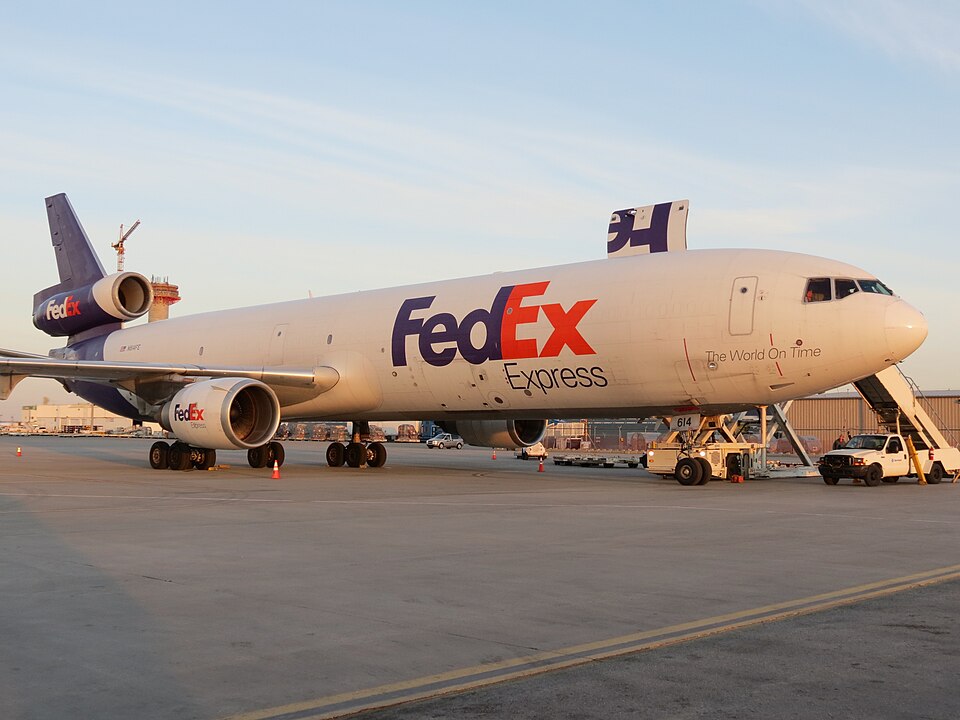
An MD-11 was cleared for a visual approach to runway 24R, following a Boeing 747 landing on parallel runway 24L. The two runways were separated by 550 feet, with the threshold of runway 24L displaced 4,300 feet beyond that of runway 24R, leaving the MD-11 approximately 1 minute behind the preceding aircraft. The captain used the Visual Approach Slope Indicator (VASI), which provided a 3.25-degree glide path.
During the final approach, a left crosswind of 21 knots diminished to about 5 knots. Beginning at 100 feet above ground level (AGL), the MD-11 exhibited a left roll followed by a right roll and slight yawing. At approximately 50 feet AGL, the aircraft entered a high rate of descent.
Go-Around and Impact
The captain initiated a go-around and raised the nose. The lower aft fuselage struck the runway surface, and the MD-11 bounced. The captain then discontinued the go-around, and the aircraft bounced two more times. The impacts caused damage to the aft pressure bulkhead.
During the final 20 seconds of flight, the MD-11 averaged a rate of descent of 1,380 feet per minute, an airspeed of 152 knots, and an approach angle of 5.12 degrees.
Operator Training and Procedures
The MD-11 flight manual contained discussions of visual approaches, go-around procedures, and tail and wing clearance issues. However, the operator did not provide formal tailstrike awareness training for its MD-11 pilots. Following the accident, the operator developed a tailstrike awareness training program that included bounced landing recovery techniques and simulator training, and it limited pitch attitude to 7.5 degrees for recovery from a bounced landing.
The Aeronautical Information Manual (AIM) recommended that, when landing behind a larger aircraft on a parallel runway closer than 2,500 feet, pilots should stay above the larger aircraft's flight path. The tower controller did not issue a precaution for wake turbulence.