Casualties unknown

1999-11-20: Cessna 172R (N475ER) — Embry-riddle Aero. Unv. — Daytona Beach, FL

Daytona Beach, FL, US

On November 20, 1999, a Cessna 172R (registration N475ER) operated by Embry-riddle Aero. Unv. was involved in an aviation accident near Daytona Beach, FL. Investigators recorded the probable cause as: Was the pilot's improper flare and improper recovery from a bounced landing resulting in a hard landing and damage to the aircraft. This summary draws on records from the U.S. National Transportation Safety Board (NTSB) historical archive; 8 related events involving the same aircraft type or operator are linked below.

Sourcesthe U.S. National Transportation Safety Board (NTSB) historical archivePrimary reportUpdated 1781061362Data APIEditorial standards
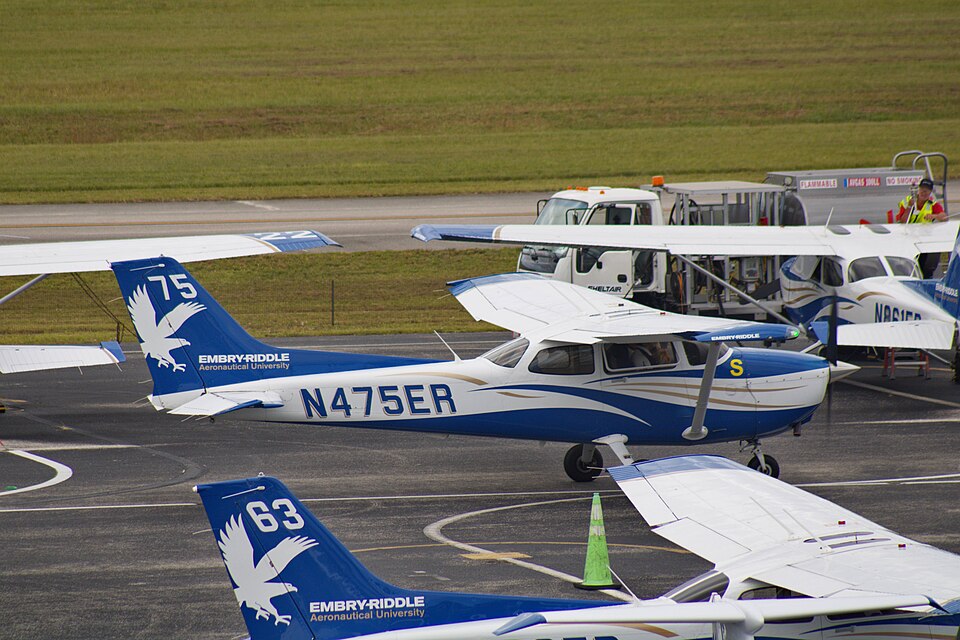
Aircraft registered N475ER
Aircraft registered N475ER. Photo: ZLEA / CC BY-SA 4.0, via Wikimedia Commons

A pilot reported that during landing touchdown the aircraft bounced, leading to a nose wheel contact and additional bounce. Post-flight inspection revealed damage to the nose landing gear, engine firewall, belly, and propeller.

Introduction

A recent incident involving a landing aircraft resulted in damage to multiple components, as reported by the pilot and confirmed by maintenance personnel. The event occurred during touchdown when the aircraft experienced a bounce, leading to a series of events that caused structural damage.

Incident Details

According to the pilot, during the landing touchdown, the aircraft bounced. In response, she applied engine power to level off the aircraft. However, the aircraft ballooned and subsequently touched down on the nose wheel, which caused another bounce. The pilot then regained control, completed the touchdown, and taxied the aircraft off the runway to the parking ramp.

Damage Inspection

Following the incident, maintenance personnel from the operator examined the aircraft. The inspection revealed damage to the nose landing gear, the engine firewall, the aircraft belly, and the propeller. No further details about the extent of the damage or any other system impairments were provided.

Conclusion

The aircraft was removed from service for repairs after the damage was discovered. The pilot's actions during the landing sequence were documented as described, and the aircraft was subsequently inspected by qualified maintenance staff.

Investigation report by the U.S. National Transportation Safety Board (NTSB) historical archive. Original record: https://carol.ntsb.gov/event/20001212X20141. This page is a structured re-presentation; facts and quotes are in the National Transportation Safety Board (NTSB), United States.