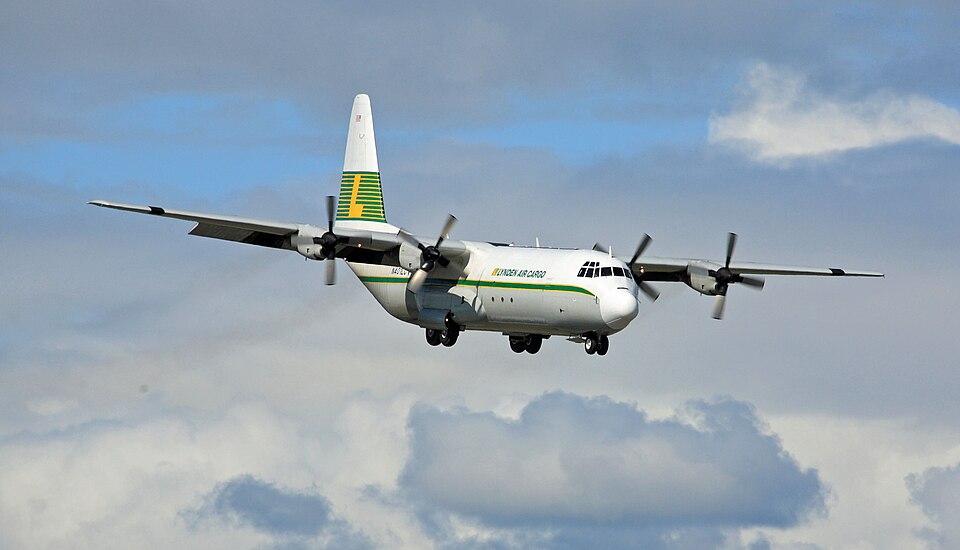
Incident Overview
The crew of an arriving cargo flight conducted a flyover of the airport to assess runway conditions before landing. Based on their observations, they elected to use runway 20, which is a gravel runway measuring 4,200 feet in length and 90 feet in width. The crew noted that the runway surface exhibited several frost-heaves that had developed during the preceding winter.
Landing Sequence
During the initial touchdown of the landing, the airplane "skipped" as the main wheels made contact with the crest of one of the frost-heaves. This caused the airplane to become airborne again, floating slightly before touching down again approximately 750 feet beyond the approach end of the runway. During the second landing flare, the main landing gear wheels contacted the downhill side of a second frost-heave. This contact allowed the tail of the airplane to strike the gravel runway. The captain characterized the second touchdown as within acceptable limits, albeit with a slightly nose-high attitude.
Damage Discovery
Following the landing, the crew conducted a postflight inspection of the airplane. During the inspection, they discovered a puncture measuring 4 feet by 2 feet on the belly of the airplane, just forward of the main cargo door.