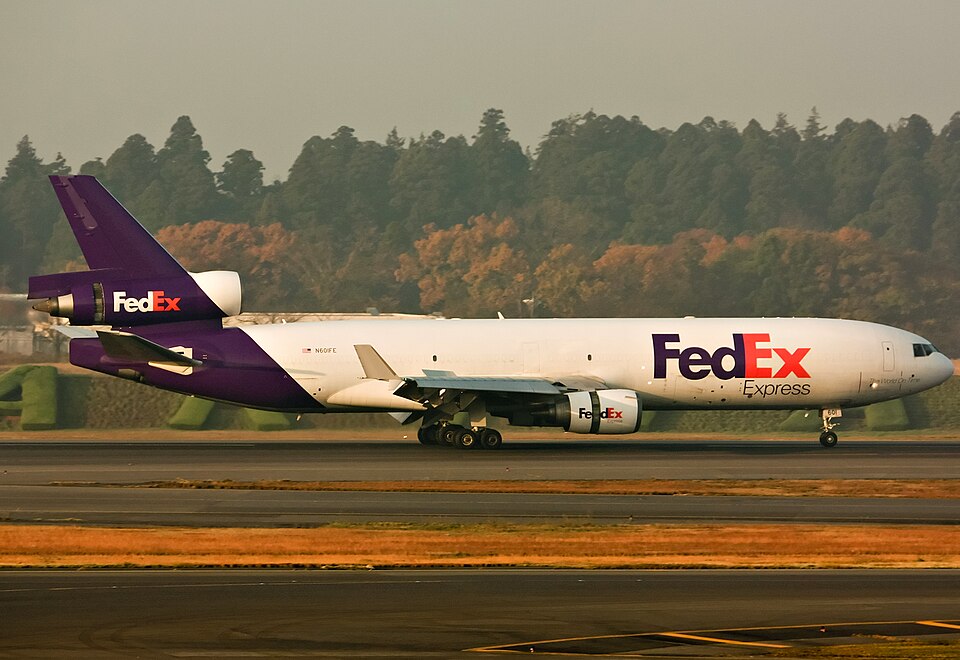
Incident Description
During final approach to landing, the flight crew of an MD-11F selected flaps 50 (full extension). Approximately one minute later, they heard a loud bang and felt the airplane shudder. The aircraft began to roll to the left, requiring nearly full right control wheel input to counter the roll. The crew executed a missed approach, declared an emergency, and diverted to another airport. During the subsequent landing, the aircraft experienced a tailstrike.
Malfunction Analysis
The flight control malfunction was initiated by the failure of the bolt assemblies securing the left inboard flap outboard hinge to the wing trailing edge. The lower outboard nut failed first due to stress corrosion cracking. The lower inboard bolt failure was initiated by fatigue and completed by overload after the lower outboard bolt nut failed. The two upper bolts then failed by overload following the failure of both lower bolt assemblies. The failure of all four bolt assemblies allowed the flap hinge to pull free from the wing trailing edge, drop, and jam the left inboard flap at the fully extended position.
The separating flap hinge pulled components of the left-hand spoiler system from their original positions, causing deployment of spoilers L1, L4, and L5. The deployment of three of the five left-hand spoilers resulted in the uncommanded left roll. Hydraulic system No. 3 was also damaged when the flap hinge separated, allowing hydraulic fluid to drain. Once hydraulic quantity was depleted, the No. 3 spoilers on each wing would not operate. According to Boeing engineers, the loss of the R3 spoiler affected the ability of the right wing flight controls to counter the left roll.
Maintenance and Inspection History
The airplane was originally used as a manufacturer flight test aircraft. The impact of flight testing on the overall fatigue life of the flap hinge bolts could not be determined. Prior to the accident, there were no requirements for inspection of the flap hinge bolt assemblies on MD-11 aircraft. After the accident, the manufacturer issued a service bulletin recommending inspection and/or replacement of the flap hinge lower bolt assemblies, specifically changing from alloy steel bolts and nuts to Inconel, a nickel-based alloy resistant to corrosion and stress corrosion cracking. The FAA issued an Airworthiness Directive mandating the service bulletin.