History of Flight
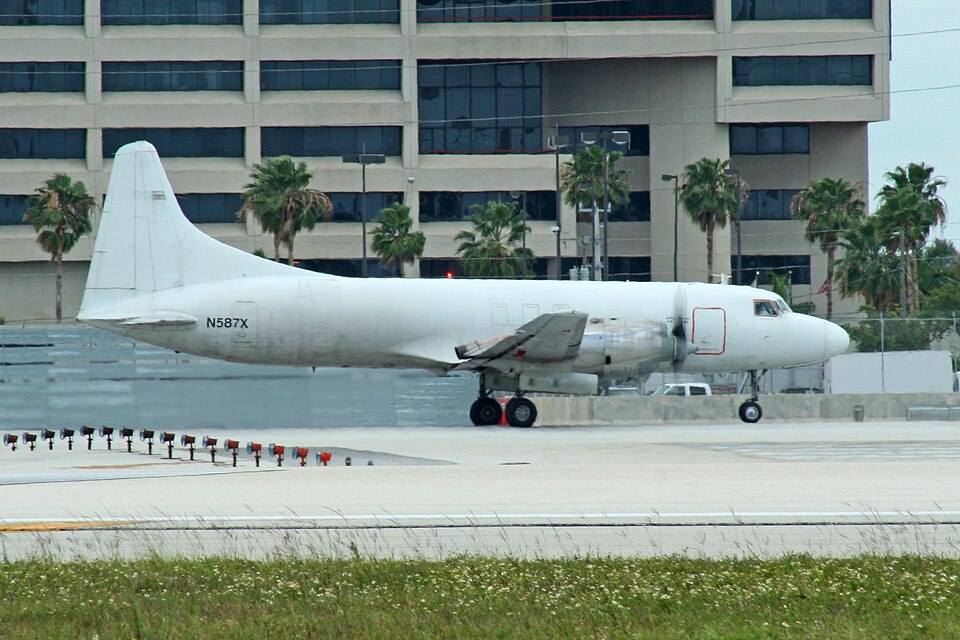
On September 1, 2008, about 1206 eastern daylight time, a Convair CV-580 airplane, N587X, operated by Air Tahoma Inc., was destroyed when it impacted terrain as it was attempting to return to Rickenbacker International Airport (LCK), Columbus, Ohio. The flight had just departed from runway 5L (11,937 feet by 150 feet, asphalt) at LCK. The captain, first officer, and a company pilot sitting in the observer seat received fatal injuries. The 14 Code of Federal Regulations Part 91 post maintenance check flight departed LCK at 1203, and was en route to Mansfield Lahm Regional Airport (MFD), Mansfield, Ohio. Visual meteorological conditions prevailed at the time of the accident. An instrument flight rules (IFR) flight plan was filed.
The accident flight was the first flight following a maintenance Phase 1 and Phase 2 check, which included flight control cable rigging as part of the check. The flight was also intended to provide cockpit familiarization for the first officer and the observer, and a training flight for the first officer.
Personnel Information
The captain was an airline transport pilot with multi-engine land and instrument airplane ratings. He held a first-class medical certificate issued on July 23, 2008. His total flight time was 16,087 hours, with 170 hours in the CV-580 in the last 90 days. The first officer was an airline transport pilot with single-engine and multi-engine land and instrument airplane ratings, holding a first-class medical certificate issued on August 6, 2008, and having 19,285 total flight hours. The observer pilot was a commercial pilot with single-engine and multi-engine land and instrument ratings, holding a first-class medical certificate issued on April 4, 2008, and having 498 total flight hours.
Aircraft Information
The airplane was a Convair CV-580, serial number 361, manufactured in 1956 as a 56-seat passenger airplane converted to a cargo airplane. It was modified with two Allison 501-D13D turboprop engines. The maximum gross weight was 58,156 pounds. The last phase inspection was conducted on August 18, 2008, and total airframe time was 71,990.4 hours. The accident flight was the first flight after that inspection.
Examination of the Phase 1 and Phase 2 cards revealed that the inspector's block on numerous checks were not signed off by the Required Inspection Item (RII) inspector. The RII inspector did not sign Phase 2 card items related to elevator servo trim tab cable rigging. A note on the Phase 2 card stated that a complete inspection of all elevator controls must be accomplished and signed off by an RII inspector, but that was not done.
Meteorological Information
At 1157, the surface weather observation at LCK was: winds 080 at 3 knots, visibility 7 miles, clear skies, temperature 28°C, dew point 18°C, altimeter 30.18 inches of Mercury.
Flight Recorders
The Cockpit Voice Recorder (CVR) and Flight Data Recorder (FDR) were retrieved from the wreckage. The FDR contained approximately 4 hours of data, but the accident flight was not recorded because the FDR switch was not turned on. The CVR recorded 33 minutes and 11 seconds of usable audio from 1132:47 to 1205:58. The recording showed that the pilots did not discuss any special flight control checks related to the maintenance performed. During the flight, the captain repeated the word "pull" about 27 times from rotation until impact. The CVR captured sounds similar to trim wheel motion four times. At 12:04:39, the observer asked, "Come back on the trim?" and the captain responded, "There's nothing anymore on the trim." The Sound Spectrum Study indicated that until 12:05:45, the engines likely operated at or near maximum power.
Wreckage and Impact Information
The airplane impacted terrain on a southerly heading. Initial contact with corn showed three parallel cuts consistent with the landing gear being down. The main wreckage was found about 825 feet from the initial impact point. The forward 10 feet of the airplane, including the cockpit, separated and was consumed by post-impact fire. The elevator pitch control system inspection revealed no anomalies except the reversed elevator trim cables aft of Fuselage Station 798. The inboard cable at FS 798 exited through the lower fairlead hole, whereas the maintenance manual specified it should exit through the upper fairlead hole to the top of the elevator trim jack drum.
Medical and Pathological Information
Autopsies of the captain and first officer were conducted on September 2, 2008. The cause of death for both pilots was multiple blunt force trauma. Toxicology reports were negative for the captain; the first officer's report detected Pioglitazone, which was used for diabetes treatment.
Additional Information
A maintenance technician briefed the pilot on the maintenance actions performed, which included removal and reinstallation of propellers, propeller gearbox split, engine turbine work, landing gear work, and removal and replacement of elevators, rudder, and flight control cables. The operator's Vice-President of Maintenance reported that per the company's maintenance manual, only the propeller removal/reinstallation required a test flight. On-site inspection revealed that the elevator trim cables were reversed, so that nose-up trim input would have produced nose-down trim effect.