History of Flight
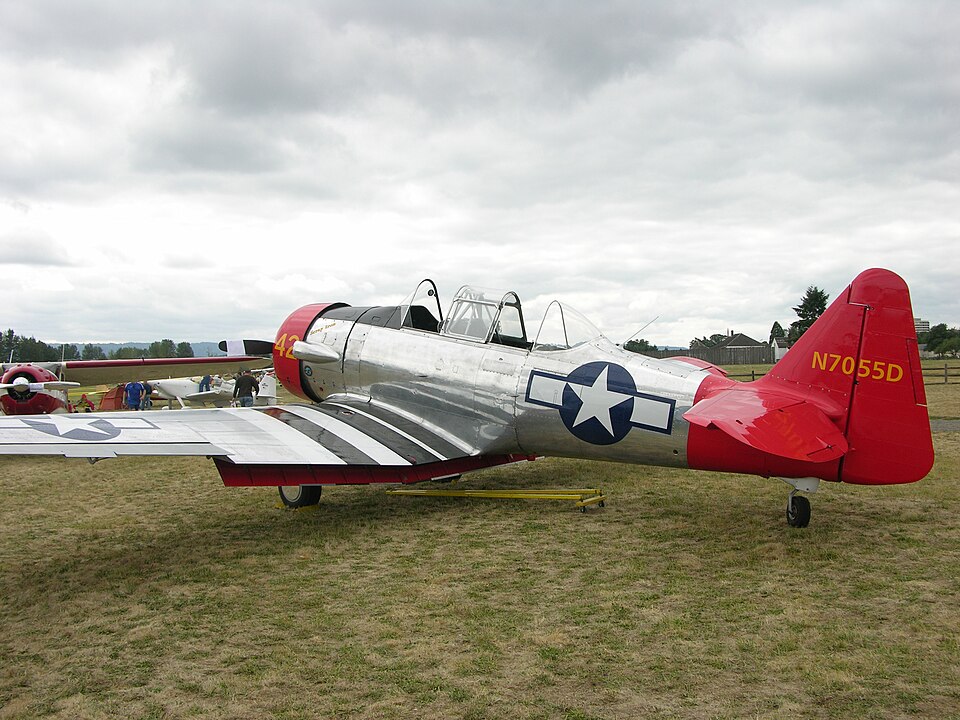
On March 23, 2016, at approximately 1542 Pacific daylight time, a North American AT-6A, registration N7055D, impacted the Columbia River near Astoria, Oregon. The private pilot and a passenger sustained fatal injuries, and the airplane was destroyed. The flight, operating under Title 14 Code of Federal Regulations Part 91, departed Pearson Field Airport in Vancouver, Washington, at about 1506. The purpose of the flight was to disperse the deceased husband's ashes of the passenger. The intended location was along the Pacific coast near a beach house in Ocean Shores, Washington, or over the Columbia River if weather conditions were poor.
A witness aboard a moored cargo ship observed the airplane flying at about 300 feet above sea level. The airplane flew overhead and then began a left turn. The left wing dipped, and the airplane rapidly transitioned into a steep vertical dive, impacting the water in a nose-down attitude. The engine was heard operating throughout. Another witness on shore reported seeing a slow, graceful left turn that suddenly became an aggressive dive. No smoke or vapor was observed. Weather at the time included good visibility with overcast skies; rain began later.
Aircraft and Pilot Information
The airplane was a tailwheel-configured North American AT-6A with retractable main landing gear, powered by a nine-cylinder Pratt & Whitney R-1340-AN1 radial engine driving a two-blade constant-speed propeller. It had been disassembled and restored in 2006 and issued an experimental special airworthiness certificate in the exhibition category. Maintenance records indicated a condition inspection on May 23, 2014, with total airframe time of 3,070.7 hours. The pilot held a private pilot certificate with an instrument rating and a third-class medical certificate issued July 1, 2014, with no limitations. He reported 1,140 total flight hours at that time. His logbook showed 1,282.4 hours as of March 19, 2016, with about 168 hours in the accident airplane.
Wreckage and Impact
Search efforts located the wreckage two days later in 15 feet of water, about 2 miles northeast of Astoria. The underwater debris field was approximately 150 feet long and 100 feet wide. Recovered sections included the fuselage with empennage, right wing outboard of the main landing gear, wing center section, engine and propeller, and fragmented left wing. Examination revealed that the rear control stick was detached and stowed, indicating the passenger was not using it. The rear canopy was found in the full-forward (open) position. A 10-inch crescent wrench, a 9/16-inch wrench, and a 3-inch bolt were found loose in the tailwheel strut box area but clear of flight controls.
Medical and Pathological Information
An autopsy determined the pilot's cause of death as multiple blunt force injuries. Severe coronary artery disease was found, with 90% occlusion in the left anterior descending and left circumflex arteries. Toxicology testing identified sertraline, desmethylsertraline, and trazodone in the pilot's system. Sertraline is an antidepressant; trazodone is a sedating antidepressant with a warning about potential impairment. The pilot had not disclosed these medications on his FAA medical application. He had a history of sleep apnea but was not compliant with continuous positive airway pressure usage.
Additional Information
The ash dispersal procedure involved a canvas bag with a plastic liner, tethered to the airframe. The passenger would throw the bag out of the open canopy to release ashes into the slipstream. Friends reported similar procedures. A previous ash dispersal flight in June 2015 was successful. No cremation bag or attachment rope was found in the wreckage.