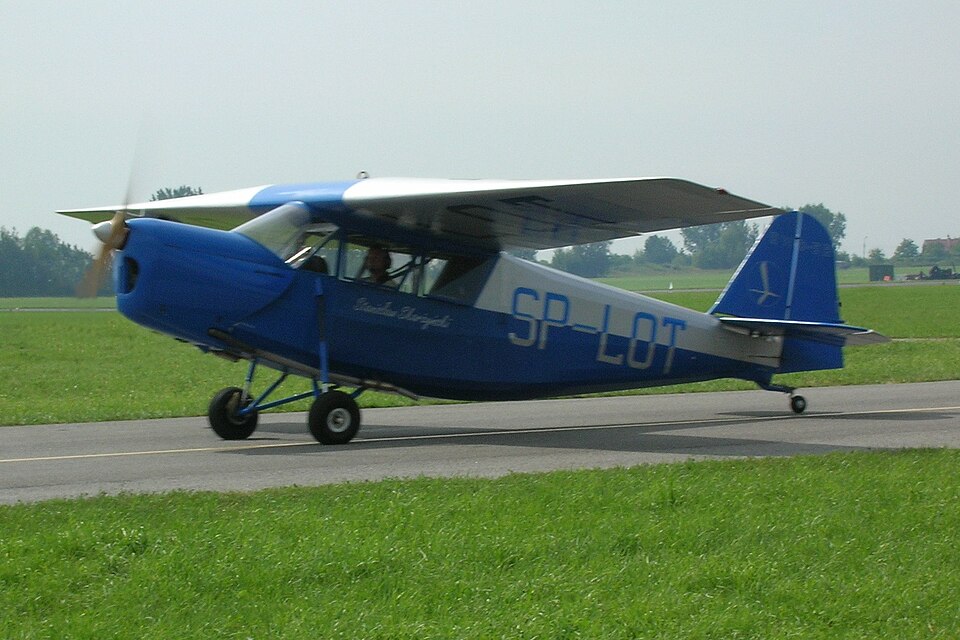
Accident Overview
On 1 September 2018, at 18:45 local time, an RWD-5R aircraft, registration SP-LOT, was involved in an accident during takeoff from Bielsko-Biała (EPBA). The aircraft was operated by Stowarzyszenie Lotnictwa Eksperymentalnego Oddział EAA 991. The flight was intended as a transit to its home airfield in Łososina Dolna (EPNL) after being unable to perform a demonstration due to afternoon rain. Neither the pilot nor the passenger sustained injuries.
Sequence of Events
The aircraft had arrived at Bielsko-Biała earlier that afternoon. After refueling with 82 liters of fuel, the pilot taxied to runway 09. Following an engine run-up, the aircraft began its takeoff roll. The grass runway surface was soft and waterlogged from previous rainfall. During the roll, the aircraft bounced several times and became airborne around the midpoint of the 510-meter runway, then briefly touched down again at about three-quarters of the length, producing water spray. The pilot continued the takeoff despite the low speed and shallow climb, remaining at approximately 2 meters above ground.
After clearing the airport fence, the aircraft struck a roadside information board with its right wheel, then hit a road sign with the right landing gear leg. These collisions reduced speed and altered the flight path. The aircraft subsequently struck metal posts with its right wing and tailwheel, causing the right wingtip to break off. It then descended into a shrub cluster 70 meters beyond the fence, coming to rest oriented about 240 degrees to the right of the takeoff direction.
Aircraft and Pilot Information
The pilot, a 59-year-old male, held a PPL(A) license with SEP(L) and glider towing endorsements, and a valid medical certificate. His total flight time was approximately 1,200 hours. The aircraft, an RWD-5R, had a maximum takeoff weight of 750 kg according to its Flight Manual. The calculated takeoff weight was 803 kg, exceeding the limit by about 53 kg. The pilot had not performed a weight calculation before the flight. With a crew and baggage weight of 158 kg, the permissible fuel load according to the manual was 48 liters, but the aircraft had approximately 120 liters (85 kg) of fuel aboard.
Findings and Causes
The investigation determined that the aircraft was airworthy and properly documented. Weather conditions were not a factor. The grass surface was soft due to rain, increasing rolling resistance. The aircraft was overloaded by approximately 53 kg. The accident was caused by two factors: (1) attempting takeoff with an overloaded aircraft, and (2) the pilot's failure to abort the takeoff. No safety recommendations were issued.