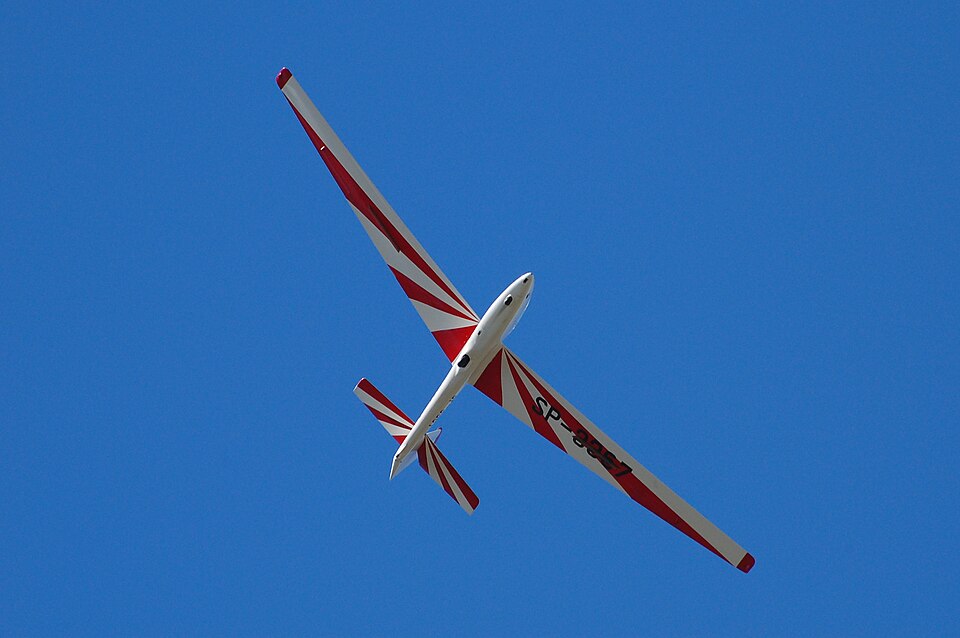
Accident
On 15 September 2019, at approximately 11:16 local time, a training flight involving a glider SZD-50-3 Puchacz (registration SP-3367) and a tow plane Aviat A-1B Husky (registration SP-TIR) ended in an accident at Warszawa-Babice airfield (EPBC). The glider, operated by Aeroklub Warszawski, was conducting a training flight with an instructor and a student pilot. The tow plane was piloted by a qualified tow pilot.
Before departure, the student performed the pre-start checklist and discovered the battery for the onboard radio was missing. The instructor exited the glider to ensure the battery was correctly installed, then re-entered and rechecked the trimmer, airbrake lever, and canopy closure before signaling readiness. After the tow plane connected the tow rope and tensioned it, the flight director gave the start command. The glider lifted off first, followed by the tow plane. Shortly after takeoff, the tow pilot noticed the aircraft was not gaining speed, and the climb rate was below normal. At an altitude of about 30–40 meters, over a taxiway perpendicular to the runway, the instructor observed an airspeed indication not exceeding 100 km/h. As the formation approached a tree line, the instructor took control of the glider, released the tow rope, and informed the student. The tow plane, freed from the glider's drag, accelerated and performed a normal circuit and landing without further incident.
The instructor executed a left turn of about 180° with the intention of landing downwind. During the approach, the glider stalled and impacted the ground. The glider first struck the ground with its forward fuselage and left wing, then the fuselage broke behind the wings. The glider slid for approximately 22 meters before stopping. The student, who sustained serious injuries, was transported by helicopter to a hospital. The instructor was also transported to a hospital after exiting the glider unassisted; the tow pilot remained uninjured.
Investigation
The Polish State Commission for Aircraft Accident Investigation (PKBWL) examined the site and the aircraft. No pre-existing malfunctions were found in either the glider or the tow plane. However, the investigation noted deformations in the mounting of the airbrake plates in the left wing. Continuity tests of the control linkages showed no disconnection; after straightening the deformed element, the airbrakes opened and closed correctly, and the locking mechanism functioned without issues.
According to statements, the instructor did not deploy the airbrakes after releasing the tow rope. The Commission concluded that the airbrakes were likely not locked and extended during the takeoff roll or shortly after liftoff. With the airbrakes fully extended, the glider's drag significantly increased, preventing the tow plane from gaining speed and altitude. The subsequent turn with extended airbrakes led to a stall. The Commission determined that the pre-flight inspection was hurried or incomplete, as evidenced by the missing battery. Although the pre-start checklist was performed, the airbrake lever was likely in the closed but unlocked position. The instructor failed to properly verify the airbrake lock. Neither crew member noticed the airbrakes extending after takeoff, possibly due to the student concentrating on maintaining formation and the instructor focusing on correcting the student's errors.
The flight director did not observe the takeoff. Witnesses at the airfield reported that the formation appeared too low. The Commission dismissed the possibility that the tow plane's propeller pitch setting contributed to the poor climb, citing the normal takeoff roll length.
Findings
- Weather conditions did not affect the accident.
- The glider's airbrakes were not locked and extended during takeoff.
- The extended airbrakes increased drag, preventing the tow plane from climbing and accelerating.
- After release, the instructor turned downwind with the airbrakes still extended, leading to a stall and impact with terrain.
- The pre-flight inspection was inadequate; the airbrake locking was not verified.
- No aircraft malfunctions were identified.
Probable Cause
The most likely cause was the extension of the glider's airbrakes due to incomplete locking, which went unnoticed by the crew. The resulting drag prevented the formation from climbing, and the subsequent turn with extended airbrakes caused a stall.