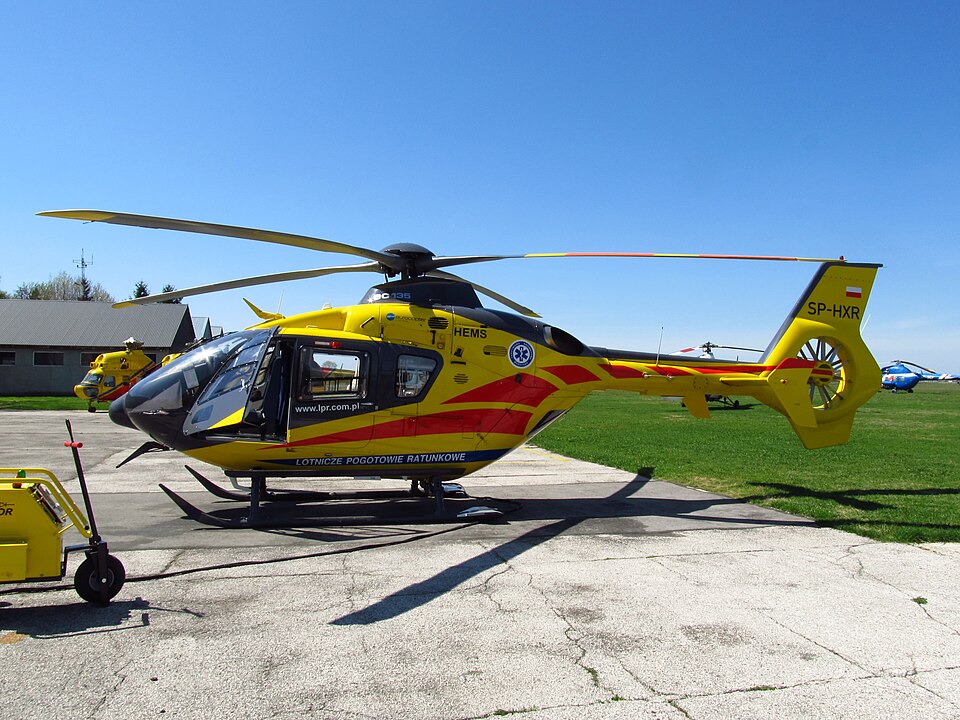
On February 16, 2021, an EUROCOPTER, EC-135/P3 (registration SP-HXR) operated by Pilot śmigłowcowy zawodowy was involved in an aviation accident near Warszawa Babice (EPBC), PL. Investigators recorded the probable cause as: Pilot error due to improper distribution of attention during the engine start, insufficient supervision of the engine number 2 start process, and failure to comply with the provisions in the EC135P3 Flight Limitations Manual regarding the aborting of a start. This summary draws on records from the Polish State Commission on Aircraft Accidents Investigation (PKBWL); 8 related events involving the same aircraft type or operator are linked below.
On 16 February 2021, a Eurocopter EC-135 P3 (SP-HXR) experienced an engine start anomaly at Warsaw Babice. The pilot aborted the second engine start, but post-flight data showed a temporary exceedance of exhaust gas temperature limits.
Incident Overview and Aircraft Details On 16 February 2021, a Eurocopter EC-135 P3 helicopter with registration SP-HXR was involved in an incident at Warsaw Babice (EPBC). The aircraft was operated by the Air Medical Service (LPR) from its Warsaw branch. The flight crew was responding to a medical emergency in the locality of Stojadła. ## Sequence of Events During the pre-flight engine start procedure, the pilot successfully started engine number 1. While starting engine number 2, the engine experienced a stall at 14% rotor speed. The pilot expected the speed to increase but it did not. The pilot aborted the start when the exhaust gas temperature reached approximately 650°. After waiting for the compressor speed of the right engine to drop to zero, the pilot restarted the engine, which then started normally. The crew completed the mission and landed at the base without further consequences. ## Investigation Findings The pilot was unaware of any parameter exceedance during the event. However, after the helicopter's parameter records were read by the Technical Coordination Center, it was determined that the maximum allowable exhaust gas temperature before the turbine was exceeded, reaching 870° for a period of 18.875 seconds. A query was sent to the engine manufacturer, P&W, which recommended an inspection and repair of the engine. ## Causes and Safety Actions The investigation identified the following causes: 1. Pilot error due to improper distribution of attention during the engine start. 2. Insufficient supervision of the engine number 2 start process. 3. Failure to comply with the provisions in the EC135P3 Flight Limitations Manual (FLM) regarding the aborting of a start. The commission accepted the following preventive actions proposed by the investigating entity: 1. The pilot underwent training and a simulator session on helicopter limitations and cases where a start should be aborted. 2. The entire operational and technical staff of the Air Medical Service was briefed on the incident. 3. The incident was discussed during training with operational staff regarding applicable regulations and procedures after aborting a start. No additional safety recommendations were issued by the commission.
Probable cause
Pilot error due to improper distribution of attention during the engine start, insufficient supervision of the engine number 2 start process, and failure to comply with the provisions in the EC135P3 Flight Limitations Manual regarding the aborting of a start.
An X-AIR HAWK ultralight crashed in Chonburi, Thailand, killing the pilot and injuring a passenger. The accident was caused by deteriorated wing fabric and…
A Challenger II Special ultralight aircraft (U-B23) landed off-runway at Pai Airport, Mae Hong Son, on September 17, 2024, due to a gust of wind. No injuries…
The Polish aviation safety authority is investigating a serious incident involving an AT-3R100 aircraft that occurred on September 2, 2024. The investigation…
A SZD-48-3 glider suffered damage when its left wing struck a ground obstacle during a low final approach at EPWK on June 20, 2025. The pilot was uninjured.
A 39-year-old skydiver died after a hard landing near Leszno on May 1, 2026. The PKBWL preliminary report indicates the fatal impact resulted from a late,…
A student pilot crashed an SZD-50-3 Puchacz glider into the airfield fence during a solo training flight on June 6, 2026. The pilot was uninjured, but the…