Event Description
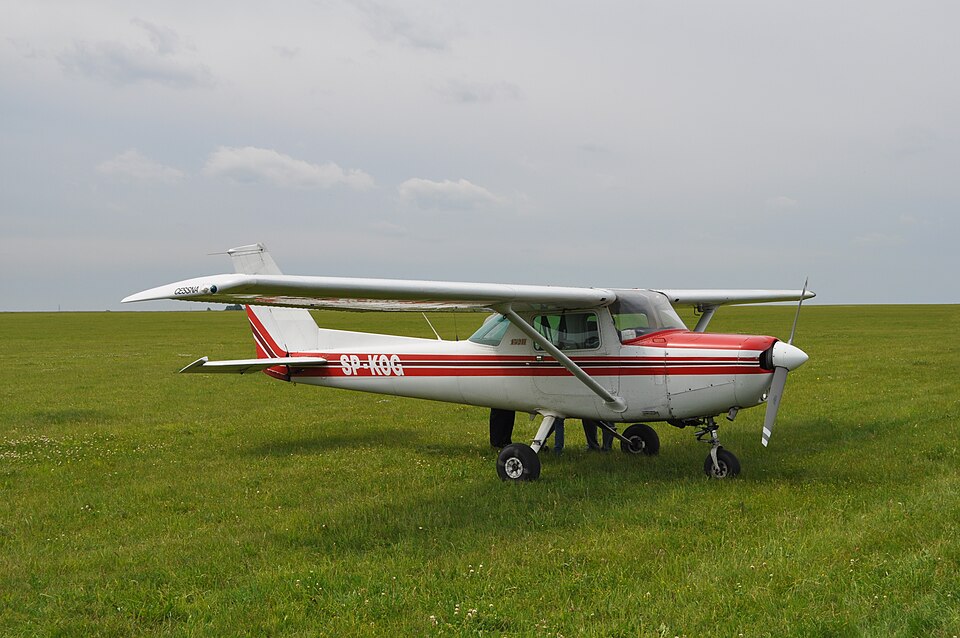
On 14 April 2022, at 09:09 local mean time, a Cessna 152, registration SP-KOG, operated by Aeroklub Warszawski, departed from EPBC airport for a solo cross-country flight to EPRU. The aircraft was piloted by a student pilot training for a PPL(A) license, under the supervision of a flight instructor on the ground. Shortly after takeoff, during the climb after the first turn, the student pilot experienced an unexpected dislodgement of the air vent collector from the upper left air intake, causing a strong airflow into the cockpit. The student assessed the situation as an emergency and decided to abort the mission. On the Babice-Radio frequency, the student announced the aircraft's position on the downwind leg and informed the supervising instructor of the intention to land at the departure airport. However, the student did not specify the reason for aborting the task, and the instructor did not seek clarification.
To expedite landing, the student executed the third turn prematurely, at a location that deviated from the standard traffic pattern at EPBC. Intensely focused on the landing procedure and limited by experience typical of early flight training, the student did not notice the presence of another aircraft in the vicinity of the third turn. The supervising instructor did not intervene to support the student.
At the same time, a Piper PA-28-181, registration SP-FFR, operated by Runway Pilot School, was flying standard traffic patterns at EPBC. The aircraft was crewed by a flight instructor and a student pilot. While in the third turn, the crew observed the Cessna approaching from the left. The Cessna overtook the Piper and crossed its flight path, moving to the right side. The Piper crew attempted to contact the Cessna on the Babice-Radio frequency but initially failed. Believing the student was heading to the Foxtrot point to leave the traffic pattern and the Babice ATZ, the Piper crew was surprised when the Cessna turned toward them, resulting in a loss of separation and a very close passing. The student pilot did not see the Piper and continued toward the fourth turn.
A subsequent radio call successfully reached the Cessna, and before the fourth turn, the student was informed of the Piper's position below and to the left. After spotting the Piper, the student aborted the approach and executed a go-around, which was performed correctly. The Cessna landed without further incident and was handed over to maintenance. The supervising instructor later debriefed the student. After the aircraft was repaired and the briefing concluded, the student resumed the solo cross-country flight, which completed without event.
Cause
The cause of the incident was the loss of situational awareness of the student pilot and the execution of the third turn at a location deviating from the standard traffic pattern at EPBC airport.
Contributing Factors
- The student pilot did not report the cockpit malfunction on the Babice-Radio frequency as the reason for aborting the task and needing an immediate landing.
- The supervising instructor of the solo flight did not take actions to support the student pilot's activities.
Safety Actions
The approved training organization conducted additional training for the student pilot using a flight simulation training device, covering emergency procedures and radio communication appropriate to the circumstances.