Introduction
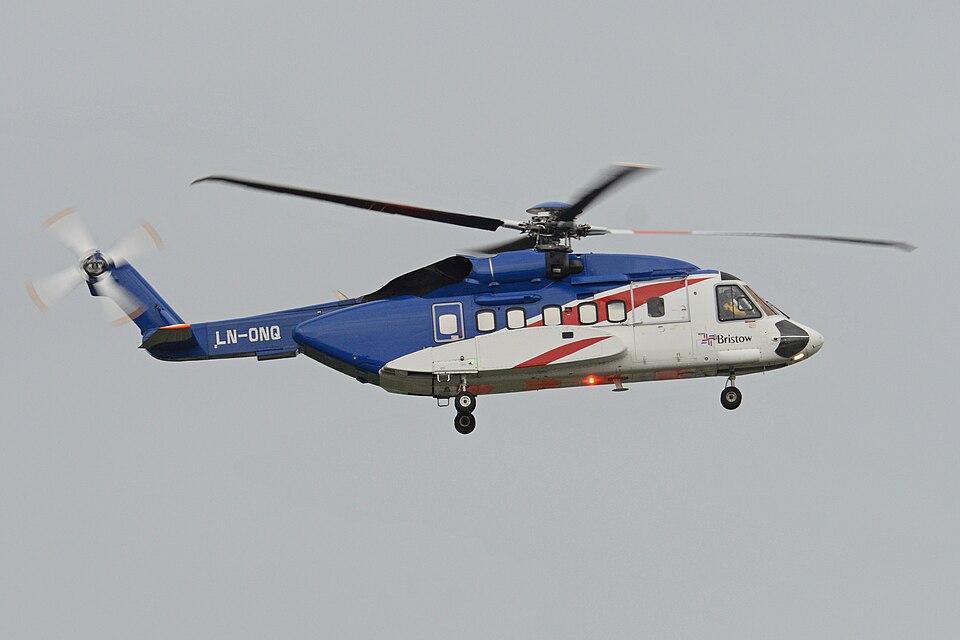
On 25 September 2020, a Sikorsky S-92A helicopter, registration LN-ONQ, operated by Bristow Norway AS, experienced a serious incident during approach to Stavanger Airport Sola (ENZV). The helicopter had departed from the West Elara oil platform in the North Sea with two pilots and three passengers aboard.
History of the Flight
Approximately one hour after departure, while descending from 7,000 ft to 1,000 ft, the MGB OIL PRESS caution illuminated at 4,500 ft, indicating that oil pressure in the main gearbox had dropped below 45 psi. The oil pressure continued to decrease, and shortly thereafter the INPUT/ACC # 1 HOT caution illuminated for the left engine. The crew followed the emergency checklist, reduced the left engine to idle, and issued a MAYDAY call. As pressure fell to 35 psi, the MGB BYPASS caution illuminated, indicating automatic disconnection of the main gearbox oil cooler. The crew descended further to 200 ft and maintained that altitude until landing. The helicopter touched down at Sola 16 minutes after the initial caution and was escorted by fire and rescue crews. After parking and rotor stop, a significant oil leak was noted on the left side of the main gearbox.
Investigation Findings
Examination of the left input module revealed a metal stop-washer (type MS20002-6) lodged on edge in the scavenge return oil passageway, reducing oil flow and causing overheating. The NSIA determined that the washer most likely entered the module through openings exposed when the generator was disconnected from the flange on the accessory module during maintenance. The last time these openings were accessible was 487.35 flight hours before the incident, suggesting the washer had been inside the gearbox for at least that period.
No injuries occurred to the crew or passengers. The incident was classified as a serious aviation incident.
Conclusion
The NSIA concluded that a foreign object—a metal stop-washer—entered the main gearbox oil system during maintenance, obstructing the scavenge oil flow and leading to the loss of oil pressure and overheating. The exact date of entry could not be established.