What happened
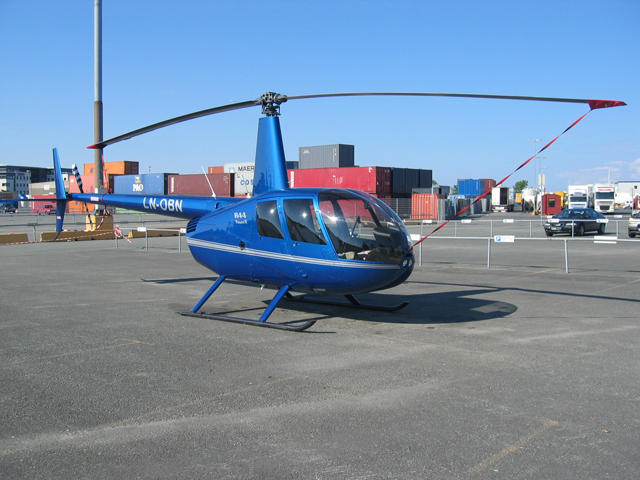
On May 20, 2024, a private Robinson R44 Raven II helicopter, registration LN-OBN, was performing a flight from Elvestrand to Kjeller for annual maintenance. The aircraft was operating under a Permit To Fly because its Airworthiness Review Certificate had expired. During the flight, the pilot encountered a thick layer of clouds and heavy turbulence while flying near Fiskarfjellet.
Deciding to abort the mission, the pilot attempted to turn back toward Alta. During this maneuver, the aircraft was hit by powerful downward winds and turbulence. Despite the pilot's attempt to increase lift by pulling the collective, the helicopter could not maintain altitude and struck the ground with low energy. The impact damaged the rotor blades, the tail section, and the front of the aircraft. Following the crash, a fuel leak was discovered, prompting an immediate evacuation of the two occupants. Both individuals sustained minor injuries.
The investigation
The Norwegian Safety Investigation Authority (NSIA) examined the wreckage and the local environment. The investigation focused on the technical cause of the fuel leak and the meteorological conditions at the time of the accident. Investigators found that a structural component—a stay between the airframe and the forward gearbox mount—had broken during the impact. This broken part penetrated the main fuel tank's aluminum structure and the internal bladder tank, causing the leak.
Meteorological data revealed that while conditions at the departure point appeared favorable, the area was subject to significant wind and turbulence. Modeling showed that winds at higher altitudes were reaching 30 to 40 knots, and the terrain likely created mechanical turbulence and downdrafts on the leeward side of the mountains.
Findings
- The primary cause of the crash was the encounter with severe turbulence and downdrafts that exceeded the aircraft's performance capabilities during the turn.
- The aircraft's fuel leak was caused by structural damage to the gearbox mount during the impact, which punctured the fuel tank.
- The pilot was unaware of a specific restriction in the Permit To Fly that prohibited passengers, though the flight was intended as a service for the owner.
- The occupants were not equipped with appropriate cold-weather gear or survival equipment for the mountain environment, leading to hypothermia before rescue arrived.