Incident Overview
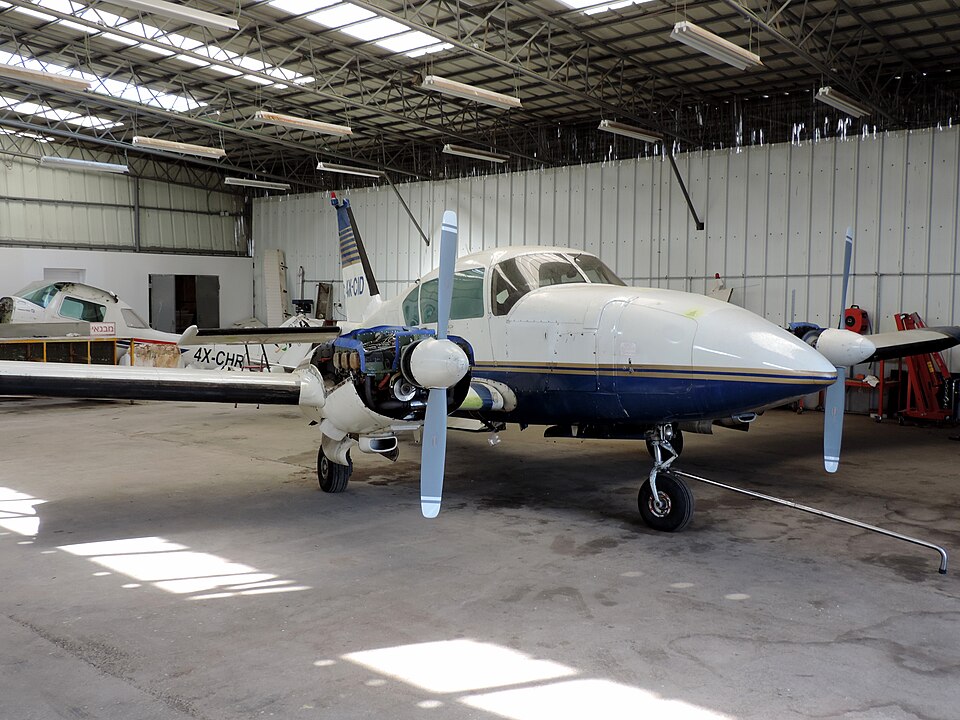
On Saturday, 20 June 2015, at approximately 10:00 local time, a Piper Aztec PA-23F aircraft, registration 4X-CID, was involved in an accident at Samos International Airport, Greece. The aircraft was preparing for takeoff as part of a general aviation fly-in organized by the Israeli Association of General Aviation. After starting the engines in the parking bay, the aircraft began moving forward slowly without the pilot's initial awareness. Despite the pilot's attempt to brake, the aircraft continued into a rainwater drainage channel located between the parking area and the runway strip, resulting in substantial damage. All three occupants—the pilot, a passenger-pilot, and a female passenger—escaped uninjured.
Aircraft and Crew Information
The aircraft was a Piper Aztec PA-23F, manufactured in 1979, with a valid airworthiness certificate issued on 26 March 2015. The pilot in command, aged 57, held a private pilot license for single- and multi-engine piston aircraft and had approximately 1,600 total flight hours, including 60 hours on the accident model. The passenger-pilot, aged 52, held a private pilot license for single-engine aircraft with 470 hours of experience. Both pilots had instrument ratings that were not current. The female passenger was the pilot's 22-year-old daughter.
Sequence of Events
On the morning of the accident, the crew performed the daily inspection, including checks of drainage systems, fuel, oil, and components. Engine oil was added to the right engine, which spilled onto the right wheel. After inspections, the occupants boarded and took their seats: the pilot in the left front seat, the passenger-pilot in the right front seat, and the female passenger in the middle row right seat. The passenger-pilot requested and received startup permission from the control tower. The pilot started the engines: first the left engine, then the right. The tachometer indicated 1,200–1,400 rpm, which the pilot reduced to 1,000 rpm while applying brake pressure to keep the aircraft stationary.
Immediately after startup, the passenger-pilot requested taxi clearance. While awaiting approval, the pilot began the after-startup checklist, and the passenger-pilot focused on flight documents. The passenger-pilot then felt the aircraft moving, looked up, and saw it approaching the drainage channel, approximately two meters from the asphalt edge. He shouted a warning to the pilot. The pilot, looking up from the checklist, observed the movement and applied maximum brake pressure, but the aircraft continued slowly across the grass verge and fell into the drainage channel, which contained rainwater from the previous evening. The impact inside the cabin was barely felt.
Post-Accident Actions
After the aircraft came to rest in the channel, the pilot closed the fuel valves and shut off the engines; the passenger-pilot shut off the mixture controls. Attempts to open the right side door were unsuccessful due to the door becoming twisted. A firefighter from the airport fire unit assisted from outside, but conflicting pulling forces prevented opening. A fellow fly-in participant, a mechanic, suggested using the emergency exit hatch. With guidance, the passenger-pilot opened the hatch located behind the pilot's seat in the middle row. The female passenger evacuated first, followed by the passenger-pilot and the pilot. The pilot immediately reported the incident to the Israeli Chief Investigator, who coordinated with Greek authorities. The Greek investigation authority later transferred responsibility to the Israeli office.
Weather and Site Conditions
Weather at the time was fair with visibility over 10 kilometers, wind from the north-northeast at 8 knots, and temperature 24°C. Rain had fallen at the airport the previous evening. The parking area was an unmarked asphalt surface between taxiways C and D, 24 meters long north to south, bordered by a 3-meter grass verge and then the drainage channel.
Damage
The aircraft sustained damage beyond repair. The occupants were not injured.