History of the Flight
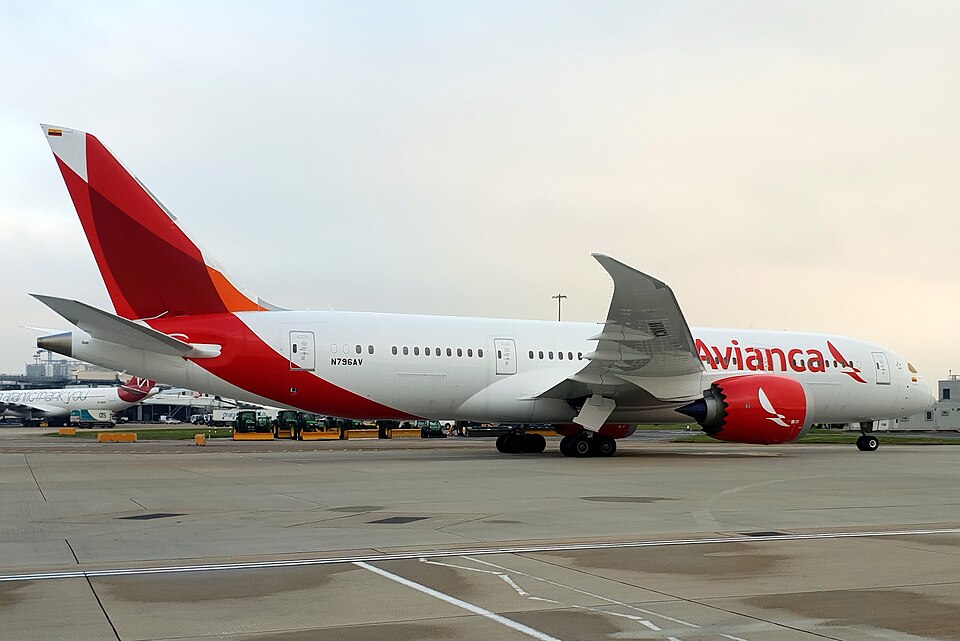
The aircraft, a Boeing B787-8 registered N796AV, was operating Avianca flight AVA018 from Bogotá (SKBO) to Barcelona-El Prat (LEBL) on 3 November 2019. It carried 3 pilots, 7 cabin crew, and 251 passengers. After approximately 8.5 hours of flight, it entered the Iberian Peninsula at flight level 410 while following airway UN725. Air traffic control instructed the crew to descend to FL300, and later the flight crew requested further descent to FL200. During the descent through FL260, the commander, who was serving as pilot flying (PF), began a passenger announcement. At that time, the aircraft's speed increased toward the maximum permissible operating speed (VMO). In response, the commander extended the speed brakes, disengaged the autopilot, and pulled the control column aft. This maneuver produced a maximum vertical acceleration of +2.14 g. The subsequent reduction in column force caused the acceleration to drop to a minimum of +0.69 g. The abrupt change in vertical acceleration resulted in serious injuries to one passenger and one cabin crew member. The aircraft continued without further incident and landed at Barcelona-El Prat Airport. The injured occupants were taken to a hospital.
Injuries to Persons
One passenger and one cabin crew member sustained serious injuries as a direct result of the abrupt vertical acceleration changes.
Aircraft and Operational Details
The aircraft was a Boeing B787-8, registered N796AV, operated by Avianca. The flight deck crew consisted of the commander as PF, the co-pilot as pilot monitoring (PM), and a relief pilot seated in the observer seat. At the start of the descent, the autopilot and autothrottle were engaged. The aircraft was using vertical navigation speed (VNAV SPD) mode. To increase the descent rate and recover the vertical profile, the PF had selected a speed of 340 knots indicated airspeed. The autothrottle was in HOLD mode.
Conclusions
The investigation concluded the probable cause of the accident was the set of actions taken by the PF to prevent exceeding VMO, which resulted in the abrupt change in vertical acceleration that seriously injured a passenger and a cabin crew member. Contributing factors included the PF's decision to make a passenger announcement without delegating his functions to the PM, and a lack of monitoring from the PM.