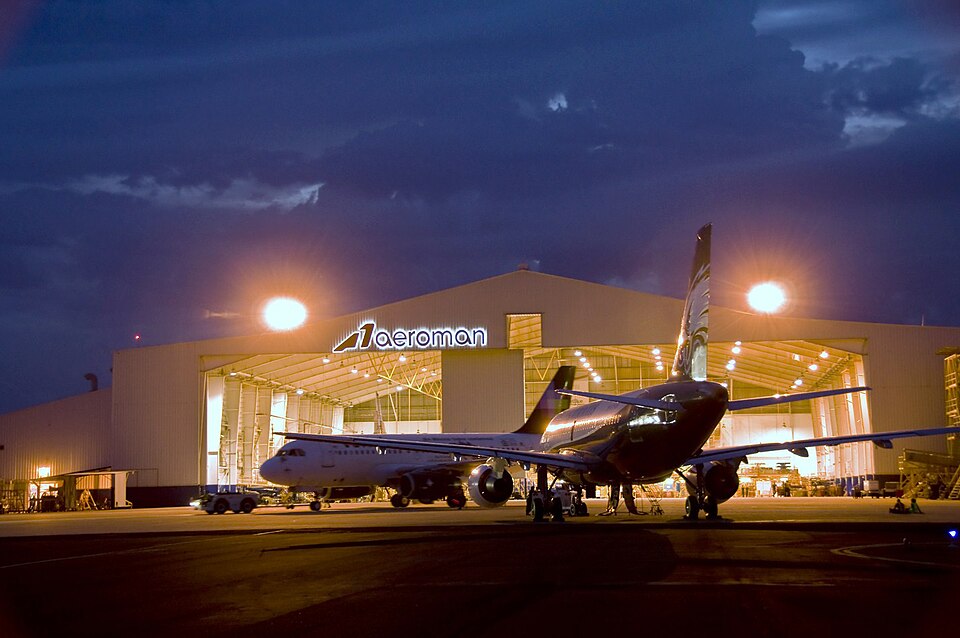
On December 26, 2005, an Airbus A319-112 C-GJTC operated by Air Canada was involved in an aviation accident near Winnipeg International Airport, Manitoba, CA. This summary draws on records from the Transportation Safety Board of Canada (TSB); 8 related events involving the same aircraft type or operator are linked below.
An Air Canada Airbus A319-112 (C-GJTC) landed hard and left of centerline at Winnipeg in freezing fog. A left bank after autopilot disengagement caused the drift; one tire was cut and two edge lights broken.
Incident Overview and Aircraft Details On 1835 central standard time, Air Canada Flight 261, an Airbus A319-112 with registration C-GJTC and serial number 1668, was landing at Winnipeg International Airport in darkness. The aircraft was conducting an instrument landing system (ILS) approach to Runway 13 using the autopilot. At approximately 80 feet above ground level, the captain disengaged the autopilot and manually completed the approach and landing. ## Landing and Damage The aircraft touched down firmly about 1,600 feet from the runway threshold and well left of the runway centerline. During rollout, the left landing gear briefly tracked outside the runway edge lights on the left side. Two runway edge lights were broken, and one tire on the left wheel set sustained a cut and was replaced. No other damage to the aircraft was reported, and there were no physical injuries. ## Weather Conditions The most recent weather observation at Winnipeg at 1815 central standard time reported wind from 180° true at 8 knots gusting to 15 knots, vertical visibility of 100 feet, visibility of 3/8 statute mile, and freezing fog. The runway visual range (RVR) for Runway 13 in the 10 minutes before the observation was variable, with a minimum of 3,500 feet and a maximum of 6,000 feet. The temperature and dew point were −1°C. The automatic terminal information service (ATIS) weather available to the crew, based on 1805 conditions, reported wind from 170° magnetic at 12 knots, vertical visibility of 200 feet, visibility of 1/2 statute mile, and freezing fog. At four miles on final approach, the crew received an advisory that the RVR was 2,600 feet. An approach was authorized under the prevailing visibility. ## Runway and Approach Environment The runway surface condition report for Runway 13 issued at 1221 indicated that a strip about 100 feet wide down the runway centerline was 50 percent bare and dry and 50 percent bare and wet. The remainder of the runway on the sides was reported as 30 percent bare and dry with 30 percent ice patches. Runway 13 was served by a precision approach Category I ILS with a decision height of 200 feet above ground level. The approach plate advisory visibility was 1/2 mile or 2,600 feet. The final approach course was 134° magnetic with a standard 3° glide slope. The lighting for Runway 13 was considered appropriate for Category I approaches, with a 2,400-foot approach lighting system set at full intensity, level 5, at the time of the incident. ## Crew Background The captain had been employed with Air Canada and previously with Canadian Airline International Ltd. for about 22 years, with approximately 15,000 hours of total flying time and about 2,500 hours on the Airbus. His training records indicated excellent crew resource management skills. He was rested and had completed two 8-hour duty days in the 48 hours before the occurrence flight. The captain held a valid airline transport pilot licence subject to the limitation that he wear glasses, with contact lenses approved. He was wearing both contact lenses and new progressive glasses, which in combination met his vision prescription. The captain had never before worn his new glasses while landing in low visibility. Following the occurrence, he obtained bifocal glasses with a clear demarcation between the distance and reading segments. The first officer held a valid airline transport pilot licence with the requirement that he wear glasses, which he did on the incident flight. He had been employed with the company for about six years, with approximately 9,700 hours of total flying time, including about 2,400 hours on the Airbus. He had requalified on the Airbus in May 2005 after 18 months on the Bombardier RJ. His training record noted excellent crew resource management skills. In the two days immediately preceding the incident flight, he had flown 10 hours, and he had been off duty for the three days before the duty. ## Approach and Landing Sequence Before the approach, the crew briefed and discussed a possible missed approach. Because of the low visibility and ceiling, the crew decided that the captain would fly the approach and landing. The navigation system was programmed for the possible missed approach, and the cabin crew was advised of the weather conditions and the possibility of executing a missed approach. A Category I ILS approach to Runway 13 was flown on autopilot in accordance with existing Canadian Aviation Regulations and company standard operating procedures. The captain was the pilot flying (PF) and flew from the left seat. The autopilot was engaged and coupled to the ILS, and the auto-thrust system was also active. The automatic systems flew a stabilized approach profile at a speed of approximately 130 knots. The first officer, the pilot not flying (PNF), monitored the approach on instruments. The approach lights were visible to both pilots about 100 feet above decision height, and the PF elected to land. Neither pilot could see the runway surface at decision height. The aircraft landing lights were on during the approach and landing. The PF disengaged the autopilot at about 80 feet above ground level and continued flying the approach manually. When the captain disengaged the autopilot, it was believed that the aircraft was over the extended runway centerline with the wind drift eliminated. However, the runway surface was obscured by fog and the reflection from the landing lights. Approximately three seconds after the autopilot was disengaged, the PF banked left about four to five degrees. At about 30 feet above ground level, the PNF looked up and observed the aircraft drifting to the left and advised the PF, who was not taking action to stop the drifting. The call was acknowledged. The PF began the landing flare, slightly reduced the left bank, and moved the thrust levers to idle. Immediately before touchdown, the PF made a large right rudder input, and the aircraft landed hard while crabbed to the right. There was some vibration during the initial part of the rollout as the PF steered the aircraft toward the runway centerline and braked. ## Post-Landing Inspection and Analysis The PF inspected the aircraft with maintenance personnel at the gate while the passengers deplaned. No damage was found. Subsequent inspection by maintenance personnel revealed a cut in one of the left main wheel tires. A runway inspection conducted by airport staff immediately after the occurrence found skid marks from the aircraft's right main gear tires on the runway and two broken runway edge lights in the path of the aircraft's left landing gear. The crew's planning before the approach indicated that they were not fixated on landing at Winnipeg and were prepared to execute a missed approach. They had left themselves options and appeared prepared to execute them. Although the absence of a cockpit voice recorder (CVR) recording prevented a review of the crew's interaction, the decisions were taken mutually and indicated that crew resource management techniques were used. Their planning also indicated a heightened awareness of the degraded visual environment on the runway. The reported weather and other weather information obtained indicated that the required visual references were available for the landing and that the decision to continue at decision height was reasonable. Information also indicated that the aircraft was properly positioned with drift eliminated at decision height. The captain's decision was consistent with company operating procedures, and a normal landing in the vicinity of the runway centerline should have been assured, given the captain's training and experience. Analysis of the flight data recorder (FDR) information and flight simulation indicated that the aircraft began to drift left because the captain banked the aircraft four to five degrees to the left, removing the crosswind correction. The left bank, coupled with the crosswind from the right, moved the aircraft well left of the runway centerline. The computer flight simulation indicated that the left bank began after the runway approach and threshold lights disappeared under the nose of the aircraft. At this point, only the two rows of runway edge lights were visible and appeared at an angle to the aircraft heading. In this situation, the FSF ALAR briefing note indicates that there is a tendency for pilots to align the aircraft with the runway, which is likely what the PF did. The subsequent drift should have been observed and corrected. Once visual references were acquired by the PF and the autopilot was disconnected in preparation for landing, the first officer, as PNF responsible for monitoring the approach predominately inside the cockpit, looked up and saw that the aircraft was drifting. The captain, with PF responsibilities predominately outside of the cockpit, did not recognize that the aircraft was moving to the left. While the visual environment was degraded in darkness, and the reflection from freezing fog particles obscured the runway threshold, the external visual environment was essentially the same for both pilots. Even though the PF had to concentrate on controlling the aircraft, the PF rather than the PNF should have been more likely to detect the left drift. Consequently, other factors may have degraded the PF's visual environment. Another factor influencing the PF's visual environment was the combination of contact lenses and new eyeglasses. First, the effect of the reflection from the freezing fog could have been greater for the PF than for the PNF. Second, the PF may have had some distortion and loss of night vision capability that had not been experienced previously due to the characteristic of progressive eyeglass lenses to interfere with peripheral vision. Third, progressive lenses can require some period of adjustment to use effectively in moving from far to near vision. The PF had worn the eyeglasses only a few times and may not have been fully adjusted to them. Finally, the PF may not have adjusted to the need