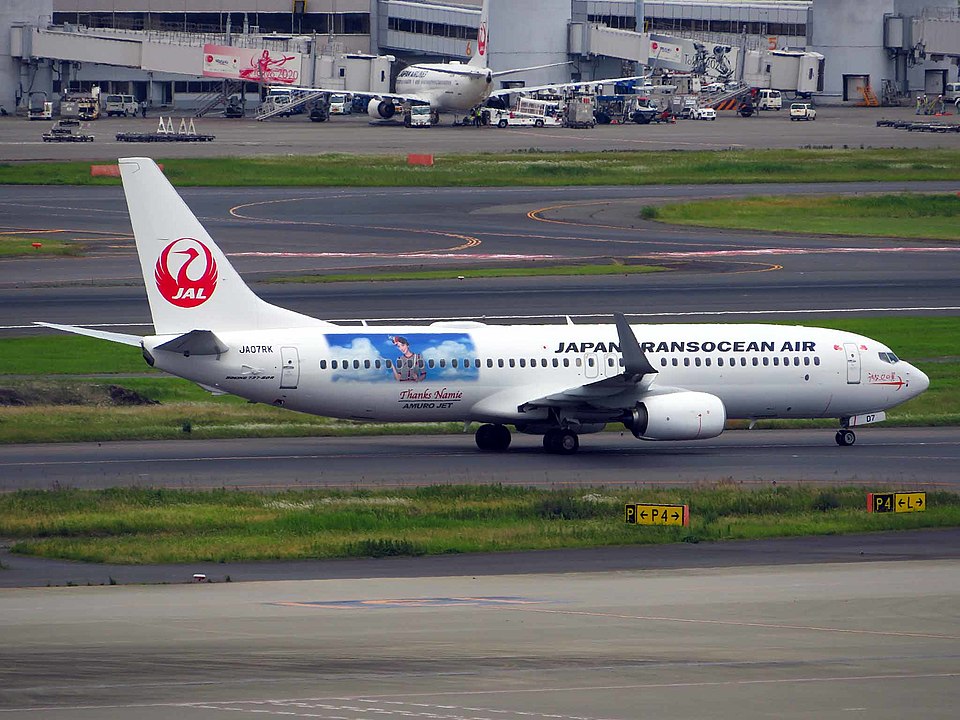
Flight Details
On October 3, 2022, at approximately 12:55 Japan Standard Time, a Boeing 737-800 registered JA07RK, operated by Japan Transocean Air Co., Ltd., was flying from Naha Airport to Komatsu Airport as scheduled flight 36. The aircraft carried 106 occupants: the pilot in command, five other crew members, and 100 passengers.
Sequence of Events
The flight departed Naha at 11:22. While cruising at flight level 410 (about 41,000 ft) in clear conditions, the aircraft suddenly encountered significant shaking (termed the 1st Shaking) around 12:50. The pilot turned on the seat belt sign and descended to FL 390, then to FL 370, where the shaking ceased. At approximately 12:54, the pilot turned off the seat belt sign, anticipating no further turbulence. Shortly after, at 12:55, the aircraft experienced another episode of lateral shaking (the 2nd Shaking). At that time, a cabin crew member (Cabin Crew A) was in the aisle. The shaking threw Cabin Crew A against the left side wall; they grabbed a seat headrest and braced with the right foot to avoid falling. The seat belt sign was immediately turned on again, and Cabin Crew A returned to the aft galley and occupied the attendant seat. The flight continued and landed at Komatsu Airport at 13:28.
Injuries
Cabin Crew A reported discomfort in the right foot after bracing. On October 4, a medical examination yielded a diagnosis of suspected right pollex pedis sesamoid fracture. A follow-up on October 7 confirmed a right pollex pedis sesamoid fracture. The injury was classified as serious.
Aircraft Status
No damage to the aircraft occurred.
Weather and Environmental Conditions
Pre-flight weather forecasts, including domestic significant weather prognostic charts and flight route forecast cross sections, indicated no phenomena expected to cause turbulence along the route. Atmospheric analysis at the time of the accident similarly showed no significant vertical wind shear or clouds likely to produce moderate turbulence. No other aircraft had reported turbulence to air traffic control. The pilot stated that the aircraft was flying outside clouds and no turbulence signs were visible on flight instruments or the airborne weather radar.
Crew Information
The pilot in command, aged 54, held an airline transport pilot certificate with a Boeing 737 type rating and had 19,217 total flight hours. The first officer, aged 27, held a commercial pilot certificate and had 525 total flight hours. Both possessed valid Class 1 aviation medical certificates.