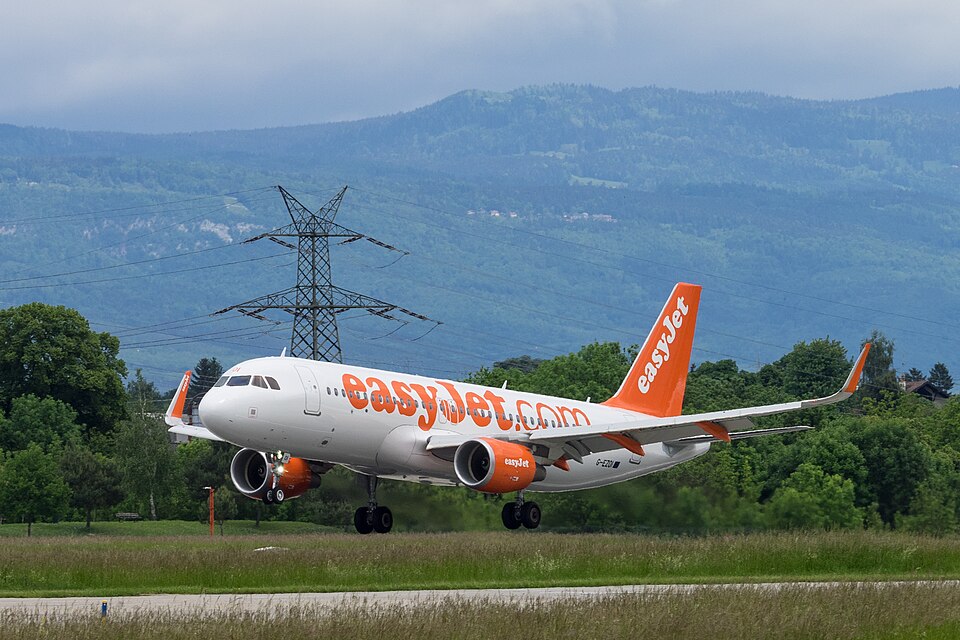
History of the Flight
Before departure from Edinburgh, the cabin manager reported a louder-than-usual fan noise. The commander identified it as coming from an avionics vent fan. After discussion with the co-pilot and cabin manager, the commander decided to continue the flight while monitoring the noise for any change.
During cruise, the noise increased and vibration became apparent. The commander sent a message to company Maintenance Operations Control (MOC) requesting engineering assistance upon arrival at Bristol. The crew also reviewed procedures for fan overheat or fire/smoke indications.
Shortly after starting initial descent near Birmingham, a strong burning smell filled the flight deck. The crew donned their oxygen masks and initiated a diversion to Birmingham Airport. The commander alerted the cabin crew and gave a NITS brief. The fan noise was then heard to wind down, and the Electronic Centralised Aircraft Monitoring (ECAM) displayed a vent extract fault message. The crew performed the ECAM actions, after which the smell of smoke lessened. A PAN was declared to air traffic control, and an uneventful approach and landing was made at Birmingham.
Aircraft Examination
The avionics blower and extract fans were removed and examined. The extract fan was found to be seized, with a worn rear flange, damaged rotor, and worn front bearing. The blower fan had no significant anomalies and was fully functional. Both fans were replaced, and the aircraft returned to service.
Previous Similar Events
The AAIB reported a similar in-flight fumes event in July 2015 involving an Airbus A320-232. That report noted safety actions by the aircraft manufacturer, including a 2005 vendor service bulletin to replace steel ball bearings with improved ceramic bearings, and an August 2013 service information letter adding a periodic bearing replacement task with a recommended 10,000 flying hours interval, with operators advised not to exceed 12,000 hours. The manufacturer also planned in-service evaluation of fan vibration monitoring to reduce future events. Subsequently, an optional modification introduced a ball bearing health monitoring (BBHM) function to stop the fan before failure.
Safety Action
The fan manufacturer issued service bulletin 3454HC-21-101 on 18 April 2018, detailing the optional BBHM modification. The operator had already introduced a soft-life campaign beginning in 2016 to incorporate earlier recommendations, and in November 2018 began a campaign to install the BBHM function; by the date of the report, 23 modified fans had been installed.