Incident Overview
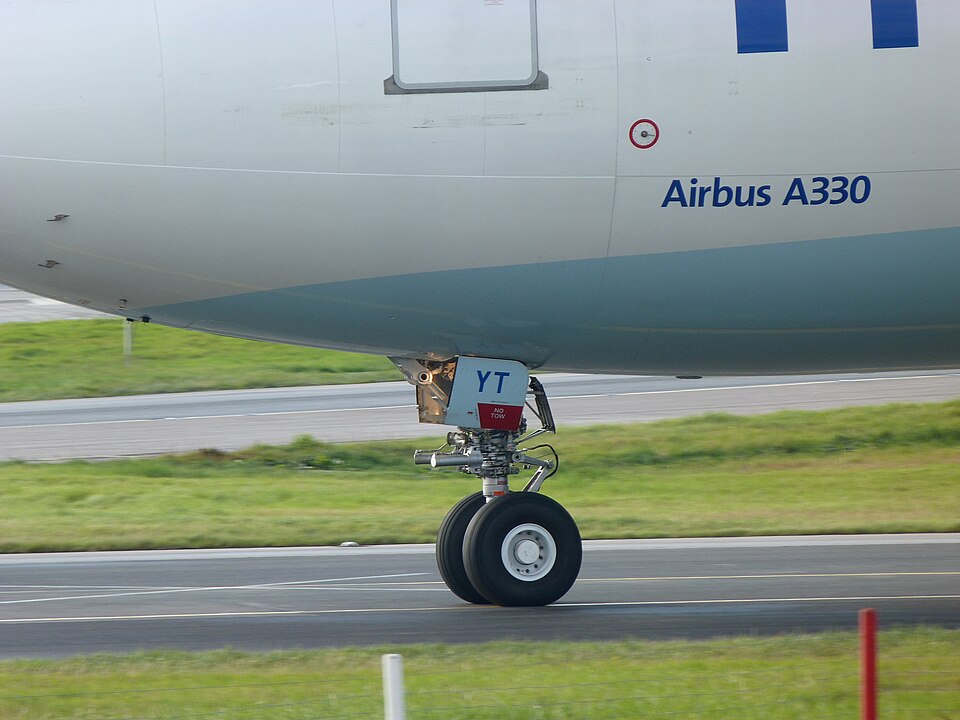
On 24 June 2013, an Airbus A330-243, registration G-OMYT, experienced a high-pressure (HP) turbine blade failure at Manchester Airport. The incident was investigated by the engine manufacturer, and a forensic report was issued.
Blade Failure Analysis
Examination revealed that the blade failure resulted from high cycle fatigue propagation, which was attributed to surface damage caused by Type 2 Sulphidation corrosion. During the investigation, unidentified deposits were found on the blade surfaces, raising concern that they might be volcanic in origin, specifically from the 2010 eruption of Eyjafjallajökull in Iceland.
Additional Forensic Testing
Further forensic analysis was conducted to determine the composition of the deposits. Completed in August 2014, the analysis did not identify compounds typically associated with volcanic activity. While an encounter with volcanic gaseous sulphur could not be entirely discounted, the investigation concluded that the deposits were probably an accumulation of atmospheric dirt and pollutants.