Summary of Event
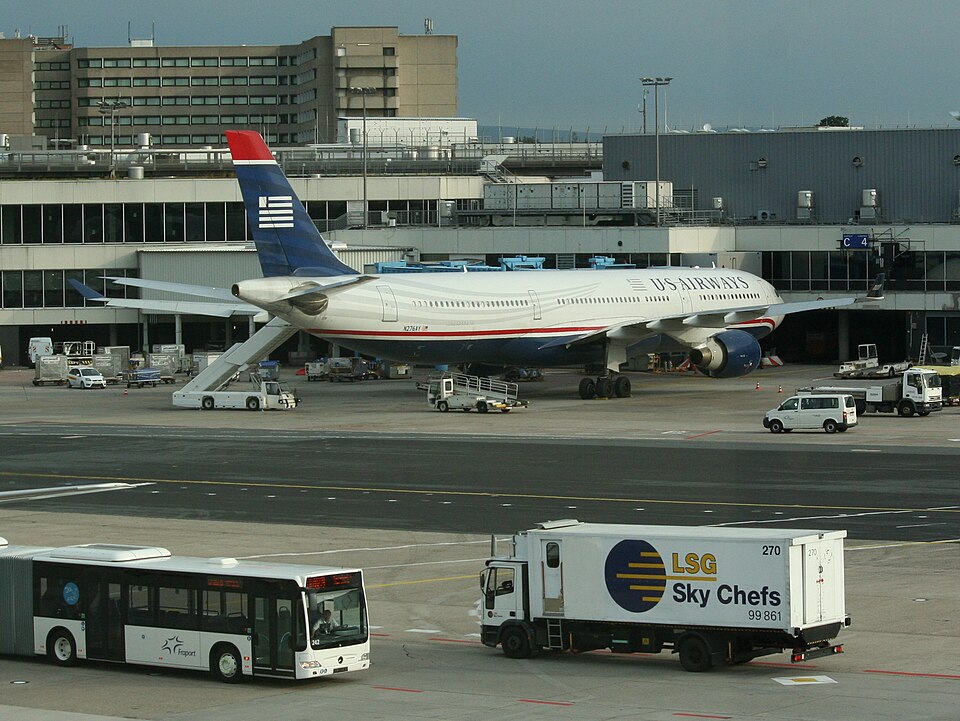
On 26 June 2016, an Airbus A330-323 (registration N276AY) was at Stand 307 at London Heathrow Airport after passenger boarding. While the aircraft was preparing for departure, the cabin filled with smoke. The flight crew attempted to manage the situation, and a passenger evacuation was initiated by cabin crew. Most passengers exited via the jetbridge at door 2L, but some used emergency slides from aft doors. The source of the smoke was later traced to a failure of the Auxiliary Power Unit (APU) load compressor carbon seal.
Sequence of Events
The APU was providing conditioned air while external electrical power was connected due to an unserviceable APU generator. After door arming, the jetbridge was removed at 1057 hrs, but a navigation system defect prompted the commander to request engineering assistance. The jetbridge was re-attached, and an engineer, accompanied by the Gate Operational Co-ordinator (GOC), entered the flight deck. The commander noticed a burning smell and then saw smoke appear behind his seat, with the smoke lavatory warning illuminating on the ECAM. He assumed the APU was the source and closed the APU bleed valve. Meanwhile, the International Relief Officer (IRO) and co-pilot began addressing checklists. Smoke quickly spread through the cabin.
Cabin Crew Actions
In the mid-cabin, an FA (E-FA) saw smoke fill the cabin rapidly and attempted to call the commander via interphone but received no response. She made a passenger announcement to evacuate. Passengers were instructed to leave belongings. In the aft cabin, an FA heard an explosive noise before smoke appeared. FAs reported dense white smoke with a chemical or electrical smell. Passengers became agitated, and some stood up.
Evacuation and Response
One FA at the aft galley initiated the evacuation. Passengers opened exits 3L and 3R; exit 3L was not armed, so its slide did not deploy, while exit 3R deployed its slide but was not used. The commander made a PA to halt the evacuation, believing he had isolated the smoke source, but FAs continued directing passengers to the jetbridge. The GOC informed the operator’s ground team and helped passengers ashore. Emergency services arrived quickly. Three passengers and several FAs received treatment for smoke inhalation, and one passenger sustained a minor leg injury from an escape slide.
Aftermath and Investigation
The AAIB investigation traced the smoke to a failure of the APU load compressor carbon seal, which allowed hot oil to enter the bleed air supply. Metallic debris in the shared oil system compromised the load compressor bearing, leading to the seal failure. The APU manufacturer has taken action, and the Master Minimum Equipment List (MMEL) has been amended. Six safety recommendations were made regarding interphone design, passenger briefings, and crew training coordination. Two additional recommendations concern automatic APU shut-down protection enhancements.