Synopsis
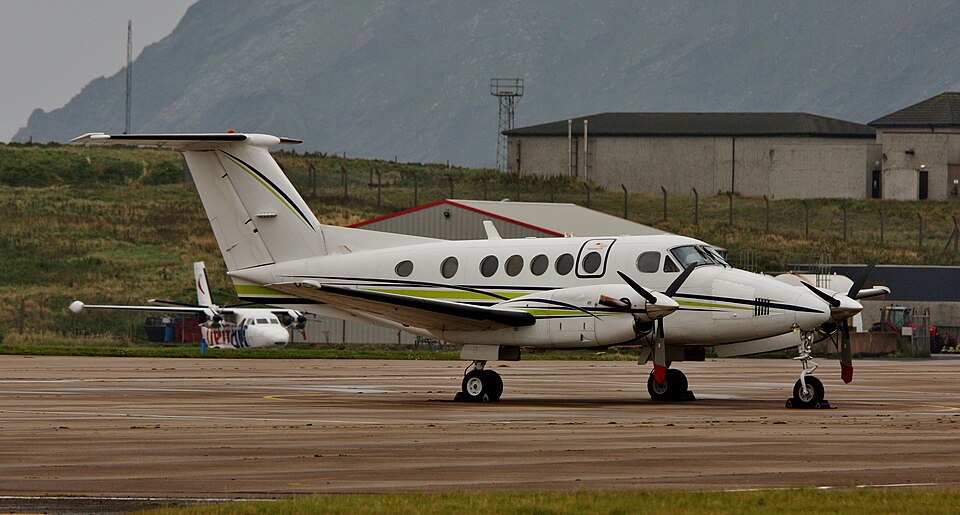
On 3 October 2015, at approximately 0920 UTC, a Beech B200 Super King Air, registration G-BYCP, crashed near Chigwell, Essex. The aircraft was climbing after takeoff from Stapleford Aerodrome when it began a right turn at around 750 ft amsl. It continued climbing to 875 ft amsl before descending. The descent ended when the aircraft struck trees at the edge of a field, about 1.8 nm southwest of the aerodrome. The pilot and passenger sustained fatal injuries, and the aircraft was destroyed. Evidence suggested a loss of control in instrument meteorological conditions, but this could not be confirmed due to lack of cockpit evidence. The possibility of pilot incapacitation contributing to the accident was considered. Three Safety Recommendations were made regarding Terrain Awareness and Warning Systems (TAWS).
History of the Flight
The flight was a non-commercial operation from Stapleford Aerodrome to RAF Brize Norton, with two company employees on board: the pilot (aircraft commander) in the left seat and a second pilot in the right seat. The commander held a Commercial Pilot’s Licence (CPL) with 1,941 total hours (162 on type). The second occupant held an Airline Transport Pilot’s Licence (ATPL) but was not rated on the King Air; his licence was valid on Bombardier Challenger 300 and Embraer ERJ 135/145 aircraft. The pilot delayed the planned 0815 departure due to poor meteorological visibility. At approximately 0850, visibility was estimated at 600 m. By approximately 0915, visibility had improved to at least 1,000 m, and the pilot decided conditions were suitable. The aircraft took off at 0921. After takeoff, it climbed on a track of approximately 205° magnetic. At about 750 ft amsl, it began a right turn. The aircraft continued climbing in the turn to a peak altitude of 875 ft amsl, then commenced a descent, striking trees in a field. A witness walking near the impact site reported hearing the aircraft, turning, and seeing it in a nose-down attitude with the right wing slightly low. The aircraft appeared intact and not on fire, and struck the ground with high speed.
Recorded Data
Radar data from four installations (Heathrow, Debden, Stansted, Bovingdon) provided 25 seconds of coverage. The aircraft climbed at an average rate of 1,500 ft/min to 875 ft amsl. As it climbed, it passed a mast at 800 ft amsl and had started a right turn. After reaching 875 ft amsl, the aircraft began to descend, with the descent rate increasing to over 7,000 ft/min. Groundspeed increased over the final 15 seconds, reaching 188 kt before radar coverage ended at approximately 230 ft agl.
Accident Site
The accident site was in open farmland 1.8 nm southwest of Stapleford Aerodrome, elevation 220 ft amsl. The aircraft struck a line of oak trees in a shallow pitch attitude at high speed, breaking into many fragments. Wreckage was distributed along a 300 m trail oriented on a heading of 290° magnetic. Impact marks indicated a roll attitude of about 12° right wing low. A strong smell of unburned fuel and scorching of wreckage suggested an intense, short-duration fuel fire after impact. All major components were identified at the site. The fuselage from cockpit to vertical fin was found 170 m from initial impact, severely damaged by fire. A section of left inboard wing, nacelle, and engine was located 200 m from impact, also fire-damaged.
Wreckage Examination
Both engines were dismantled and inspected. No evidence of pre-impact failure was found. Internal witness marks indicated both engines were producing medium to high power at impact. The propellers exhibited blade bending and tip fractures consistent with rotation under power at or near impact. The left propeller blades were bent backwards with detached tips; the right propeller had two blades bent (one forward, one backward) and one blade broken off. The high degree of fragmentation and fire damage prevented a complete evaluation of the aircraft’s systems.