Incident Overview
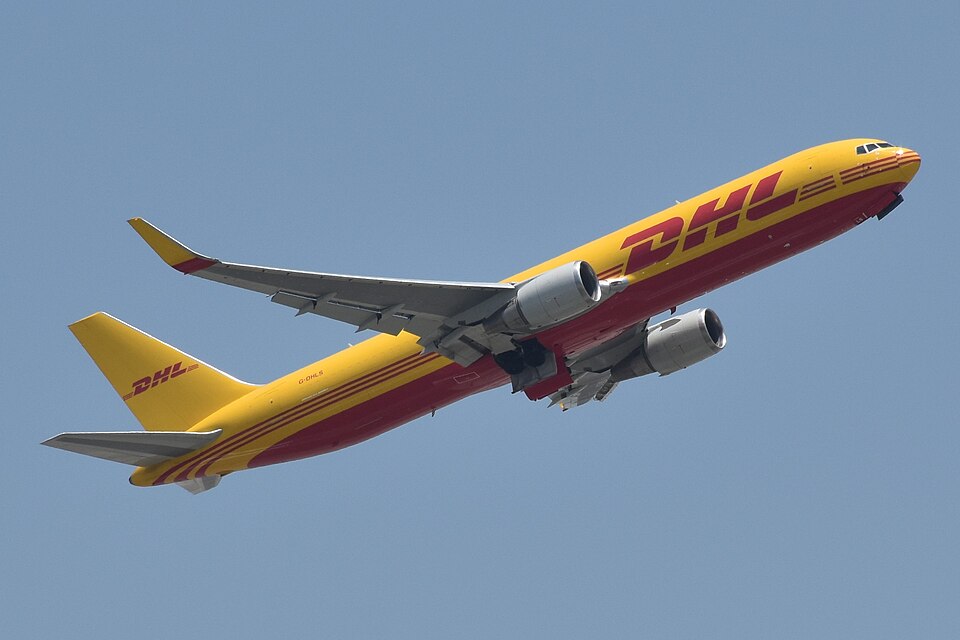
A Boeing 767-316F, registration G-DHLS, experienced a serious incident on 9 October 2025 while operating a cargo flight from Keflavik, Iceland to the UK. The aircraft was at FL350 when the crew encountered a jam in the roll control system. The commander declared a MAYDAY and descended to FL200, where a coordinated input from both pilots freed the controls. The flight continued to East Midlands Airport without further event.
Flight History
The aircraft arrived in Keflavik approximately ten hours before departure. Cargo consisted of fresh goods packed with frozen gel packs. After loading, the flight departed at 1707 UTC with the co-pilot as pilot flying. The first 90 minutes were uneventful. While approaching west of Glasgow at FL350, the autopilot caution activated as ATC instructed a heading change. The selected heading mode did not produce a turn, and the autopilot disengaged. Manual control revealed limited wheel movement in roll, though pitch and yaw remained normal. The commander made a MAYDAY call and descended to FL200. During descent, the crew consulted the Quick Reference Handbook for jammed controls and checked circuit breakers. After leveling off, they applied maximum force to the control wheel simultaneously. The co-pilot reported a sensation of something breaking, and roll control returned. The autopilot was re-engaged, and the aircraft landed normally.
Recorded Data
Flight data recorder analysis showed that for 75 minutes at FL350, the right inner aileron deflection increased progressively relative to the left, reaching a differential of over four times. Control wheel force during the event was measured at 15 times normal levels, with a maximum of 76.6 lbf before returning to normal after the jam was released.
Meteorological Conditions
Keflavik experienced rain and drizzle before departure, with temperatures up to 9°C and dew point matching from 1500 UTC. Crew noted that some pallets were wet from rain when loaded. The outside air temperature at FL350 was -54°C, and at FL200 it was -15°C.
Aircraft Systems
G-DHLS, originally built in 2012 as a passenger aircraft, was converted to freighter in 2023. The aileron control system is mechanical with hydraulic assistance and multiple redundancies. The system includes primary and backup cables, control quadrants, and lateral central control actuators. The aircraft had completed all mandated modifications and inspections related to previous ice-induced roll control jams.
Outcome
No injuries were reported, and the aircraft sustained no damage. The incident is attributed to likely ice formation on the aileron control system, which caused a temporary jam.