Introduction
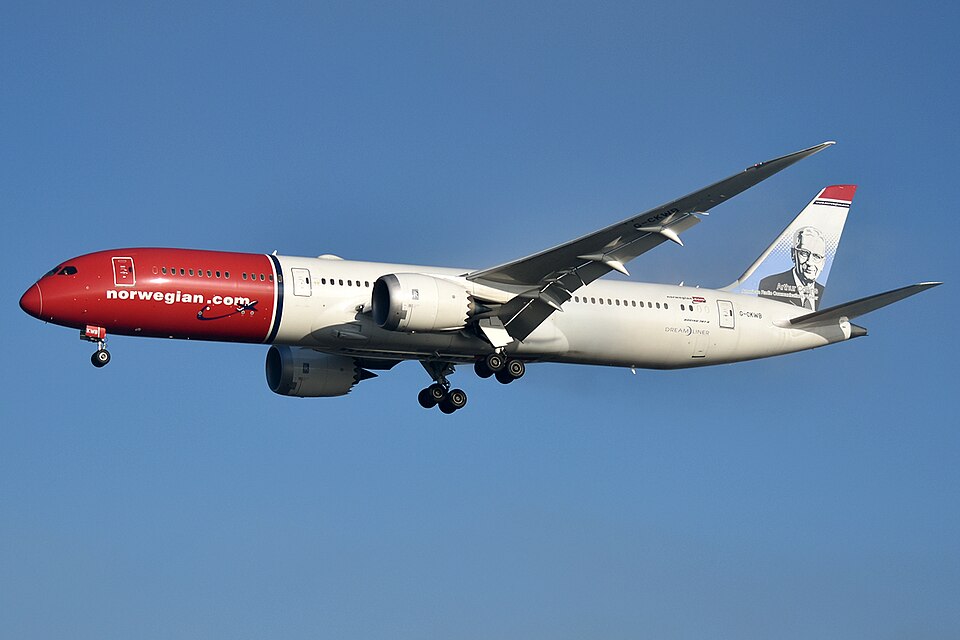
On 12 August 2019, a Boeing 787-9 Dreamliner, registration G-CKWB, was involved in a ground accident at London Gatwick Airport. The aircraft was preparing to depart for a flight to the USA when its tail cone struck a blast screen during pushback. No injuries were reported among the 10 crew and 342 passengers.
Incident Details
The aircraft was parked on Stand 38, a confined corner of the ramp with blast screens on two sides. The stand has special procedures and a yellow painted line on the apron to guide the pushback tug driver to the correct position and angle for taxi. At 0910 hrs UTC, the crew received permission to push back. CCTV footage showed the aircraft initially moving straight back along the line but then deviating from the marked route. The headset operator signaled the driver to slow down, intending to direct him to pull forward, but before this could be done, the tail cone contacted the blast screen.
Ground Handling
Both the headset operator and the tug driver had significant experience at Gatwick and had previously pushed aircraft from Stand 38. They started their shift at 0400 hrs and were about halfway through. Neither could see the tail of the aircraft during the pushback. Neither the driver nor the headset operator was aware of the contact; another ground handler in a vehicle observed it and alerted them.
Aftermath
The flight crew were unaware of the contact but noted the Auxiliary Power Unit (APU) had shut down automatically. The headset operator informed the crew, who then advised ATC. After assessing the damage, the aircraft was moved under its own power to Stand 37, where engines were shut down and passengers disembarked. The APU exhaust fairing was found damaged. The aircraft was withdrawn from service for repairs.
Analysis
The investigation found that G-CKWB was not pushed onto the required line or stopped at the correct point, resulting in contact with the blast screen and damage to the tail cone. The pushback presented challenges due to limited space, inability of ground crew to see all parts of the aircraft, and ramp noise hindering communication.
Safety Actions
The aircraft operator temporarily suspended use of Stand 38, prepared a risk assessment on using additional ground staff to monitor wingtips and tail during pushback, issued notices reminding pushback crews of procedures and the importance of stopping if the aircraft deviates, and provided additional training to headset operators. The airport operator painted a 'STOP' mark on the ramp beside the nosewheel stop line on Stand 38 to clarify the limit.