Introduction
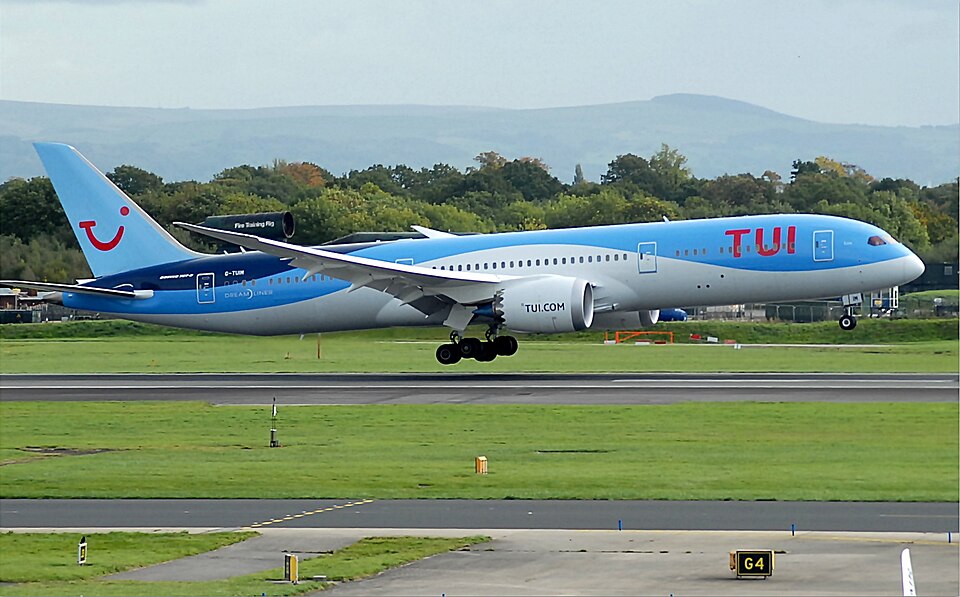
On 6 July 2018, a Boeing 787-9 Dreamliner, registration G-TUIM, operated a commercial passenger flight from Tenerife South Airport to London Gatwick Airport. During the approach to Runway 26L, the aircraft experienced a progressive degradation of normal flight controls, landing gear lowering, and nosewheel steering after flaps 1 was selected. The crew executed a go-around, completed relevant checklists, and landed safely with flaps 20 and inoperative nosewheel steering. The incident was caused by a failure of the Nose Landing Gear Isolation Valve (NLGIV).
History of the Flight
The aircraft was radar vectored on the base leg for an ILS approach to Runway 26L. Weather was good with CAVOK and light wind. After flaps 1 selection, the slats primary fail and flaps primary fail EICAS messages appeared. Subsequently, difficulty was encountered lowering the nose landing gear, and a fault indicated with the nosewheel steering. The crew discontinued the approach, requested radar vectors from ATC, and actioned several electronic checklists. The nose landing gear was lowered using the alternate system, but the nosewheel steering fault persisted. The crew discussed landing without nosewheel steering, planning to use autobrake 4 and rudder for directional control, then manual braking and differential braking if needed. The cabin crew was briefed for a precautionary landing, later upgraded to an emergency landing due to the nosewheel steering issue. The Senior Cabin Crew Member initiated brace commands as the aircraft neared landing. The aircraft landed safely and was towed to the stand; passengers disembarked normally.
Recorded Information
At 1652 hrs, during descent at 5,500 ft, flaps 1 was selected. The slats primary fail caution displayed, and the crew actioned the Electronic Check List (ECL). The aircraft entered a right orbit at 4,000 ft. During the orbit, flaps 5 was selected, triggering a flaps primary fail message. The ECL required a flaps 20 landing. After the orbit, the aircraft was vectored northeast, and flaps 20 was selected using the electrical alternate system. At approximately 9 DME, landing gear was selected down, resulting in a gear disagree message; the nose landing gear indicated in transit. The approach was broken off, and during another orbit the nose landing gear was lowered using the alternate system. The aircraft then positioned onto the ILS, autopilot disengaged at 1,140 ft, and a stable approach was flown. The landing rollout was 5,513 ft, with no directional control difficulties reported.
Aircraft Information
This was the third incident involving G-TUIM in a week with similar system degradation indications. On 30 June and 4 July 2018, slats and flaps primary failure messages appeared, but no nose landing gear or nosewheel steering issues were noted. Engineering performed system checks that passed, and a replacement Hydraulic Control Unit was ordered. On 6 July, additional gear disagree and nosewheel steering EICAS messages appeared, and the hydraulic synoptic page showed an amber cross through the NLGIV. The NLGIV failed a serviceability test and was replaced; no recurrence was reported by publication.
Engineering Investigation
The aircraft manufacturer examined the NLGIV and found that early in the 787 programme, similar events were caused by brinelling of a pintle and coining of a valve seat. The Acceptance Test Procedure (ATP) was altered to identify this condition, and manufacturing changes were made to prevent brinelling. A cold test of the NLGIV at -40°F showed the unit failed to open, a repeatable failure. This finding supports future work and potential mitigating actions. The manufacturer planned revisions to the Fault Identification Manual (FIM) and Aircraft Maintenance Manual (AMM) to add operational tests of the valve.
Analysis
The flight crew faced escalating system degradation from initial slats and flaps primary failures. The nose landing gear failed to achieve selected position, requiring alternate lowering, followed by a nosewheel steering fault. ATC provided radar vectors for orbits, allowing the crew to complete checklists and plan the landing. The commander briefed the cabin for a precautionary landing, upgraded to an emergency landing due to the steering issue. The Senior Cabin Crew Member issued brace commands when the aircraft was close to landing without flight deck orders. The landing rollout was safely accomplished using rudder and differential braking. The aircraft stopped on the runway and was towed.
Conclusion
The incident was caused by the NLGIV failing to open when commanded, which prevented normal operation of the leading-edge slats, trailing edge flaps, nose landing gear, and nosewheel steering. The alternate electrical system was used to select flaps 20 and lower the nose landing gear.
Safety Action
Following the incident, the aircraft manufacturer: 1. Changed the component Acceptance Test Procedure for the NLGIV. 2. Modified manufacturing procedures to prevent brinelling. 3. Amended the FIM and AMM to include operational tests of the NLGIV.