Synopsis
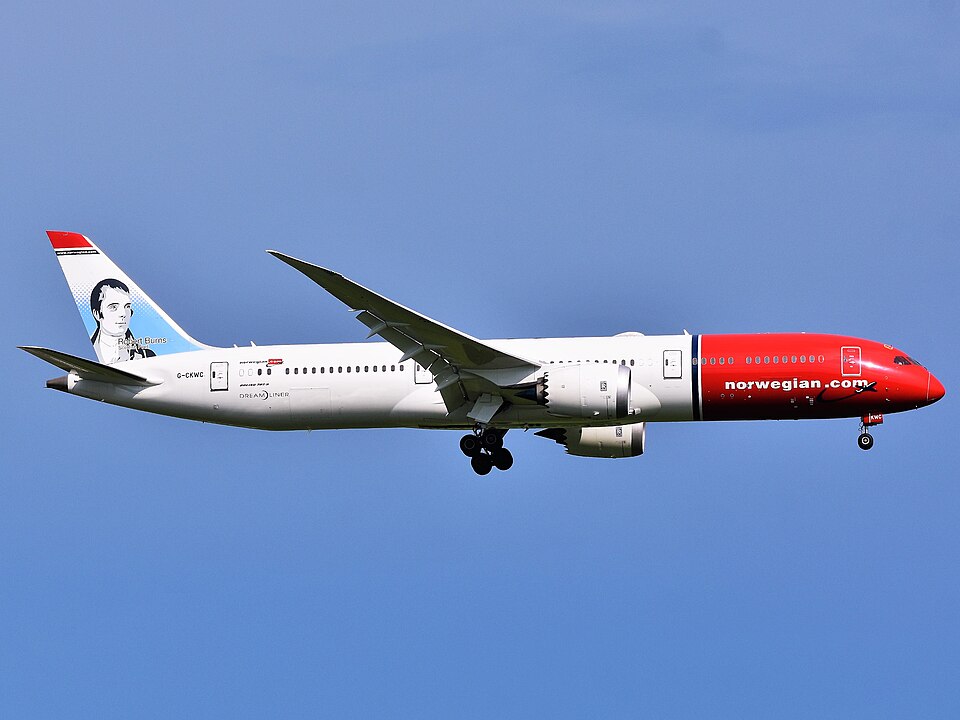
On 28 March 2018, a Boeing 787-9 (registration G-CKWC) operating a commercial passenger flight began its takeoff roll from the displaced landing threshold of Runway 26R at London Gatwick Airport (LGW), rather than from the beginning of the runway. This decreased the takeoff distance available by 417 m. The aircraft subsequently took off with insufficient thrust to meet regulatory performance criteria for the actual runway length. No injuries to the 10 crew or 260 passengers were reported, and there was no damage to the aircraft.
History of the Flight
The flight was scheduled to depart for Buenos Aires at 2130 hrs. During pre-flight briefing, the crew noted a NOTAM indicating closure of the main runway and use of the standby runway from 2145 hrs. The crew planned for a takeoff from the standby runway (26R), requiring a revised loading plan with reduced cargo and full engine thrust.
After pushback at 2137 hrs, the aircraft taxied via Taxiways KA and K to Holding Point P1. At 2156 hrs, conditional clearance was given to line up after a landing A320. The crew then taxied via Taxiways P and AN to the runway, receiving takeoff clearance while on Taxiway AN. The crew elected a rolling takeoff. The tower controller noted that the aircraft did not appear to apply power until reaching the landing threshold, and rotation occurred approximately abeam Taxiway FR. The crew later recalled little runway remaining at lift-off.
The tower controller filed a report, later upgraded to a Mandatory Occurrence Report. After evaluation of flight data and performance calculations, the operator submitted an MOR to the CAA, which informed the AAIB.
Airfield Information
Gatwick Airport has a single main runway and a standby runway (08L/26R) used when the main runway is unavailable. The standby runway is used as a taxiway when not active. In 2017, it accounted for only 1.3% of total movements.
Runway 26R has a displaced landing threshold 417 m from the start of the takeoff run available (TORA). The beginning of the runway is marked by a white line and large centreline arrows indicating the displaced threshold. The pre-threshold portion has red edge lighting and no centreline lights, compliant with regulations. The displaced threshold has green threshold lights and Runway Threshold Identification Lights (RTILS). The taxi route to Runway 26R is along Taxiway AN, which is straight and aligned with the runway heading—an unusual but compliant layout. Taxiway AN is approximately 250 m long before reaching the white line.
A sign indicating the start of the TODA (takeoff distance available) is located on the grass to the left of the beginning of Runway 26R at the end of Taxiway AN. The sign is illuminated at night. None of the crew recalled seeing it, even though it was illuminated.
The UK AIP includes a local traffic regulation stating that aircraft taking off from Runway 26R must not commence their takeoff run before reaching the START OF TODA information sign, located 417 m before the marked runway threshold.
Other Reports
Gatwick Airport reported that between September 2017 and this incident, there were at least four other incidents where aircraft did not start their takeoff roll at the beginning of the TORA on Runway 26R, involving various operators other than that of G-CKWC. These incidents were recorded by air traffic controllers.