Incident Overview
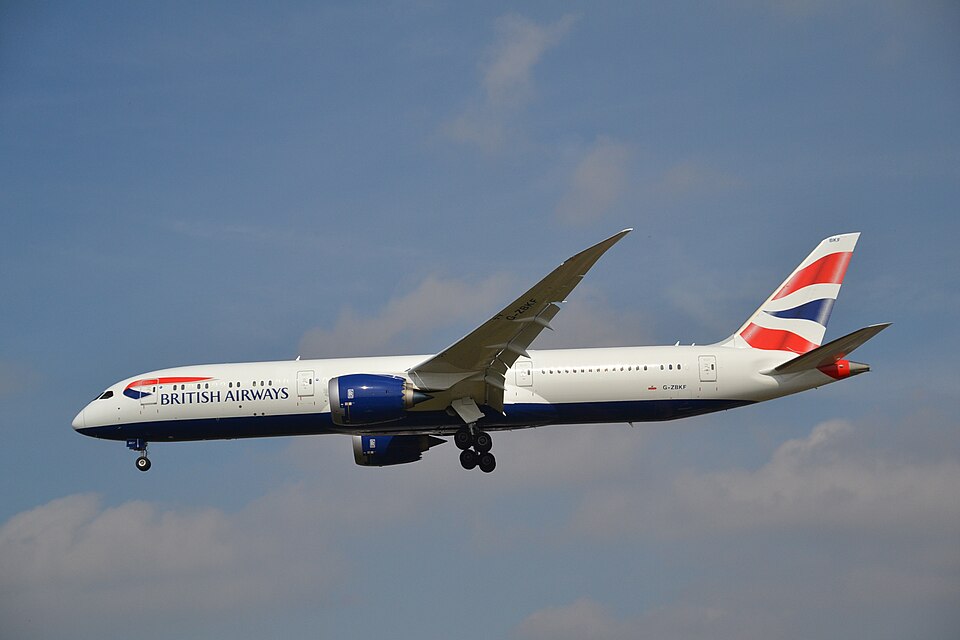
On 1 October 2020, a Boeing 787-9 (registration G-ZBKF) operated a commercial passenger flight from Miami International Airport to London Heathrow Airport. Approximately 40 minutes before landing, smoke was observed emanating from a passenger seat. The source was a mobile phone that had fallen down the side of the seat and became crushed in the seat mechanism. The cabin crew extinguished the fire using a BCF extinguisher, and the aircraft continued to its destination without further incident. There were no injuries to the 10 crew or 53 passengers, and no aircraft damage.
Flight History
Following an announcement that woke a passenger, she adjusted her seat from the flat-bed position to an upright position and left for the washroom. A cabin crew member, while stowing bedding, smelled a strong odour resembling sulphur and noticed a charging cable plugged into the seat socket with its other end down the side of the seat. The odour intensified, and the senior cabin crew member (SCCM) was alerted. A hissing sound was heard, followed by a plume of grey smoke and an orange glow in the seat area.
Crew Response
A crew member retrieved a BCF fire extinguisher and fire gloves while another crew member switched off seat power. The SCCM pulled back the seat padding, exposing a trapped device, and discharged several bursts of BCF into it. The smoke dissipated quickly, revealing a red mobile phone jammed in the seat mechanism with little heat. The crew checked for secondary heat sources and updated the flight crew. The commander, informed of the situation, decided to continue to Heathrow, made a PAN call to ATC, and requested fire services meet the aircraft on landing. The aircraft landed normally, and fire service personnel removed the device.
Operator Procedures
The operator's operations manual includes guidance on portable electronic devices (PEDs) and lithium battery hazards, emphasizing risks from crushing and overcharging. Cabin crew make announcements advising passengers to disconnect PEDs when not in use and to report any devices lost in seats. The manual also specifies firefighting procedures for PED fires, including use of BCF extinguishers and immersion in water when safe.
Seat Design Considerations
The seat type involved was designed approximately ten years ago to limit the chance of PEDs becoming trapped, but complete risk elimination proved challenging. The operator subsequently made further improvements to reduce likelihood. The EASA has noted that seat manufacturers have tried to design seats to minimize the risk, but designing moving seats that entirely prevent devices from falling into mechanisms remains difficult.
Previous Events
The CAA's Mandatory Occurrence Report database contained 166 reports of PEDs trapped in passenger seats in the past five years, with 42 resulting in fire or smoke. Boeing's safety database confirmed three specific events where PEDs were trapped in a seat, managed with existing crew procedures. EASA issued a safety information bulletin in 2015 recommending passenger awareness of PED risks from seat mechanisms.